Rubber Blocks Guide Olympic Speedskaters to Gold at Milan-Cortina 2026
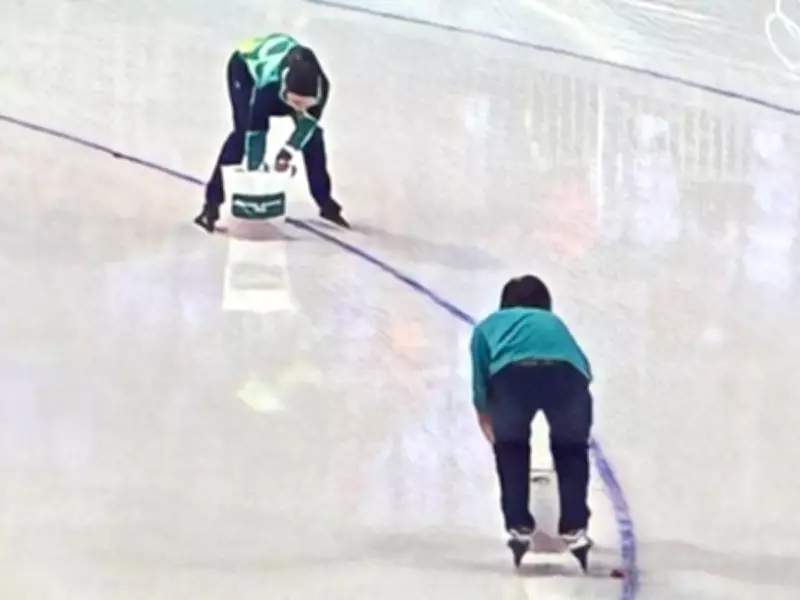
At the Milano Speed Skating Stadium, the path to Olympic glory is meticulously lined with rubber blocks, placed by dedicated workers during commercial breaks and low-light moments. These unsung heroes ensure the long-track speedskating events at the Milan-Cortina 2026 Winter Games run smoothly, maintaining the integrity of the competition.
The Crucial Role of Rubber Blocks
Every job at the Milan-Cortina Games holds significance, but the task of positioning rubber blocks along the oval's turns is particularly vital. After resurfacing machines shave off the top ice layer and spread fresh water that freezes into a smooth surface, four aides spring into action. They skate out to the painted blue lanes, squatting down to affix rubber blocks that make the lines more visible to skaters in the corners.
These blocks serve a dual purpose: they help athletes navigate the track clearly and act as markers to detect if skaters cut too close or cross lanes, which can lead to disqualification. Without these blocks, races could be marred by invisible boundaries and unfair advantages.

Meet the Former Athletes Behind the Scenes
Postmedia spoke with three of the four technical personnel working in the shadows at the Winter Olympics in Milan. All are ex-athletes with deep ties to speedskating. Romedius Thurner, who raced with Italy's national team before retiring about a year ago, explained their background: "If there was a local race, we just did it because somebody had to do it."
His sister, Carmen Thurner, skated with Italy's junior national team until last year and now competes for fun while studying in Innsbruck, Austria. She didn't hesitate to help at the Olympics, calling it "a great opportunity." Sveva Mazzoleni Ferracini, another former junior national team member, joined them after quitting to focus on university.
Why Expertise Matters
As athletes, they possess the skating skills and precise knowledge of where to place the blocks. Romedius Thurner noted, "We know where to place them. We did it a few times when we were younger. We know the people that work here, and they asked us if we could do it here also." This expertise ensures the blocks are positioned correctly to maintain fair play.
The installation process requires patience and timing. Workers must wait until the water layer left by ice resurfacing machines solidifies, then loosely attach the blocks to the ice. This careful placement prevents interference with the skaters while providing clear visual cues.
Ensuring Fair Competition
Sveva Mazzoleni Ferracini emphasized the blocks' importance: "It's so skaters can see where the corners are, and so they don't skate beyond the bonds of their lanes." Romedius Thurner added, "There's a blue line on the ice, but the athletes sometimes cannot see it very well. They're there so that the athletes can clearly see where the corner is. And the second part is, so that you can see when the athletes cut too close and touch one of those because then they're disqualified and the race doesn't count."
This behind-the-scenes work highlights the meticulous attention to detail that defines Olympic events, ensuring every race is decided by skill and speed, not obscured boundaries.