The Olympic Dilemma: Cheering for America While Criticizing Its Government
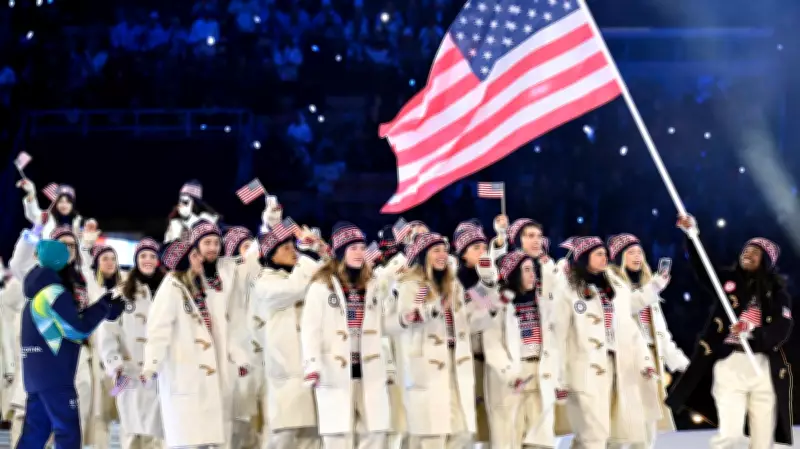
As American athletes pursue glory at international sporting events like the 2026 Milan-Cortina Winter Games, a profound psychological conflict emerges for many citizens. While Team USA competitors win medals under the stars and stripes, federal policies involving family separations, detentions, and violence create what therapists describe as "national shame." This whiplash between Olympic pride and political disappointment has become a common emotional experience.
When Wearing the Flag Creates Conflict
U.S. Olympic skier Hunter Hess articulated this tension clearly when he stated, "There's obviously a lot going on that I'm not the biggest fan of. Wearing the flag doesn't mean I represent everything going on in the U.S." His comments prompted former President Donald Trump to label him a "real loser," highlighting the polarized nature of this discussion. Many athletes now approach international competition with significant ambivalence about what the American flag represents beyond athletic achievement.
Los Angeles-based licensed clinical social worker Aimee Monterrosa confirms this phenomenon extends far beyond athletes. "As we continue to witness national and global atrocities in real time...it can trigger feelings of guilt, despair, shame, anger," she explains. "It continues to be one of the main topics I hold space for in therapy."

The Psychology of Cognitive Dissonance
Nevada-based clinical psychologist Tanisha Ranger clarifies that this experience goes beyond simple mixed feelings. "Cognitive dissonance isn't just 'having mixed feelings,'" she emphasizes. "It's a psychological state that happens when someone holds two conflicting beliefs or values at the same time, or they are engaging in behaviors that contradict their values."
Ranger explains that our brains naturally seek consistency. "Our brains don't like inconsistency, so it searches for ways to reduce that tension. Oftentimes, not [in] the healthiest of ways," she notes. This internal conflict can manifest in various physical and emotional symptoms.
How Cognitive Dissonance Manifests
In the mind, this tension might appear as an internal debate. "You might worry, 'Why do I want them to win when I'm angry about what the country is doing?'" Ranger describes. People might qualify their feelings with statements like, "I'm rooting for them, but..." Some may even need to turn off games immediately after significant moments because continuing to cheer feels too complicated.
Physically, this psychological conflict can create tangible symptoms. Ranger observes that people often experience "a weird mix of excitement and discomfort at the same time" that might feel like "a tightening in your chest or stomach when you realize you're cheering and cringing simultaneously." Monterrosa adds that cognitive dissonance can cause tightness in the neck, shoulders, or jaw, along with digestive issues and sleep disturbances.
Historical Context and Individual Differences
Psychologist and executive coach Lauren Appio suggests that the intensity of these feelings depends partly on one's perception of American ideals versus reality. "The degree to which you feel shame and guilt right now for cheering U.S. Olympians might also depend on how much cognitive dissonance you have between the stated values of being American –– freedom, revolutionary spirit, opportunity for all –– versus how our government has actually acted," she explains.
Appio notes that some individuals experience minimal cognitive dissonance because government actions don't contradict their expectations. "They have already been exposed to the difference between what America claims to be versus what it is," she says.
Navigating the Emotional Complexity
Team USA hockey player Kelly Pannek has been particularly vocal about representing America during a period of controversial immigration enforcement in her Minneapolis community. After federal agents fatally shot Minneapolis resident Alex Pretti, Pannek criticized what she called "unnecessary and just horrifying" actions by immigration authorities.

"It's obviously really heavy," Pannek told NPR. "What I'm most proud to represent is the tens of thousands of people that show up on some of the coldest days of the year to stand and fight for what they believe in."
Strategies for Managing Conflicting Feelings
Ranger emphasizes that there's no simple resolution to these complex emotions. "Learning to move through cognitive dissonance means naming these emotions and letting complexity exist," she advises. "You can hold more than one truth at the same time. You can admire the discipline and sacrifice of the athletes, you can strongly disagree with government policy, [and] you can feel both pride and disgust without needing to collapse that into one 'correct' feeling."
Several practical approaches can help individuals navigate this tension:
- Focus on individual athletes rather than national symbols: Appio suggests, "If waving the American flag or chanting, 'USA!' makes us feel grossed out or ashamed, we can cheer for individual athletes. We can also learn more about their stories and the stories of athletes from around the world, and appreciate all they have done to get to the height of their sports."
- Engage in education and mutual aid: Monterrosa recommends finding campaigns to join and educating yourself to ease feelings of dissonance and disconnection.
- Practice mindfulness: "Don't forget to breathe, we are all just trying to take things one day at a time while navigating too many uncertainties," Monterrosa reminds us.
Embracing Nuance in a Polarized World
Therapists point to athletes like Pannek as examples of how to acknowledge complexity without being overwhelmed by it. "They acknowledged the tension, named it, held the complexity without letting it topple them," Ranger observes. "It's the exact kind of nuance most people run from but really need to embrace. They showed that it's absolutely possible to honor and exalt human effort and accomplishment without having to pretend that the political context doesn't exist."
This psychological balancing act between Olympic celebration and political criticism reflects broader societal tensions. As American athletes continue to compete internationally, their experiences and the public's response highlight the ongoing negotiation between national pride and political conscience in contemporary America.