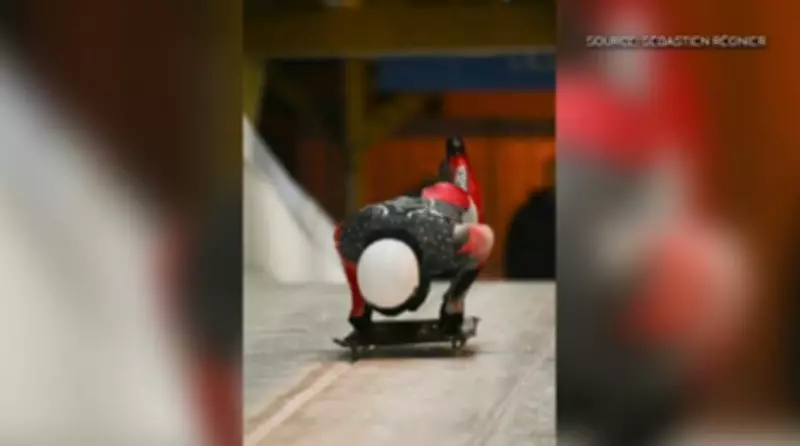
Métis Skeleton Athlete Sébastien Régnier Shares Olympic Insights and Racing Instincts
In an exclusive interview, Sébastien Régnier, a proud Métis athlete representing Team Canada in skeleton racing, offers a rare glimpse into the high-speed, adrenaline-fueled world of his sport. With his competition sled and specialized equipment on display, Régnier delves into the physical and mental rigors required to excel on the icy tracks of international competition.
The Art of Skeleton Racing: More Than Just Speed
Régnier emphasizes that skeleton racing is not merely about velocity; it is a discipline built on precision, instinct, and profound technical knowledge. "It's all about instincts," he explains, highlighting how split-second decisions made during a descent can determine the outcome of a race. Athletes must navigate the course at speeds exceeding 130 kilometers per hour, relying on subtle body shifts to maintain optimal lines.
The Métis competitor details the intense training regimens that skeleton athletes undergo, which include strength conditioning, sprint work, and countless practice runs to memorize every curve and straightaway of a track. "You have to know the ice like the back of your hand," Régnier notes, underscoring the importance of track familiarity in a sport where milliseconds separate podium finishers.

Specialized Gear and Technological Advancements
During the interview, Régnier showcased his custom-built sled and protective equipment, explaining how each component is meticulously designed for performance and safety. The sled itself is a marvel of engineering, crafted from lightweight materials like carbon fiber and steel to minimize weight while maximizing aerodynamics and durability.
He also discussed the evolution of skeleton gear, from helmets with enhanced visibility and impact resistance to aerodynamic suits that reduce drag. "Every piece of equipment is tailored to the athlete," Régnier states, pointing out that even minor adjustments to the sled's runners can significantly affect handling and speed on the ice.
Olympic Prospects and Key Competitors to Watch
As the Olympic Games approach, Régnier shares his perspective on the global competitive landscape. He identifies several athletes from nations like Germany, Great Britain, and Latvia as formidable contenders, noting their consistent performances and technical prowess on the circuit.
For Team Canada, Régnier expresses confidence in the squad's depth and preparation, highlighting the collaborative environment that fosters excellence. "We push each other to be better every day," he says, emphasizing the team's collective focus on achieving podium success at the highest level of competition.
He also reflects on the significance of representing both Canada and his Métis heritage on the world stage, viewing it as an opportunity to inspire future generations of Indigenous athletes. "It's about showing what's possible with dedication and passion," Régnier concludes, encapsulating the spirit of his athletic journey.