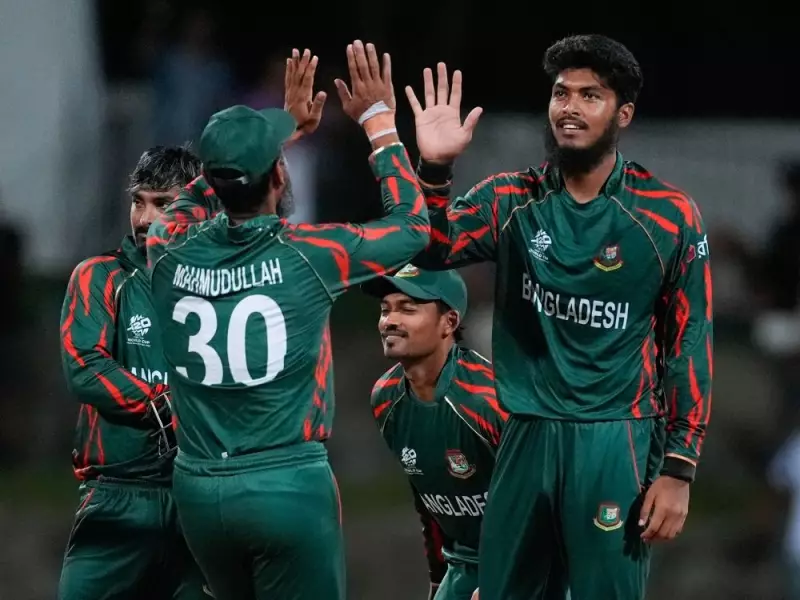
ICC's Controversial Decision on Bangladesh Sparks Global Cricket Uproar
The International Cricket Council (ICC), the global governing body for cricket, finds itself embroiled in yet another significant controversy. This time, the issue centers on its decision to outright ban Bangladesh from participating in the upcoming ICC Men's T20 World Cup, which is scheduled to commence next month. This move has been met with widespread criticism and accusations of blatant favoritism, particularly toward the Indian cricket board.
A Pattern of Inconsistent Governance
Historically, the ICC has navigated a complex landscape of international cricket politics, often struggling to maintain consistent and fair governance. While it has occasionally acted with decisive authority, there have been numerous instances where its decisions appeared hesitant or contradictory. This latest episode involving Bangladesh is being viewed by many as a clear example of the organization's inconsistent application of its own rules and standards.
The controversy stems from Bangladesh's request to have its World Cup fixtures relocated from India to Sri Lanka. This request was formally denied by the ICC, leading to the team's disqualification from the tournament. Bangladesh will be replaced by Scotland, which was the highest-ranked side outside the top twenty qualifying teams. The Scottish team now faces its own logistical nightmare, scrambling to assemble a squad and secure Indian visas for players of Pakistani heritage—a process that has proven notoriously difficult due to longstanding political tensions between India and Pakistan.

Allegations of Favoritism Toward India
Critics argue that the ICC's handling of the Bangladesh situation reveals a troubling double standard. They point to the organization's past willingness to accommodate India's requests, such as allowing the Indian team to play all its matches in the United Arab Emirates instead of Pakistan during a previous World Cup edition, citing security concerns. In contrast, Bangladesh's appeal for a venue change has been met with a harsh and immediate ban.
The root of Bangladesh's request lies in a recent diplomatic incident. Following the toppling of former Prime Minister Sheikh Hasina in a 2024 coup and her subsequent refuge in India, relations between Dhaka and New Delhi have been strained. Unconfirmed reports in Indian media about violent mobs targeting minorities in Bangladesh, though denied by authorities, prompted the Indian cricket board to intervene. It instructed the Kolkata Knight Riders of the Indian Premier League to release Bangladeshi pacer Mustafizur Rahman, whom the franchise had purchased for $1 million US. This action led Bangladesh to seek a change in World Cup venues, refusing to play in India under the current circumstances.
"We want to play the World Cup, but we won't play in India. We will keep fighting," stated Bangladesh Cricket Board President Aminul Islam, highlighting the nation's firm stance.
Financial and Political Realities
The perceived bias toward India is often attributed to the country's immense financial influence within international cricket. India contributes millions of dollars to the ICC and the sport globally, essentially serving as its primary benefactor. Without Indian support, many fear the cricketing ecosystem would face severe financial challenges. Compounding this dynamic is the fact that the ICC is currently chaired by Jay Shah of India, who was elected unopposed in 2024. This leadership structure has raised concerns about equitable representation and decision-making for smaller cricket nations like Bangladesh and Pakistan.
Potential Ripple Effects and Tournament Stability
The fallout from the Bangladesh ban may extend far beyond a single team's exclusion. Cricket Pakistan chairman Mohsin Naqvi has publicly expressed solidarity with Bangladesh and indicated that Pakistan is considering withdrawing from the T20 World Cup as well. Naqvi recently met with Prime Minister Shehbaz Sharif, stating that a final decision on Pakistan's participation will be made within ten days.
"I briefed [Sharif] on the ICC matter, and he directed that we resolve it while keeping all options on the table," Naqvi explained.
If Pakistan follows through on this threat, the consequences could be severe and multifaceted:

- A complete halt to all bilateral cricket series involving Pakistan.
- Potential exclusion from the Asia Cup tournament.
- Denial of No Objection Certificates (NOCs) for foreign players wishing to participate in the Pakistan Super League (PSL).
- Significant financial losses for Pakistani international players.
- A major financial blow to the ICC, particularly from the highly lucrative India versus Pakistan match scheduled for February 15 in Colombo.
This brewing storm places the ICC in a precarious position, forcing it to balance diplomatic sensitivities, financial dependencies, and the fundamental principles of fair play. As the T20 World Cup approaches, the governing body must navigate these turbulent waters carefully to preserve the integrity and stability of one of cricket's premier global events.