The 2026 Winter Olympics: A New Era of Sustainable Games with Significant Travel Challenges
The 2026 Winter Olympics, set to unfold across Italy with Milan and Cortina as host cities, represent a dramatic departure from the compact Games of the past. While Olympic speed skating events are decided by mere hundredths of a second, spectators and athletes at these Games will face travel times measured in hours. This unprecedented geographical spread, covering approximately 22,000 square kilometers, is a direct result of a strategic pivot towards long-term sustainability for host communities.
From Ancient Origins to Modern Sustainability
The modern Winter Olympics are a relative newcomer compared to their ancient and summer counterparts. The original Olympic Games in Olympia began in 776 BC, while the modern summer version launched in Athens in 1896. The first dedicated Winter Games commenced in Chamonix, France, in 1924, featuring just 16 events all contained within the town. The 2026 edition, however, will be the most widespread in the history of the Winter Olympics, a transformation driven by a core principle of the Olympic Agenda 2020.
The Driving Force: Olympic Agenda 2020 and Venue Reuse
The significant dispersion of venues stems from a deliberate policy shift. Olympic Agenda 2020, a strategic roadmap for the International Olympic Committee, emphasizes reusing or repurposing existing venues rather than constructing costly new facilities. The goal is to create a more sustainable legacy for host cities, avoiding the financial burdens and environmental impacts of white-elephant projects. In the case of the 2026 Games, this philosophy has led to utilizing a network of pre-existing sites across northern Italy, resulting in a multi-city hosting model.

A Map of the 2026 Olympic Venues
The two primary host cities, Milan and Cortina d'Ampezzo, are separated by roughly 400 kilometers of Italian roadway. However, the Olympic footprint extends far beyond these two hubs.
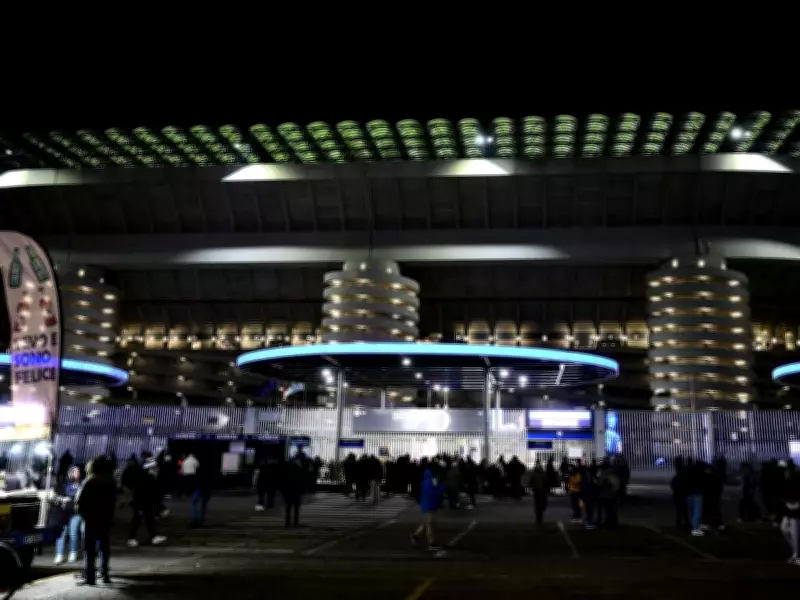
- Milan: The iconic San Siro stadium, slated for future redevelopment, will host the Opening Ceremonies. The city will also be the stage for hockey and multiple skating disciplines, including speed skating, short track, and figure skating.
- Cortina d'Ampezzo: This historic venue will host women's alpine skiing, curling in the renovated Olympic Ice Stadium, and sliding sports like bobsled, luge, and skeleton at a recently rebuilt track.
- Regional Venues: The events are scattered across the Italian Alps and beyond. Bormio will host men's alpine skiing, Livigno will stage snowboarding and freestyle skiing, while Predazzo and Tesero are set for ski jumping and cross-country skiing, respectively. The biathlon will be held in Anterselva, near the Austrian border.
- Verona: The historic Roman-era Verona Arena, an architectural marvel with much of its original stonework intact, will provide a breathtaking backdrop for the Closing Ceremonies.
The Reality of Travel for Spectators
This venue strategy comes with a significant logistical consideration for attendees. Travel between sites will be lengthy and subject to the unpredictable Alpine weather. Sarah Hirshland, CEO of the U.S. Olympic & Paralympic Committee, has advised spectators to be realistic, noting they should "pack your patience" for the considerable travel times.
Road travel estimates highlight the challenge:
- Milan to Cortina: Approximately 4 hours and 45 minutes.
- Milan to Bormio: Nearly 3 hours.
- Milan to Predazzo: Around 3 hours and 45 minutes.
- Milan to Anterselva: Over 4 hours.
- Milan to Verona: A relatively shorter 2-hour journey.
Why Not Lake Placid?
An initial proposal to use the sliding track in Lake Placid, New York, for bobsled, luge, and skeleton events was ultimately abandoned. This would have introduced extreme transatlantic travel complexities. The plan was rendered unnecessary after organizers committed to a major $128-million renovation of the historic sliding track in Cortina, bringing it up to modern Olympic standards and allowing all sliding events to remain within Italy.

The 2026 Milan-Cortina Winter Olympics will thus stand as a landmark test case for the sustainable Games model, trading the convenience of a compact venue cluster for the long-term economic and environmental benefits of reusing legacy infrastructure, even if it means asking the Olympic family to embrace a much longer journey.