Milano Cortina 2026 Winter Olympics Commence with Historic Multi-Venue Opening Spectacle
The Milano Cortina 2026 Winter Olympic Games officially launched on Friday, February 6, 2026, with an unprecedented opening ceremony that spanned four distinct locations across northern Italy. The festivities began at the iconic San Siro soccer stadium in Milan, where temperatures hovered around 50 degrees Fahrenheit (10 degrees Celsius) under a clear azure sky—creating a surprisingly mild atmosphere for a Winter Games celebration.
A Celebration of Italian Heritage Across Multiple Venues
This year's Winter Olympics represent the most geographically dispersed edition in history, with competition venues spread across approximately 8,500 square miles—roughly equivalent to the entire state of New Jersey. The opening ceremony reflected this expansive footprint through its innovative multi-site format.
Beyond the main festivities at San Siro Stadium—which opened a century ago and currently hosts Serie A soccer giants AC Milan and Inter Milan—athletes also marched in three additional locations:

- Cortina d'Ampezzo in the heart of the Dolomite mountains
- Livigno in the Alps
- Predazzo in the autonomous province of Trento
This unique arrangement allowed athletes from mountain-based sports like Alpine skiing, bobsled, curling, and snowboarding to participate in the Parade of Nations without traveling several hours to Milan.
Dual Cauldrons and Cultural Tributes
In another departure from Olympic tradition, organizers lit not one but two cauldrons—both designed as homages to Leonardo da Vinci's geometric studies. One cauldron stands in Milan, approximately 2.5 miles from San Siro Stadium, while the other burns 250 miles away in Cortina.
The ceremony featured extensive tributes to Italian culture, including:
- Performances honoring artistic giants like da Vinci, Dante, Puccini, and Fellini
- A runway showcase of outfits created by the late fashion designer Giorgio Armani in Italy's national colors: red, green, and white
- Dancers reimagining 18th-century sculptor Antonio Canova's marble works
- References to ancient Rome, the Renaissance, and the Venice Carnival
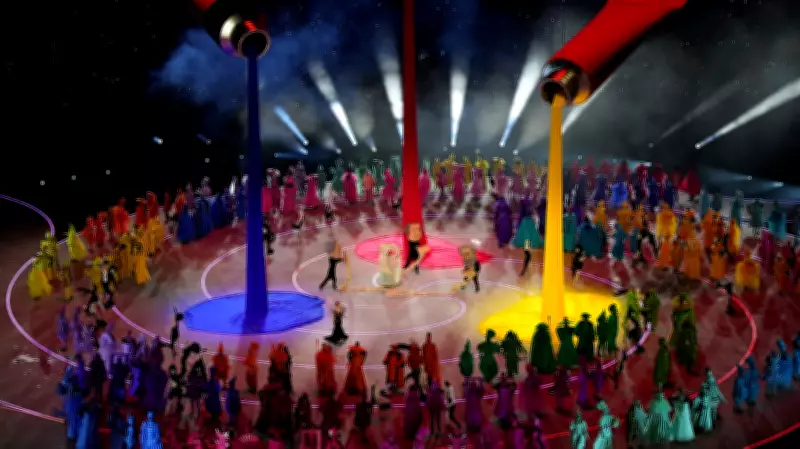
- Giant floating tubes of primary-colored paint symbolizing Italian creativity
Musical and Theatrical Highlights
The ceremony included performances by tenor Andrea Bocelli and balladeer Laura Pausini, who sang Italy's national anthem in Milan while a chorus joined from Cortina. American diva Mariah Carey also made a special appearance, adding international star power to the proceedings.
Italian actress Sabrina Impacciatore, known for her role in White Lotus, introduced a segment showcasing a century of Olympic evolution through equipment, sportswear, and music. Meanwhile, actress and comedian Brenda Lodigiani demonstrated popular Italian hand gestures often used in place of verbal communication.
Organizational Vision and Global Context
Ceremony producer Marco Balich, an Olympic ceremony veteran, designed the spectacle to convey themes of harmony and peace while representing the unique city-mountain dichotomy of these particular Games. Organizers kept many elements under wraps, seeking to create a sense of unity during a period of global tensions.
The closing ceremony on February 22 will take place in yet another location—Verona, the setting of Shakespeare's Romeo and Juliet—further emphasizing the geographically dispersed nature of these Olympics.
As the Games return to Italy for the first time in 20 years since the 2006 Turin Olympics, the opening ceremony successfully blended tradition with innovation, celebrating Italy's rich cultural heritage while establishing new precedents for how Olympic celebrations can unfold across multiple locations.