From Intimate Beginnings to Global Spectacle: The Evolution of the Winter Olympics
The 1956 Winter Olympics, held in the picturesque Italian mountain town of Cortina d'Ampezzo, presented a remarkably different vision of the Games compared to what the world will witness in 2026. As Cortina prepares to co-host the 2026 Winter Olympics alongside Milan, archival photographs serve as a poignant reminder of how much this premier sporting event has transformed over seven decades.
A Study in Contrasts: Scale and Participation
The 1956 Games were characterized by their modest scale and intimate atmosphere. With just 825 athletes representing 32 countries, the competition felt more like a gathering of elite winter sports enthusiasts than the massive global spectacle we know today. In stark contrast, the 2026 Milan-Cortina Olympics are projected to feature approximately 3,500 athletes from 93 nations, representing nearly triple the participation of the 1956 event.
This dramatic expansion reflects not only the growing popularity of winter sports worldwide but also significant changes in international relations, transportation accessibility, and media coverage that have transformed the Olympics into a truly global phenomenon.

Iconic Moments Captured in Time
The archival images from Cortina 1956 preserve numerous memorable moments that defined that era of winter sports:
- Canadian skier Lucile Wheeler finishing sixth in the women's giant slalom, representing her nation's early presence in alpine competition
- British bobsleigh athletes arriving in style in a Bentley on the eve of the opening ceremony, showcasing the different era of athlete transportation
- Austrian figure skaters Sissy Schwarz and Kurt Oppelt capturing the pairs title with their elegant performance
- German skier Ossi Reichert being congratulated by her mother after winning the ladies' giant slalom, highlighting the personal nature of early Olympic victories
Technical and Logistical Differences
The 1956 Olympics operated with considerably more modest infrastructure and technology than what will be available in 2026. Photographs reveal:
- The distinctive "Italia" ski jump that served as a centerpiece of the Games
- Rome darkroom staffer Carlo Pelliccia drying photographic negatives in a bathroom, illustrating the primitive nature of media processing at the time
- Spectators entering the ice stadium before ceremonies, with crowds that would be considered intimate by modern standards
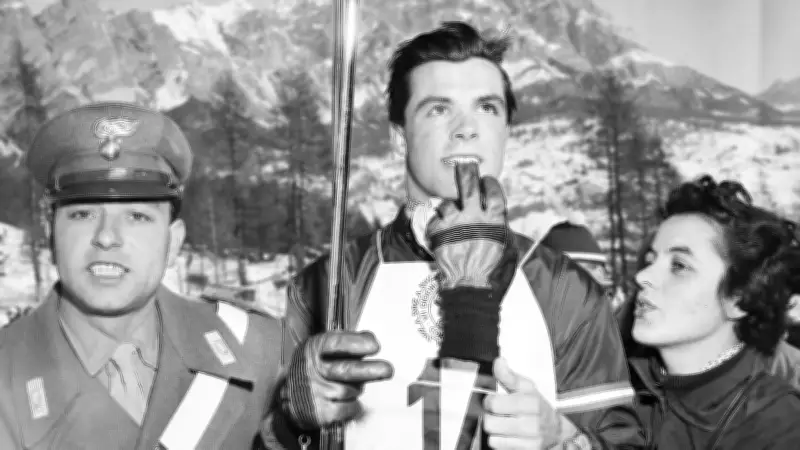
- The memorable moment when Italian skater Guido Caroli fell while carrying the Olympic torch during the opening ceremony in front of 13,000 spectators
National Pride and Athletic Excellence
The photographs capture numerous athletes who would become legends of their sports:
- Austrian skier Toni Sailer, who dominated the alpine events, winning multiple gold medals and being carried on the shoulders of adoring fans
- American figure skaters including Tenley Albright, Carol Heiss, and the bronze medal-winning David Jenkins, representing the United States' growing presence in winter sports
- Soviet and Russian athletes like Ljubov Kozyreva and Yevgeny Grishin, who excelled in cross-country skiing and speed skating respectively
- Italian athletes including Giuliana Chenal-Minuzzo, who read the Olympic oath, and Giuseppe Dordone, who brought the Olympic flame to Rome
The Changing Face of Olympic Ceremony and Spectacle
The 1956 opening ceremony, captured in authenticated news photographs, featured 1,200 competitors parading before 13,000 spectators - numbers that seem remarkably small compared to the millions who will watch the 2026 ceremonies both in person and through global broadcasts. The array of national banners hung in front of the Olympics headquarters symbolized the international spirit of the Games, while the lighting of the Olympic torch from the sacred flame maintained traditions that continue to this day.

As Cortina d'Ampezzo prepares to welcome the world once again in 2026, these archival photographs serve as both historical documentation and a measuring stick for how dramatically the Winter Olympics have evolved. From intimate competitions among a few hundred athletes to global spectacles involving thousands, the journey from 1956 to 2026 represents one of the most significant transformations in international sports history.