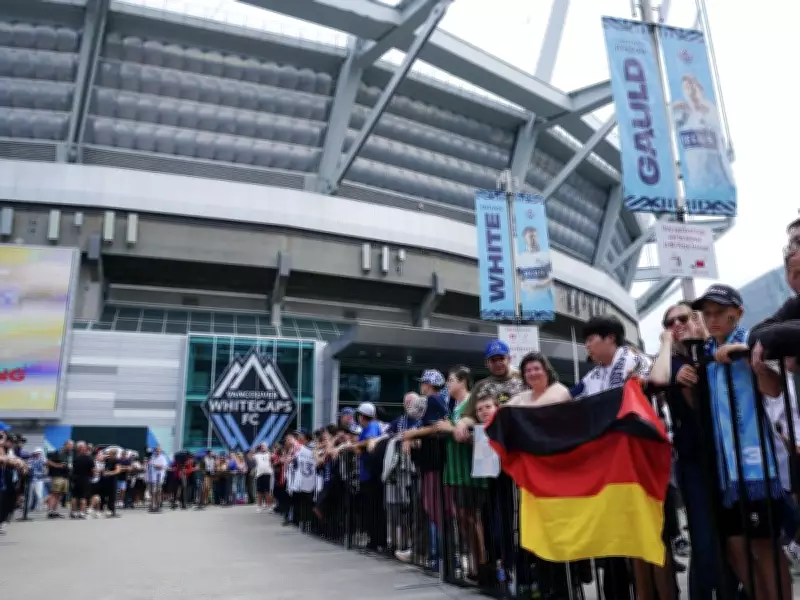
Vancouver Whitecaps' MLS Future Hangs in the Balance Amid Stadium Crisis
The Vancouver Whitecaps Football Club is confronting a critical juncture that threatens its very existence in Major League Soccer. Despite the excitement generated by star signings like Thomas Müller and passionate fan support, the club's financial and operational realities paint a grim picture for its long-term viability in Vancouver.
A Dire Financial Reality
Whitecaps CEO and sporting director Axel Schuster delivered a sobering assessment of the club's situation during recent media engagements. "Our situation is, unfortunately, not good," Schuster stated bluntly, though he emphasized that the organization is not giving up on finding solutions. The core issue remains the team's continued tenancy at B.C. Place Stadium, where operational constraints and revenue limitations have created what MLS officials describe as "untenable conditions for a major league club."
Schuster revealed that approximately 100 parties have expressed interest in purchasing the team since it was put up for sale over a year ago. More than 30 signed non-disclosure agreements to examine the club's financials, but all prospective buyers reached the same conclusion: there is no viable business case for investing in a team that continues to play at B.C. Place under its current lease terms.

The Stadium Conundrum
The Whitecaps' revenue ranking sits at the bottom of MLS, a startling position given the league's transformation into a competition featuring billionaire owners and expansion franchises valued at half a billion dollars each. The fundamental problem is that no serious investor will commit to the Whitecaps without a concrete plan for a new, soccer-specific stadium.
While the team has explored possibilities at Hastings Park—the former site of horse racing facilities—the challenges are substantial. Assembling a development project there involves navigating complex permitting processes, development costs, and construction timelines that make any stadium solution years away at best.
MLS Vice-President of Communications Dan Courtemache underscored the urgency, stating that the current stadium situation "will limit the club's long-term future in the city." He added that operational constraints around scheduling and venue access have intensified in 2026, creating conditions with no clear path forward for resolution in future years.
Operational Challenges at B.C. Place
The irony of the Whitecaps' predicament is particularly sharp as Vancouver prepares to host FIFA World Cup matches. Rather than benefiting from soccer's global showcase, the Whitecaps face potential displacement from their own home stadium. If the team advances to the semifinal or final rounds of the CONCACAF Champions Cup in May, they would be unable to host matches at B.C. Place due to FIFA's takeover of the venue.
This scenario highlights the fundamental problem: the Whitecaps are not masters of their own scheduling destiny. Two years ago, the club lost a home playoff date due to calendar conflicts at B.C. Place. Now, their potential continental championship aspirations could be compromised by the very event meant to celebrate soccer in the region.
Schuster acknowledged that PavCo, the operators of B.C. Place, have made efforts in lease negotiations, but even their concessions fall short of what the Whitecaps need to compete financially in modern MLS.
A Race Against Time
The clock is ticking for Vancouver's professional soccer franchise. While MLS values Vancouver as a market and appreciates the city's ability to attract global talent like Thomas Müller, the league will not wait indefinitely for solutions. The Whitecaps need both a new owner and a definitive stadium plan, and they need them urgently.
Schuster remains publicly optimistic about keeping the Whitecaps in Vancouver, but his tone reveals underlying anxiety about the club's future. With few stones left unturned in the search for solutions, and time running short, the coming months may determine whether professional soccer has a sustainable future in British Columbia's largest city.

The situation represents a critical test for Vancouver's sports landscape—one that will reveal whether the city can support a modern MLS franchise or whether the Whitecaps' days in Vancouver are numbered.