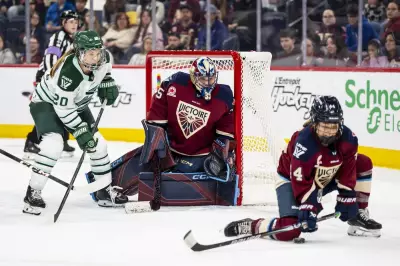
The United States men's Olympic hockey team may have already made a critical error before the puck even drops in Milan. The controversial decision by general manager Bill Guerin to exclude Montreal Canadiens stars Cole Caufield and Lane Hutson from the 25-man roster is being scrutinized as a potential strategic blunder rooted in outdated biases.
The Overtime Scenario U.S. Coaches May Dread
Imagine the gold medal game is tied 3-3 and has gone to overtime. Team USA coach Mike Sullivan looks down his bench for a game-breaking talent. The player he might instinctively want, Canadiens winger Cole Caufield, is not there. Caufield owns a team-record 11 overtime goals in his 331-game NHL career. While U.S. selections like J.T. Miller (17 OT goals) and Auston Matthews (14) have more, they have done so in far more games, with Miller having played 907 contests to Caufield's 331.
As of January 9, 2026, Caufield had 21 goals on the season. The only American-born players with more were Matt Boldy (26) and Dylan Larkin (22). His clutch scoring ability, a commodity in short supply in high-stakes tournaments, was deemed expendable.

The Persistent Size Bias
The primary reason for omitting both Caufield and defenceman Lane Hutson appears to be their stature. This is a prejudice both players have confronted throughout their careers, only to consistently prove they can not only compete against larger opponents but thrive at the highest level.
This same bias is why the Canadiens were able to select Caufield 15th overall in the 2019 draft, despite him shattering U.S. National Team Development Program scoring records previously held by Phil Kessel and Auston Matthews. Today, only his former USNTDP teammates Jack Hughes and Matt Boldy, drafted 1st and 12th respectively, have more career points from that draft class.
Hutson's story is remarkably similar. He set USNTDP records for a defenceman but saw his stock fall due to concerns over his 5-foot-8, 158-pound frame at the 2022 draft. The Canadiens selected him 62nd overall in the second round. He responded by winning the Calder Trophy as NHL Rookie of the Year last season and currently ranks third in scoring from his draft class, behind only Montreal teammate Juraj Slafkovsky (1st overall) and Logan Cooley (3rd overall).
Beyond Offense: Underrated Two-Way Play
The critique of smaller players often centers on defensive liability, but the statistics for Caufield and Hutson tell a different story. Caufield plays on Montreal's top line alongside Selke Trophy candidate Nick Suzuki, regularly matching up against opponents' best players. He sports a solid plus-11 rating; among forwards on the U.S. Olympic roster, only Matt Boldy has a better plus/minus figure.
Hutson has been an even bigger revelation. Expected by some to be a sheltered, power-play specialist, he has instead logged major minutes as a top-four defenceman. He is producing at a point-per-game pace and boasts an impressive plus-16 rating—better than any defenceman named to the American squad. Canadiens director of player development Rob Ramage aptly described Hutson's tenacity as "dog on a bone... relentless."
The Olympic roster rules, which allow for 25 players and 20 skaters dressed per game compared to the NHL's 23 and 18, presented a unique opportunity. Those extra slots are perfect for specialists who excel in specific situations like overtime, power plays, or late-game pushes. Caufield and Hutson have proven they are precisely those kinds of players in Montreal.
While there is a silver lining for Canadiens fans—avoiding injury risk and ensuring both stars are rested for the NHL playoff push—the snub represents a missed opportunity for Team USA. By prioritizing a traditional, size-based evaluation over demonstrated elite skill and heart, Bill Guerin and his staff have gambled that their old-school approach will win gold. It's a decision the entire American hockey program may come to regret if the game is on the line in Milan.