Small-Town Canadians Play Pivotal Role in Hockey at Milan-Cortina Olympics
While the majority of Canada's elite hockey players now begin their ascent in urban centers, the enduring influence of small-town origins is set to be prominently displayed at the upcoming Milan-Cortina Olympic Games. This trend highlights a fascinating shift in the development pathways of the nation's top athletic talent.
Bruderheim's Homegrown Heroine
The tiny bedroom community of Bruderheim, Alberta, located northeast of Edmonton, is poised to celebrate one of its own. Mayor Ron Ewasiuk, elected in October, has expressed strong support for erecting a "Proud Home of Emerance Maschmeyer" sign to honor the local hockey heroine. "The town is 100 percent behind her," Ewasiuk stated, emphasizing that Maschmeyer's consistent acknowledgment of her roots is a key reason for the community's pride.
Emerance Maschmeyer, a goaltender for the PWHL's Vancouver Goldeneyes and previously the Ottawa Charge, has maintained deep connections to Bruderheim. Her photograph, accompanied by thank-you notes, adorns many local businesses, reflecting the personal relationships fostered through her small-town upbringing. "Her heart is here in Bruderheim," Ewasiuk added, noting that her approachability and gratitude stem from her parents and rural background.

From Homemade Rink to Olympic Glory
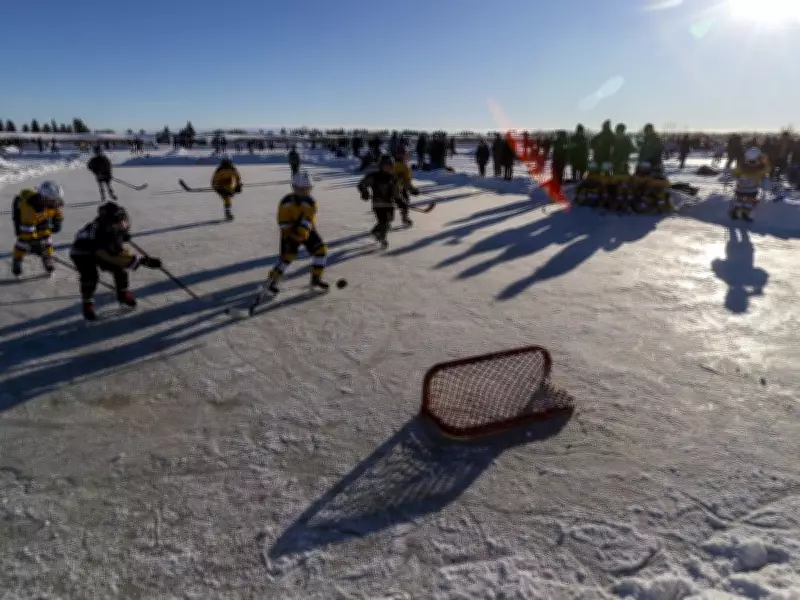
Maschmeyer's journey to the Milan-Cortina Olympics is a testament to the unique advantages of small-town life. Growing up on a grain farm outside Bruderheim, population 1,300, she and her four hockey-loving siblings spent countless hours on a homemade rink. This environment instilled a robust work ethic that has served her well both on and off the ice.
Switching to goaltender full-time around age ten, Maschmeyer played primarily on boys' teams during her minor hockey years. She later spent four years at Harvard University and three seasons in the Canadian Women's Hockey League, earning a spot on her first Olympic team in 2022. Now 31, she represents an exception to the modern trend where top players are increasingly born and raised in larger cities with superior coaching and training facilities.
The Advantage of Abundant Ice Time
Mayor Ewasiuk, who coached Maschmeyer for several seasons, pointed to the plentiful ice availability in Bruderheim as a critical factor in her development. "In our small town, we had an abundance of ice," he explained. "We were practicing twice a week, plus weekend games, so we could be on the ice four to five times. This advantage certainly did not hurt her cause."
This contrasts sharply with larger urban centers, where ice time is often limited and costly unless privately funded. The accessibility of facilities in small communities can provide a foundational edge for aspiring athletes, fostering skill development through frequent, affordable practice sessions.
Urban Dominance in Olympic Rosters
Despite the success stories like Maschmeyer's, the broader trend shows a clear urban majority in Canada's Olympic hockey teams. Approximately three-quarters of the 23 players on the 2026 women's Olympic squad were born in cities such as Toronto, Ottawa, Winnipeg, Hamilton, and Saskatoon. Similarly, city kids constitute about two-thirds of the 25-player men's team.
This urban shift is not a recent development. Even during iconic moments like Sidney Crosby's golden goal at the Vancouver 2010 Olympics, most of his teammates hailed from cities rather than small towns like his native Cole Harbour, Nova Scotia. The data underscores a gradual migration of hockey talent development toward metropolitan areas, driven by better resources and infrastructure.
Conclusion
The Milan-Cortina Olympics will showcase the enduring legacy of small-town Canada in hockey, even as urban centers dominate the rosters. Players like Emerance Maschmeyer remind us that grassroots origins, characterized by community support and accessible facilities, continue to produce world-class athletes. As the Games approach, the stories of these small-town contributors add a rich layer to Canada's hockey narrative, celebrating diversity in developmental pathways.