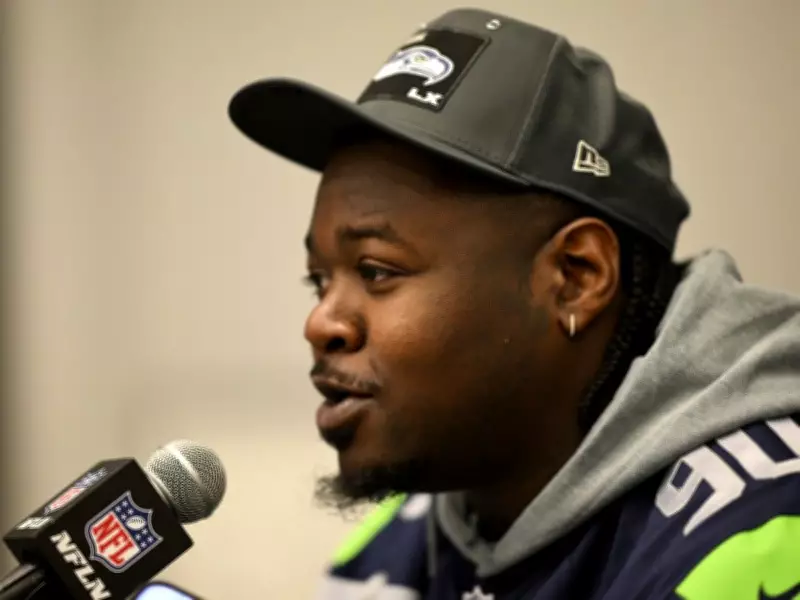
Seattle Seahawks' 'Dark Side' Defense Powers Team to Super Bowl LX
The Seattle Seahawks are heading to Super Bowl LX, and their defense, nicknamed the 'Dark Side,' is a key reason why. This well-rounded unit has been instrumental in the team's success, showcasing a blend of strategy, cohesion, and resilience that has opponents struggling to find weaknesses.
Origins of the 'Dark Side' Moniker
Defensive lineman Jarran Reed recalls that the nickname emerged during the summer, either in OTAs or training camp. A group chat among defensive leaders was formed to decide on a name for the defense. While a few options were considered, 'Dark Side' quickly became the favorite. This name pays homage to Seattle's often gloomy fall and winter weather and the thunderous crowd noise at Lumen Field, creating an intimidating atmosphere for visiting teams.
Reserve cornerback Nehemiah Pritchett emphasized that the defense wanted to carve out its own identity rather than be compared to the legendary 'Legion of Boom' teams of the 2010s, which included stars like Earl Thomas and Richard Sherman. "We kind of wanted our own thing," Pritchett said. "So, the Dark Side just kind of stuck." This desire for independence reflects a unit focused on its current achievements rather than past glories.

A Defense Built on Teamwork Over Stardom
Unlike the star-studded 'Legion of Boom,' the 'Dark Side' is characterized by its anonymity and collective strength. Edge rusher Boye Mafe highlighted this, noting the rarity of a defense with no weak links. "It's very rare that you can say that about your defense, that you can say that about your team that you feel there's no weak links," Mafe explained. "So, as you have that opportunity, it's one of those things where you just have to seize the moment."
The statistics back up this claim. During the regular season, the Seahawks allowed the fewest points per game in the NFL at 17.2. They also ranked in the top seven for sacks and interceptions, and despite injuries in the secondary, they finished 10th in the league for fewest passing yards allowed per game at 193.9. This consistency has been a cornerstone of their success.
Strategic Leadership and Key Players
Head coach Mike Macdonald, who calls the defensive plays, has implemented an aggressive scheme that he honed with the Michigan Wolverines and Baltimore Ravens. This strategy often involves deploying five or more defensive backs, allowing the defensive front, led by Leonard Williams and Byron Murphy II—who tied for the team lead with seven sacks each—to pressure opposing quarterbacks effectively.
Rookie safety Nick Emmanwori has been a standout, breaking up three passes in the NFC championship game and recording 11 pass breakups during the regular season. Macdonald praised Emmanwori's eagerness to learn and attention to detail, qualities that epitomize the defense as a whole. Linebacker Ernest Jones IV provides vocal leadership, fostering a culture of accountability and excellence.
Impact on the Offense and Team Morale
The defense's prowess has also elevated the Seahawks' offense. Quarterback Sam Darnold has been impressed by the intelligence and anticipation of his defensive teammates, who recorded the fifth-most interceptions in the NFL with 18 during the regular season. "They just do a great job," Darnold said, "and make it really hard on the offence."
Safety Coby Bryant sensed something special from the first day of training camp, and now, six months later, the defense has not only earned its nickname but also guided Seattle to within one win of a second Super Bowl title. "Obviously, there's more work to be done," Bryant stated. "We still got a job to finish on Sunday."
As the Seahawks prepare to face the New England Patriots in Super Bowl LX, the 'Dark Side' defense stands as a testament to the power of teamwork and strategic execution. With no glaring weaknesses and a hunger for success, this unit is poised to make a significant impact on the biggest stage in football.