Breakthrough Study: Red-Light Therapy Shows Promise in Protecting Football Players' Brain Health
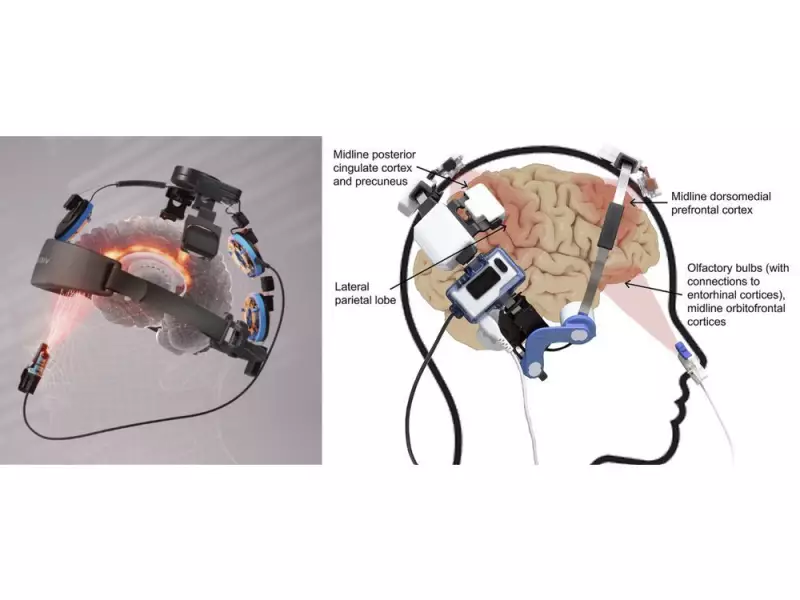
A groundbreaking study published in the Journal of Neurotrauma has unveiled what researchers describe as the first real-world solution to a persistent challenge in football: safeguarding athletes' brains from the cumulative damage of repeated head impacts. Conducted over a full NCAA Division I season, the research demonstrates that Vielight's Neuro Gamma device—a patented intranasal and transcranial photobiomodulation (itPBM) system—may stabilize and even enhance brain markers associated with neuroinflammation and axonal stress.
The Silent Threat in Contact Sports
Football is inherently defined by physical contact. Throughout a single season, players endure hundreds to thousands of repeated head acceleration events. While many of these brief collisions do not lead to diagnosed concussions, they are increasingly recognized as significant contributors to cumulative neuroinflammation and microstructural stress in the brain. This damage can accumulate silently over time, potentially degrading neural integrity long before any symptoms manifest.
Coleby Clawson, PhD, BYU's Director of Sports Medicine and Training, emphasizes the brain's central role: "I tell our players, everything starts in the brain. Movement starts in the brain, strength starts in the brain, speed starts in the brain."

Study Methodology and Findings
In collaboration with the University of Utah and Brigham Young University (BYU), the study followed NCAA Division I football players across a complete 16-week competitive season. Twenty-six athletes were randomly assigned to receive either active or sham Vielight Neuro Gamma itPBM devices. The treatment involved supervised 20-minute sessions three times per week in the team's athletic training facility.
To detect neurological changes that might be invisible to conventional imaging, researchers employed advanced diffusion MRI scans before and after the season. These scans are particularly sensitive to two critical processes affected by repeated head impacts:
- Neuroinflammation: This reflects the brain's immune response to prolonged stress, injury, and strain.
- Axonal injury: This involves disruption to the communication pathways between different brain regions.
Unlike cosmetic or consumer light-based devices commonly used for skin or hair health, this study evaluated a specialized, medical-grade itPBM system. Engineered to deliver pulsed near-infrared light to brain tissue and specific neural networks, the technology represents a significant advancement in targeted neurological intervention.
Institutional Adoption and Athlete Perspectives
The study's compelling results have already influenced decision-making at the institutional level. Tom Holmoe, former Athletic Director at BYU, stated: "We have seen compelling evidence that has driven our decision to incorporate the use of the Vielight Neuro Duo as part of the standard equipment for all our athletes. I am proud that BYU will be the first to deploy technology that I believe will become a standard in the collision sports industry."
BYU offensive lineman Joe Lapuaho highlighted the broader implications for athletes' lives beyond the field. "My mental part of the game definitely went light years ahead," he said. "And for me, this goes beyond football. I want to be able to raise a family, have a wife and kids."
Addressing a Critical Research Gap
Despite growing attention within sports medicine and athletic performance fields, an intervention had never been rigorously evaluated under real-world training and game conditions until this study. The findings suggest that athletes could potentially protect their neurological health without reducing playing time or contact exposure, offering a proactive approach to brain safety in high-impact sports.
This research marks a pivotal step forward in developing practical solutions for brain protection in football, potentially setting a new standard for athlete care and performance optimization in collision sports worldwide.