Quebec's Remarkable Reign in Canadian Short-Track Speedskating
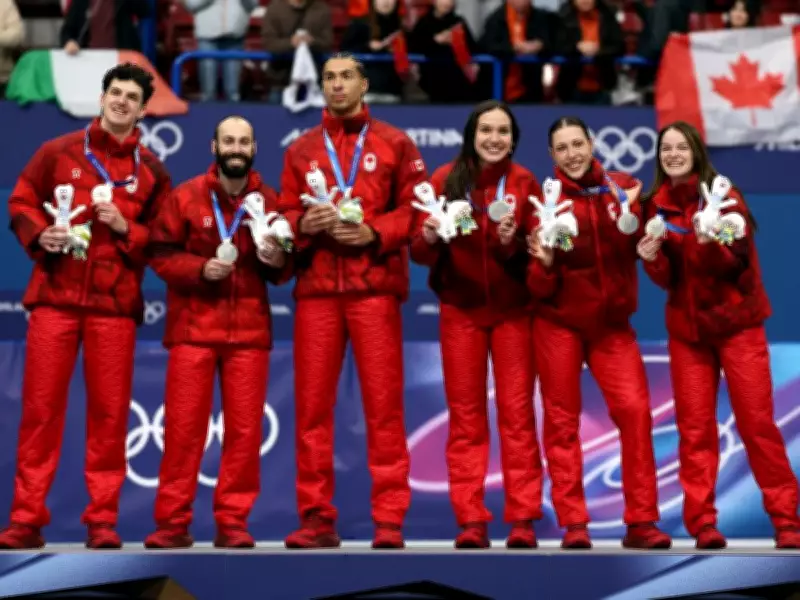
As Olympic competition unfolds in Milan, a striking pattern emerges within Canada's short-track speedskating team: eight of the ten athletes represent Quebec, specifically from the Greater Montreal area, Sherbrooke, or Trois-Rivières. The remaining two members, Courtney Sarault and Rikki Doak, hail from New Brunswick. This overwhelming provincial dominance raises intriguing questions about Quebec's role as the engine of Canada's Olympic speedskating machine.
The Passion That Fuels a Dynasty
When asked about this phenomenon, athlete William Dandjinou joked about "something in the water," but his teammate Steven Dubois offered a more profound explanation. "It's a sport of passion," Dubois emphasized. "When you fall in love with the sport, you remain in love all your life. So when you end your career as an athlete, you will reinvest in the sport." This cycle of passion has created what Dubois describes as a "dynasty" of Quebec speedskaters.
Fellow speedskater Félix Roussel echoes this sentiment, noting that "talent stays in Quebec, and knowledge is transmitted" from generation to generation. This continuity forms the backbone of Quebec's enduring success in the sport.

From Champions to Coaches: The Marc Gagnon Effect
The transformation of athletes into mentors is perfectly exemplified by Marc Gagnon. In 2002, Canadians watched in awe as Gagnon from Chicoutimi, Quebec, and Jonathan Guilmette from Montreal won gold and silver respectively in the 500-meter finals at the Salt Lake City Olympic Games. Today, Gagnon serves as head coach of Team Canada's short-track speedskating team, guiding athletes at the Maurice Richard Arena in Montreal.
As a five-time Olympic medalist, Gagnon has set an ambitious target for his team: seven medals from the Milan-Cortina Games. This goal aims to reassert Canada as a powerhouse in short-track speedskating, building on the legacy of Quebec natives like Charles Hamelin and Marianne St-Gelais who collected medals in past Olympics.
Infrastructure and Role Models: The Quebec Advantage
Quebec's influence extends beyond short-track to long-track speedskating as well, with seven of fifteen athletes on the national team originating from the province. This success is bolstered by significant infrastructure investments, most notably the Centre de glaces Intact Assurance in Quebec City, deemed the largest indoor skating centre in North America.
Olympian Valérie Maltais made the decision to move back to her home province in 2022 after four years training in Calgary, specifically to utilize this new facility. Olympic athlete Laurent Dubreuil, who lives in the region, has also benefited from this recently built infrastructure.
Long-track skater Béatrice Lamarche, marking her Olympic debut in Milan-Cortina, highlighted the importance of role models: "When we have positive role models, I think it has a positive influence." This combination of passion, coaching continuity, specialized infrastructure, and visible success creates a self-reinforcing cycle that keeps Quebec at the forefront of Canadian speedskating.
The tight-knit club that trains at Montreal's Maurice Richard Arena represents more than just a collection of individual athletes—it embodies a cultural phenomenon where love for the sport transcends generations, creating a legacy that continues to propel Quebecers to Olympic podiums.