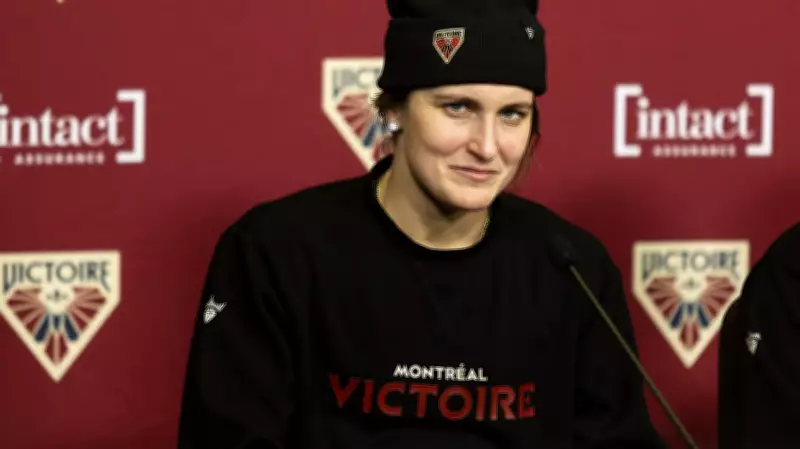
From Beauceville Basement to Olympic Glory: The Marie-Philip Poulin Story
As Team Canada superstar Marie-Philip Poulin prepares for her fifth Winter Olympics in Milan-Cortina 2026, the hockey world recognizes her as arguably the greatest female player in history. Yet in her hometown of Beauceville, Quebec, population approximately 6,300, she remains the "little girl" who learned resilience and humility through family sacrifice and small-town values.
A Viral Moment of Family Connection
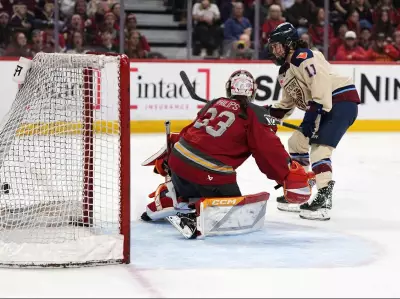
During a January 2026 Professional Women's Hockey League game at Quebec City's Videotron Centre, a tender moment captured hearts nationwide. Ninety-two-year-old Julienne Bisson, Poulin's grandmother, appeared on the arena's Jumbotron during Montreal Victoire's matchup against Vancouver Goldeneyes. As 14,624 fans watched, Bisson blew kisses to her granddaughter on the ice. Poulin, flashing a bright smile from behind her hockey helmet, returned the gesture. The arena erupted in applause, and the intergenerational connection went viral, symbolizing the family foundation supporting Poulin's remarkable career.
The Poulin family had reserved 90 seats for relatives who braved winter weather to cheer their hometown hero. "For them, despite all the success she's had, she'll always remain that little girl from Beauce," says Team Canada goaltender Ann-Renée Desbiens, highlighting how Poulin's identity remains rooted in her origins despite international fame.

Humble Beginnings in Beauceville
An hour's drive south of Quebec City, Beauceville provided the backdrop for Poulin's early development. Her parents, Robert Poulin and Danye Nadeau, worked multiple jobs to support their children's hockey dreams. Nadeau worked as a hospital administrative assistant by day and as communications officer for the Beauce-Amiante hockey league by night, with earnings directly funding registration fees. Robert worked as a stretcher-bearer, volunteer firefighter, and weekend handyman.
The family made significant sacrifices: new hockey equipment served as Christmas or birthday gifts, restaurant meals during tournaments were replaced by cooler-packed sandwiches eaten in parking lots, and vacations were limited to occasional camping trips. "At the end of the day, we were playing hockey and that was the most important thing," Poulin reflects on those lean years.
Early Hockey Development Against Odds
Poulin's hockey journey began unconventionally. After rejecting figure skating classes where girls wore doll costumes (she insisted on being a firefighter like her father), she followed her older brother Pier-Alexandre to the rink. At five or six years old, playing with used gear from flea markets, she immediately stood out. "She was better than all the little boys that were there. She had a natural talent," her mother recalls.
Poulin played exclusively on boys' teams until age 15, developing speed and resilience against physical play. "I would get picked on, but I would get up faster than I fell," she says. Her parents took precautions, securing separate changing spaces and guarding doors to ensure her privacy and safety in arenas lacking proper facilities.
Sibling Rivalry and Family Support
The competitive relationship with her brother shaped Poulin's development. They transformed their unfinished basement into a hockey arena, covering pipes with Styrofoam and eventually requiring complete renovation after countless holes in walls. "She's really one of the best natural athletes I've seen in my life," Pier-Alexandre says, noting she served as his goaltender during childhood matches.
That sibling dynamic extended to life lessons. After a poorly played game, their parents delivered a memorable message: "We won't drive an hour and a half, like we did this morning, and have three jobs for you to not work harder than everyone else." Both children internalized this work ethic, with Pier-Alexandre noting, "It never became a problem again for me or Marie-Philip."

Rise to National Prominence
At sixteen, Poulin moved to Montreal to join the newly formed Montreal Stars (later Canadiennes) of the Canadian Women's Hockey League. Living with teammate Lauriane Rougeau's family in Pointe-Claire, she immersed herself in elite hockey while facing language barriers. With limited English vocabulary (joking she knew only "yes," "no," and "toaster"), she attended Kuper Academy, an English private school, then Dawson College to become bilingual for Team Canada commitments.
Coach Peter Smith recalls first seeing Poulin at 14 or 15: "She was just a dominant player. She was strong and fit and fast and skilled." Her natural athleticism extended beyond hockey; during Olympic training, Smith observed her golf swing and thought, "Holy smokes, if she wasn't a hockey player, she could be a pro golfer."
Olympic Legacy and "Captain Clutch" Moments
Poulin's Olympic debut at 18 during the 2010 Vancouver Games announced her arrival on the world stage. With her family wearing her No. 29 jersey in the arena and 1,000 Beauceville residents watching on arena screens, she scored both Canadian goals in the gold-medal victory against the United States. "The roof almost lifted because everyone was so euphoric," her mother remembers of the hometown celebration.
This performance established her "Captain Clutch" reputation. She remains the only player—male or female—to score in four Olympic gold-medal games. Her accolades include MVP of the inaugural 2024-25 PWHL season, where she led the league in goals, and even a Barbie doll created in her honor.
Personal Life and Current Motivation
In 2024, Poulin married Team Canada and PWHL teammate Laura Stacey, with whom she shares a golden retriever named Arlo. Their relationship extends to training partnership, with Stacey noting Poulin's "consistent willingness to prepare more than anybody else." Teammates describe their competitive dynamic: even drinking milk becomes a contest, with coaches sometimes needing to separate them during sprint competitions.
At 34, Poulin approaches what might be her final Olympics as an underdog against a younger American team. "For sure, you don't want to disappoint," she acknowledges. "Using this pressure on the positive side, for me, fuels my fire every day."
Community Legacy and Future
Beauceville continues celebrating its hometown hero. The local arena features Poulin's image with the words "The dream starts here. Welcome to our arena!" though Quebec regulations prevent naming it after her while living. For the 2026 Olympics, the town plans to enter "Marie-Philip mode" with viewing parties and community support.
As grandmother Julienne Bisson reflects on Poulin's journey from Beauceville basement games to international stardom, she beams with pride: "This little girl has gone far." The family's supersized support, small-town values, and unwavering work ethic continue propelling Poulin as she carries Canadian hopes to her fifth Olympic Games, forever remaining Beauceville's humble hockey hero.