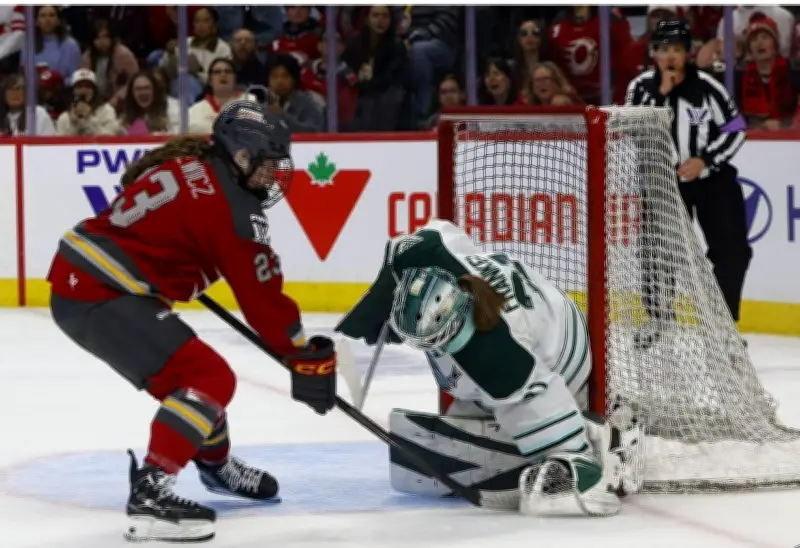
A lot can change in a week, just ask the Ottawa Charge. In less than seven days, the Charge roster has rapidly become a shell of the team that was chasing its first Walter Cup title a little less than a month ago.
As the PWHL expands from eight teams to 12 with Hamilton, Detroit, San Jose and Las Vegas welcomed into the fold, Charge stars Brianne Jenner, Emily Clark and Rory Guilday were the first three players to pursue opportunities outside of Ottawa.
It is a big loss for the Charge, to say the least. And at first glance, things may be looking grim, as we are still less than halfway through the league's six-phase expansion process, with Phase 3 beginning Wednesday at noon.

But the good news for Charge fans is that the worst of the expansion devastation is likely behind us. While expansion teams will continue to build their rosters over the next few phases, each team will also have the opportunity to protect three more players at the end of Phase 3.
Phase 3 Details
By now, all four expansion teams have signed five players to their brand-new rosters. By the end of Phase 3, this number is expected to increase to eight. Beginning on Wednesday at 12 p.m., expansion teams can target free agents included on the negotiation lists submitted in an earlier phase.
For the Charge, it is probably a huge relief that this phase only targets free agents. Ottawa will likely emerge largely unscathed with some big-name players who rejected Phase 2 offers required to sign a contract in this phase. And not only that, but Ottawa can protect three more players at the end of the phase, becoming much less vulnerable to future stages of expansion.
This is huge for Ottawa, who has managed to hang onto players like Gabbie Hughes, Fanuza Kadirova, Sarah Wozniewicz and Michela Cava so far. It will be another big decision for Charge general manager Mike Hirshfeld as to who he wants to lock down on next season's roster. Rebecca Leslie, Ronja Savolainen and Gwyneth Philips were already protected at the end of Phase 1. This second round of protections is due Friday at 5 p.m.
Who Will the Charge Protect?
Just like in Phase 1, the Charge can protect either a free agent or a player on contract with the team. If Ottawa chooses to protect a free agent like Jocelyne Larocque, or even if it holds that player's rights until the end of next season like it does with Kadirova, Wozniewicz and Peyton Hemp, Ottawa must first sign them to a contract for it to count as a protection.
As Ottawa enters this retool phase after key pieces of its core leadership group signed elsewhere, investing in its young foundation needs to be a priority. That needs to start with protecting Wozniewicz, a 22-year-old forward with a bright future ahead of her in this league. She scored nine goals and 17 points in her rookie season and was a key piece on Ottawa's top line.
Likewise, after losing some major goal scorers to expansion, Ottawa should prioritize protecting 28-year-old Russian forward Kadirova. While Ottawa waited until the final round of the draft to bring her in last season, it is hard to imagine the Charge without her. Kadirova has emerged as one of the most valuable players on the Charge roster, collecting 12 goals and 17 points as she has become a proven goal scorer in this league, surpassing any doubts about how her skills may transition from the Russian system.
Finally, Hughes would be a natural third protection, considering she is one of the best two-way forwards in the game after spending this season on the team's shutdown line. And not only that, but 26-year-old Hughes is one of few players left in Ottawa who has been with the team since the inaugural puck drop and would immediately come to mind when looking at the future leadership of this team. Hughes is signed with the team until the end of next season.