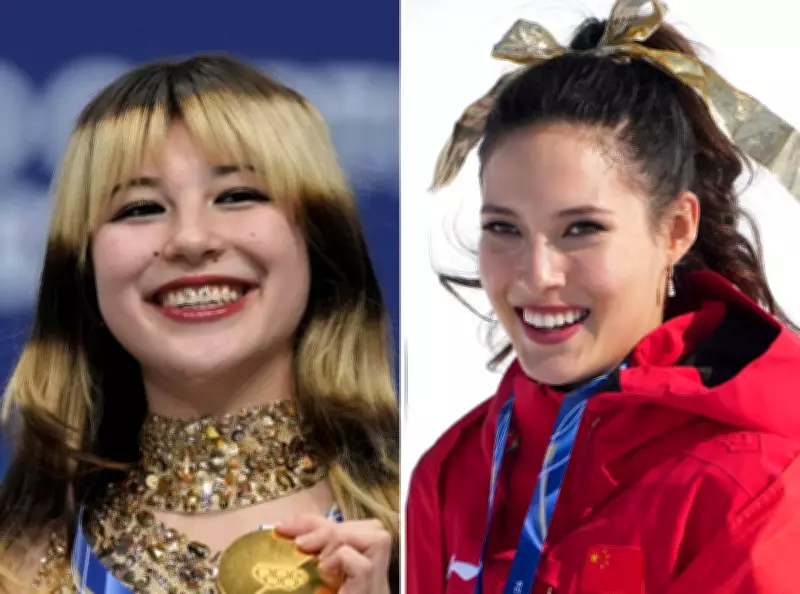
Olympians Alysa Liu and Eileen Gu: Divergent Paths Amid China-U.S. Tensions
The 2026 Winter Olympics in Milan and Livigno, Italy, showcased not only athletic excellence but also the complex interplay of international politics. Two gold medalists, Alysa Liu of the United States and Eileen Gu of China, have emerged as symbols of vastly different trajectories, with their stories deeply intertwined with the strained relations between their respective nations.
Contrasting Backgrounds and Achievements
Alysa Liu, representing the United States, secured her gold medal on February 19, 2026, in Milan. Her victory is a testament to the American sports system, which often emphasizes individual achievement and grassroots development. Liu's path to Olympic glory reflects a narrative of personal dedication and the support of a national infrastructure focused on nurturing talent from a young age.
In contrast, Eileen Gu, competing for China, claimed her gold on February 22, 2026, in Livigno. Gu's success is frequently framed within China's state-driven sports apparatus, where athletes are often seen as ambassadors of national pride and soft power. Her journey highlights the rigorous, centralized training programs that have propelled Chinese athletes to the forefront of international competitions.

Geopolitical Undercurrents
The stories of Liu and Gu are not merely about sports; they are microcosms of the broader China-U.S. relationship, which has been marked by trade disputes, technological rivalries, and diplomatic tensions. As these two superpowers vie for global influence, their athletes become unwitting pawns in a larger geopolitical chess game.
For the United States, Liu's victory is celebrated as a triumph of freedom and individualism, values that are often contrasted with China's more collectivist approach. Meanwhile, China leverages Gu's achievements to bolster its image on the world stage, showcasing the effectiveness of its state-led model in producing world-class competitors.
Impact on Sports Diplomacy
The divergent paths of Liu and Gu underscore how sports can both bridge and exacerbate international divides. While the Olympics are intended to foster unity and friendly competition, they also serve as a platform for nations to assert their cultural and political ideologies.
In an era where China-U.S. relations are increasingly fraught, the narratives surrounding these athletes are carefully curated to align with national interests. This dynamic raises questions about the role of sports in diplomacy and whether athletic achievements can truly transcend political boundaries.
Looking Ahead
As both Liu and Gu continue their careers, their stories will likely remain focal points in the ongoing discourse about China-U.S. relations. Their successes and challenges will be interpreted through the lens of geopolitical tensions, highlighting the inextricable link between sports and international politics.
Ultimately, the journeys of these Olympians remind us that in today's interconnected world, even the most personal achievements are often viewed through a geopolitical prism, shaping how we perceive not only the athletes but also the nations they represent.