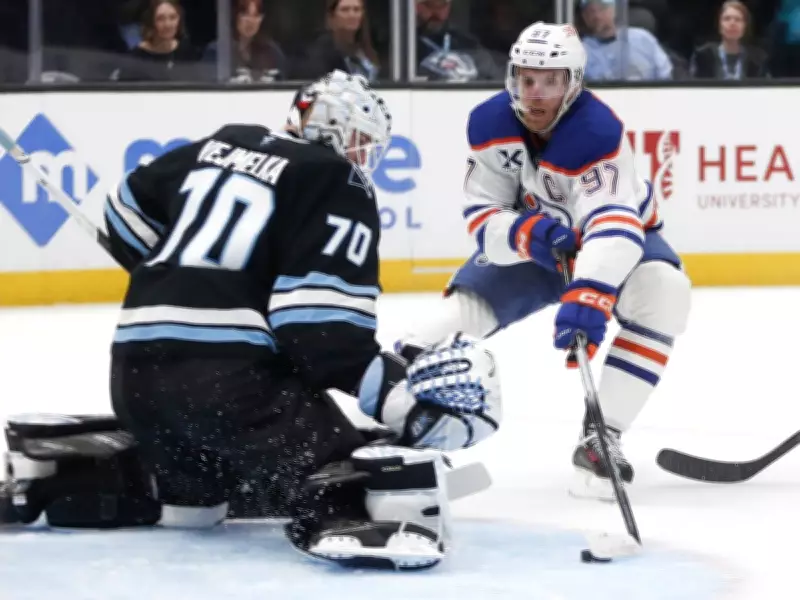
Edmonton Oilers' Playoff Readiness Under Scrutiny After Defensive Meltdown
The Edmonton Oilers' postseason aspirations have hit a significant roadblock following a concerning 6-5 overtime loss to the Utah Mammoth. This defeat, characterized by defensive lapses and poor decision-making, has cast serious doubt on whether the team is truly prepared for the intense demands of playoff hockey.
A Game of Missed Opportunities and Defensive Breakdowns
Tuesday night's contest in Salt Lake City exposed fundamental flaws in the Oilers' approach. Despite building three separate leads throughout regulation, Edmonton repeatedly surrendered advantages through careless play. The game's conclusion proved particularly damaging—a tripping penalty by Matt Savoie just 25 seconds into overtime created a power play opportunity that Utah converted a mere 33 seconds later for the decisive goal.
This marked the second consecutive game where Edmonton's defensive structure completely collapsed, with the team allowing 11 total goals across their last two outings. Such porous defense directly contradicts what teams typically emphasize during the crucial final stretch of the regular season.

Beyond Missing Stars: Systemic Issues Emerge
While the absences of offensive weapons Leon Draisaitl and Zach Hyman certainly impacted scoring potential, Tuesday's problems extended far beyond goal production. The Oilers displayed alarming carelessness with puck management and defensive positioning throughout the contest.
Specific breakdowns included:
- JJ Paterka scoring completely uncontested on Utah's first shot of the game
- Evan Bouchard committing two costly turnovers that led directly to partial breakaways
- A soft outlet pass from Jason Dickinson resulting in Nick Schmaltz's goal from between the circles
- A shorthanded breakaway goal surrendered by the penalty kill unit
"This wasn't the Oilers trying to shut Utah down with stifling defense," observed analysts. "This was reminiscent of November hockey—trying to outscore fundamental mistakes rather than eliminating them."
Silver Linings Amid the Defensive Chaos
Despite the overall disappointing performance, Edmonton did demonstrate resilience in responding to adversity. The team consistently answered Utah goals with quick strikes of their own:
- Curtis Lazar tied the game just 11 seconds after Utah took a 1-0 lead
- Vasily Podkolzon restored Edmonton's advantage 47 seconds after Logan Cooley tied the game 3-3
- Colton Dach, returning from injury, gave Edmonton a 5-4 lead early in the third period after Utah scored shorthanded
These timely responses from depth players provided brief momentum shifts and demonstrated offensive capability beyond the team's usual scoring leaders.
Special Teams Struggles Compound Problems
The power play unit continued its recent struggles, managing just one goal that resulted primarily from Connor McDavid's individual effort rather than structured play. More concerning was the shorthanded goal surrendered late in the second period—a critical mistake that erased momentum.
With only two power play goals in their last 20 opportunities over nine games, Edmonton's special teams performance has become a significant liability. As the team battles for Pacific Division positioning, this deficiency could prove decisive in tight postseason matchups.
Playoff Implications and Urgent Adjustments Needed
With the regular season winding down, teams typically focus on two primary objectives: securing optimal playoff positioning and refining their game for postseason intensity. The Oilers' performance in Utah addressed neither priority effectively.
The loss raises legitimate questions about whether Edmonton can summon the disciplined, defensively responsible hockey required for playoff success. While offensive firepower remains impressive, Tuesday's game demonstrated that outscoring problems becomes increasingly difficult against playoff-caliber opponents who capitalize on defensive mistakes.

As the postseason approaches, Edmonton must address these systemic issues quickly. The margin for error shrinks dramatically in playoff hockey, and teams cannot afford the kind of sloppy, undisciplined play that characterized their performance against Utah. Whether the Oilers can make these necessary adjustments will determine their fate in what promises to be a challenging playoff journey.