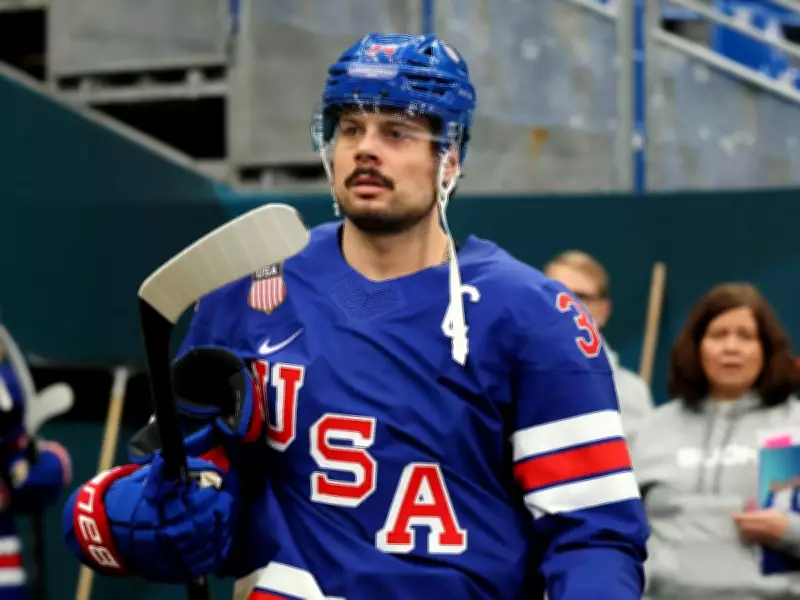
Maple Leafs Dressing Room Divided as U.S. Captain Auston Matthews Leads Olympic Charge
The Toronto Maple Leafs dressing room will once again be split along national lines during Sunday's Olympic gold-medal hockey game, with American captain Auston Matthews at the center of the international rivalry. As Team USA prepares to face Canada in the championship match at the Milano Cortina 2026 Winter Olympic Games, the Maple Leafs organization finds itself in a unique position with seven American players on their roster, including their own captain wearing the red, white, and blue for his country.
Team Unity Tested by International Loyalties
Coach Craig Berube has adjusted the team's Sunday practice schedule to allow players to watch the early morning game together at the Ford Centre, while a separate fan watch party will be held at Scotiabank Arena. "Having our captain being their captain and leading them this far is exciting," Berube acknowledged, revealing his own divided loyalties as a Canadian cheering for his American players. "I'm torn a bit. The games have been tight. It's been good hockey."
The locker room dynamic reflects the broader hockey rivalry between the two North American nations, with twelve Canadian players on the Leafs roster creating what winger Matthew Knies describes as "pretty evenly divided" allegiances. Knies anticipates plenty of Canadian chirping from teammate Scott Laughton during the highly anticipated matchup.

Matthews Embraces Dual Leadership Role
Auston Matthews continues his leadership role for Team USA, building on his performance in last year's 4 Nations Face-Off loss to Canada. His presence on the international stage has created a unique situation for the Maple Leafs organization, with teammates expressing both support and competitive spirit toward their captain's Olympic ambitions.
Wisconsin-born defenceman Jake McCabe shared a telling family anecdote about the rivalry's personal dimensions. "My kid comes home with a Canada flag tattooed on his cheek," McCabe revealed after Saturday's practice. "I laughed about that. We'll be wiping that one off and putting an American one on." McCabe plans to wear his Matthews' shirt on Sunday, emphasizing the significance of Olympic competition for growing the game internationally.
Historical Precedents of Leafs Captains in International Play
The current situation echoes previous Maple Leafs captains who thrived on the international stage, though with different outcomes. Mats Sundin led Sweden to Olympic gold in 2006, scoring eight points in eight tournament games despite some criticism back in Toronto where the Maple Leafs missed the playoffs that season.
Darryl Sittler's 1976 Canada Cup performance provides another historical parallel, with the Leafs captain tying for second in tournament goals before scoring the dramatic overtime winner against Czechoslovakia. Sittler's strategic understanding of opposing goaltender Vladimir Dzurilla's tendencies proved crucial in that championship moment, much as current players study their Olympic opponents.
Building Anticipation for Best-on-Best Competition
McCabe expressed enthusiasm for the Olympic tournament's competitive level, noting that "once it got to the medal round, it's been great, what all hockey fans wanted in best-on-best competition." He acknowledged Canada's historical dominance while expressing hope that Team USA could "bring home gold in a big game."
The provincial government's decision to encourage public schools to show Friday's Canada-Finland semifinal underscores the broader cultural significance of Olympic hockey in Canada. This institutional support creates additional layers to the rivalry that plays out in professional dressing rooms and family homes alike.
As Sunday's gold-medal game approaches, the Maple Leafs organization embodies the complex loyalties of professional hockey in an international context, with personal relationships, team dynamics, and national pride all converging around the Olympic competition that has captured the attention of hockey fans across North America and beyond.