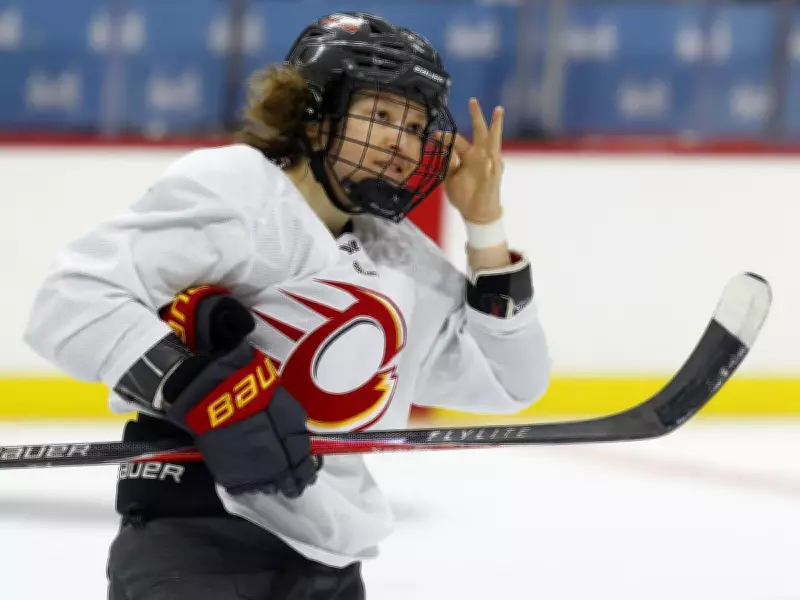
Even if Fanuza Kadirova's English isn't yet strong enough to hold a conversation, her Ottawa Charge teammates say she speaks hockey on the ice. The Russian forward has seamlessly integrated into the team, using the universal language of hockey to communicate and excel.
On-Ice Chemistry Overcomes Language Barriers
Kadirova may still rely on nods, smiles, and her Google Translate app in the locker room, but on the ice, she is fluent. Her 11 goals in 30 games this season underscore her impact, and she has carried that momentum into the playoffs. With the best-of-five semifinal series against the Boston Fleet tied 1-1, Kadirova has proven to be a difference-maker.
“Hockey is our language, so it’s easy on the ice,” said forward Rebecca Leslie. “We just make plays, and she’s a great player, so she can make those plays, and then we do our best to translate when needed.”

Transition from Russian League to PWHL
The 28-year-old from Kukmor spent 12 seasons in the Russian women’s hockey league before declaring for the PWHL draft last season. Women’s hockey in Russia emphasizes high-finesse, technical puck movement, a stark contrast to the intensely physical, high-intensity game in the PWHL. Kadirova was among the first Russian-born players to make the move to North America, facing legitimate questions about how her game would translate.
Ottawa Charge general manager Mike Hirshfeld acknowledged the challenge after drafting Kadirova in the sixth round. “She’s a goal scorer,” Hirshfeld said in a June 25, 2025 press release. “She’s going to have to deal with the physicality of this league, but we think the upside of where we picked her in the sixth round is really high.”
Silencing Doubts with Performance
With 30 PWHL games under her belt, Kadirova has silenced those doubts. She finished with the third-most goals on the team in the regular season while thriving under the league’s physical demands, averaging just over a hit per game. “All year, she’s just gotten stronger and stronger,” said Charge head coach Carla MacLeod. “She’s a player. She likes the physicality, she likes the speed, she likes to shoot, and we’ve seen the benefits of those ingredients throughout the season, and she’s just a hoot. Her energy is so infectious.”
Off-Ice Adaptation and Team Bonding
Off the ice, the transition has been harder, as Kadirova arrived in Ottawa with very few English words. However, her teammates see it as a unique opportunity to learn each other’s languages. “I’m trying to learn more (Russian) now actually, not as a joke,” said Charge forward Michela Cava, who has frequently played on the same line with Kadirova since coming to Ottawa in a January trade that sent Anna Shokhina to Vancouver.
Kadirova’s trademark hairstyle has become part of her PWHL identity, and her infectious energy has made her a beloved figure in the locker room. As the playoffs continue, her ability to speak hockey fluently ensures she remains a key asset for the Ottawa Charge.