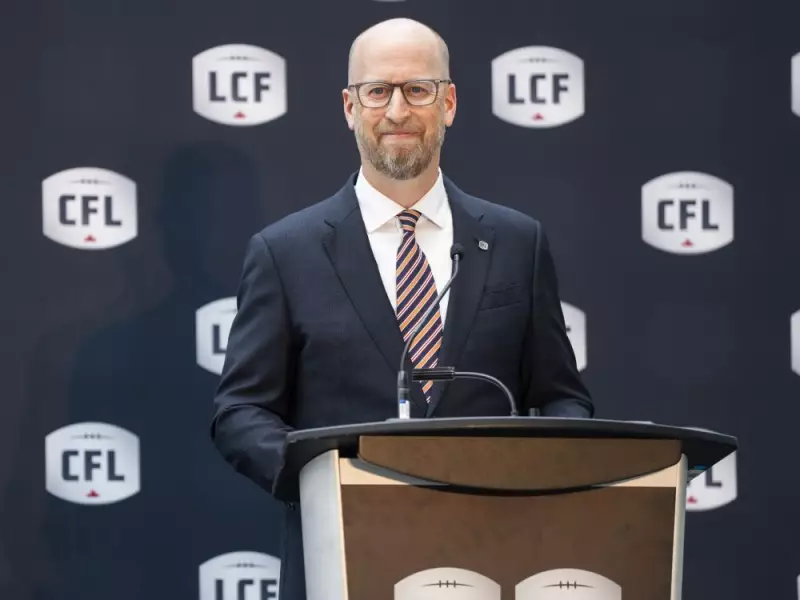
The Canadian Football League is considering its most significant set of rule changes in years, with a bold proposal to eliminate the possibility of tie games during the regular season. Commissioner Stewart Johnston unveiled the recommendations during the league's winter meetings in Calgary, outlining a future where every game has a decisive winner.
New Overtime Format to Decide Games
The central proposal from the CFL rules committee aims to abolish ties. Starting this year, if a game remains deadlocked after the existing overtime format, a new "alternating play" system from the three-yard line would be used until one team scores and the other fails. Commissioner Johnston acknowledged that ties are rare—only four have occurred since 2016, with two happening in 2024—but stated the league's position clearly: "no one likes a tie."
The current overtime rules, which grant each team a maximum of two possessions from the opponent's 35-yard line, would remain the first step. The new alternating-play showdown would only be triggered if the score is still even after those possessions.

Additional Proposals for Game Flow and Field Size
The committee didn't stop at overtime. A second major recommendation involves speeding up the final three minutes of each half by implementing a 20-second play clock, replacing the 35-second clock set to be introduced this season. Johnston emphasized officials will be encouraged to run this critical period more efficiently.
A third change would see the ball placed at the 40-yard line instead of the 30 if a kick goes through the end zone or hits the upright. All three proposals require approval from the CFL's board of governors.
Further changes are already locked in for the 2026 season. The single point, or "rouge," will no longer be awarded for missed field goals, punts, or kickoffs that travel through the end zone. A single will only be given if a returner fields the ball in the end zone and is tackled or kneels before advancing it out.
Major Field Changes Coming in 2027
The most dramatic alterations are scheduled for 2027. The league plans to shorten the field from 110 yards to 100 yards and reduce end zones from 20 yards to 15 yards. Additionally, goalposts will be moved from the goal line to the back of the new end zones. These changes represent a fundamental shift in the CFL's playing surface.
Johnston also addressed other league business. He set a deadline to secure a new broadcast agreement before the 2026 season kicks off, as the current deal with TSN expires after that year. He expressed a desire to see a 10th team join the league by 2030.
Discussions also covered the CFL's replay centre, with a goal to reduce its use for non-egregious errors to improve game flow. The league is also leaning towards continuing its season during the 2028 Los Angeles Olympics, where CFL players may represent Canada in flag football, though details are still being finalized.
Finally, the league's playoff format is under review. Johnston highlighted a focus on ensuring the regular season remains meaningful while examining the structure that currently allows a team to win just one playoff game and reach the Grey Cup. "More to come on that," he stated, indicating further evolution for Canada's iconic football league is on the horizon.