Canucks Urged to Build Ice Rink Legacy Beyond Britannia Complex
While fans and politicians debate the Vancouver Canucks' proposed practice rink at the Britannia complex, a more pressing issue is being overlooked: the city's critical shortage of ice rink capacity. According to local minor hockey associations, the team should aim for a broader legacy by addressing Vancouver's decades-long stagnation in ice facilities.
The Real Need: More Ice, Not Just a Practice Rink
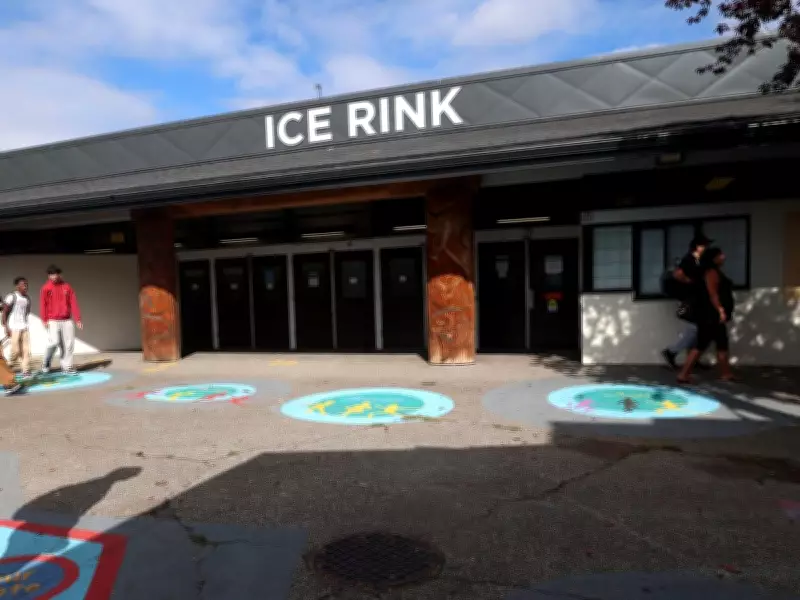
Levi Higgs, president of the Vancouver Minor Hockey Association (VMHA), emphasizes that the idea of a four-storey building attached to Britannia Rink elicits little excitement from youth hockey organizations. "What they need is ice," he states, noting that Vancouver's ice rink capacity has remained essentially unchanged for half a century. The VMHA, which oversees boys' youth hockey across east Vancouver, relies heavily on Britannia for over a quarter of its ice time, with the Agrodome as its other main facility.
However, scheduling conflicts have arisen since the Agrodome became the training base for the Vancouver Goldeneyes, blocking morning slots crucial for minor hockey. "They upgraded, which is great, but then they blocked off 7 a.m. till 3 p.m. for a month so we couldn't get our schedule sorted out," Higgs explains. This has forced the association to consider turning away children next year due to a lack of available ice time.

Potential Conflicts and Infrastructure Challenges
If the Canucks were to move into Britannia, their practice schedule—typically between 10 a.m. and 1 p.m.—might not directly conflict with minor hockey. However, weekend events at Rogers Arena could force the team to use Britannia, potentially displacing youth games. "What would the contract say?" Higgs wonders. "What is their ability to kick us out? You can work around skills sessions and practises, but you can't be moving game times."
Beyond scheduling, infrastructure issues pose significant hurdles. Higgs, who previously served on the Britannia Community Centre board, points out that a major B.C. Hydro duct runs along the south side of the rink, complicating any expansion. Additionally, the complex involves multiple stakeholders, including the school board, park board, and community board, making coordination difficult.
Opportunities for a Lasting Legacy
Higgs suggests that the Canucks could pursue more impactful solutions. For instance, building a multi-sheet facility at the PNE site—such as replacing the Agrodome with a fourplex or adding a rink where the racetrack stands—could significantly boost capacity. He notes that Burnaby and Surrey have successfully added public rinks, while Vancouver lags behind.
"One of the worst investments you can do is to build a new ice plant but have just one rink," Higgs remarks, citing the Richmond Oval's efficient two-rink setup as a model. By investing in multi-sheet complexes, the Canucks could enable Vancouver to host youth hockey tournaments, fostering goodwill and strengthening community ties.
Ultimately, the call is for the Canucks to think bigger. Rather than focusing solely on a practice rink at Britannia, the team has the opportunity to leave a lasting legacy by addressing the city's ice shortage and supporting the next generation of hockey players.