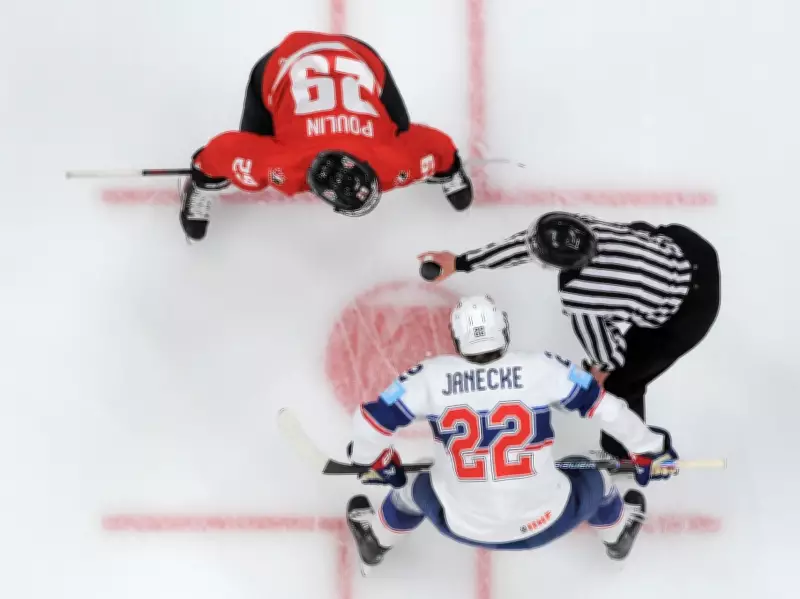
Beyond Milan-Cortina: Why Canadians Should Worry About the Americans in Women's Hockey
Mounting data is beginning to back up long-held concerns that the U.S. hockey development model has made major strides against Canada, potentially reshaping the balance of power in women's international hockey. As the Milan-Cortina Winter Olympics approach, American successes both on the ice and in registration rolls present an alarming trajectory for Canadian fans accustomed to dominance in the sport.
The Infrastructure Divide: Utah vs. Ottawa
In Salt Lake County, Utah, home to over 1.2 million residents, parents interested in signing their children up for youth hockey are directed to just three local ice rinks. Aly Mossberg, a high-scoring 14-year-old, practises three times weekly with her all-girls team, but on most nights, they only access half a sheet of ice, sharing with another team squeezed into the other half.
This contrasts sharply with Ottawa, a Canadian city of comparable size, where teams might utilize more than two dozen facilities, with competitive teams often skating on a full sheet for an hour or longer. The American approach, born from necessity in emerging hockey centres like Utah, has fundamentally reshaped practice plans.

Adapting Through Innovation
In Utah and similar U.S. regions, limited ice availability has fostered innovative training methods. Teams emphasize three-on-three scrimmages, small area games, and intensive battle drills that maximize limited space. "It pushes you to work harder to get the puck," explained Melissa Mossberg, Aly's mother and vice-president of girls' hockey for the Utah Amateur Hockey Association.
Many hockey experts argue this adaptive approach—both in tactical development and growing interest—is fundamentally reshaping women's hockey at the highest levels. The constrained environment has inadvertently created more competitive, battle-tested players who excel in tight spaces.
The Numbers Tell a Concerning Story
According to data from the 2024-25 season, Canada maintains a lead with 114,758 female players in registered programming. However, the United States follows closely with 98,000 women and girls on ice—a difference of fewer than 17,000 skaters that continues to narrow annually.
The competitive trendline has become increasingly difficult to ignore. The Americans have captured gold in seven of the last ten International Ice Hockey Federation world championships. Most recently, in December 2025, the U.S. completed a decisive four-game sweep of Canada in a pre-Olympic series, outscoring their rivals 24-7. This included a particularly sobering 10-4 victory on Canadian soil in Edmonton.
Hockey Canada's Response and American Growth
Hockey Canada has acknowledged this significant shift in the competitive landscape. The organization recently launched a sweeping new strategy to respond to the growing American threat, but even its most optimistic projections suggest meaningful results may still be a decade away.
Meanwhile, the United States shows little sign of slowing its momentum. Melissa Mossberg's personal experience illustrates this dramatic growth: when she played in the 1990s, she was one of just five girls playing hockey in the entire state of Utah. Today, 5,618 girls and women are registered to play in Utah alone, including her daughter.
"We have that problem now where there's too many girls in the girls' locker room," Mossberg noted with pride. "We have to find another space for them, and I love that."
The Cultural Perspective
Despite these gains, Team USA captain Hilary Knight maintains a characteristically humble perspective, deflecting suggestions that her side holds the upper hand over its long-standing hockey rival. "I always feel like we're the underdogs in everything," Knight stated.
This isn't false modesty but rather reflects an understanding of hockey's place in American culture compared to its central role in Canadian identity. "We're still trying to grow the game," Knight explained, "and we're this very niche sport."

Yet this underdog mentality, combined with innovative approaches born from resource constraints and explosive growth in non-traditional hockey markets, has positioned the United States as Canada's most formidable challenger in women's hockey—a reality that Canadian fans and officials must confront as international competition intensifies.