Team Canada's Top Talent Roars in Win, But Does Team Have Depth to Beat USA Women?
Team Canada's women's hockey squad has established a formidable legacy in Olympic competition, securing five out of seven gold medals since 1990, including a triumphant victory in Beijing in 2022. However, in recent World Championships, the narrative has shifted, with Canada claiming only one of the last three titles while the United States women's team captured the other two. This sets the stage for an intriguing question as the Milano-Cortina Olympics approach: can Canada clinch a sixth gold medal, or will depth issues hinder their quest against a relentless American rival?
Dominant Opening Performance Against Switzerland
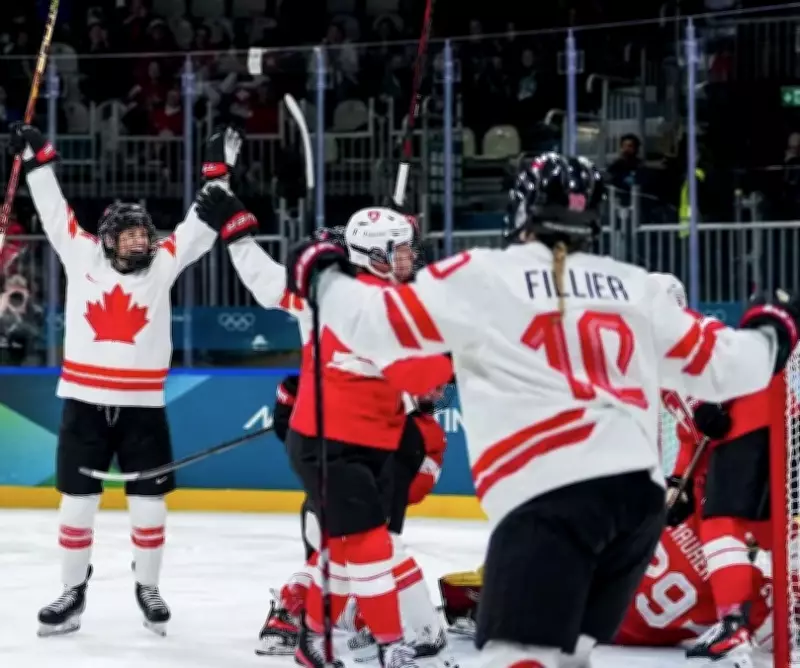
In their opening game of the tournament, Team Canada delivered a commanding 4-0 victory over Switzerland, showcasing offensive prowess that sliced through the Swiss defense with precision. The statistics were overwhelmingly in Canada's favor, with 34 Grade A shots compared to just four for Switzerland, and a subset of more dangerous 5-alarm shots standing at 19 to two. This performance highlighted the team's top-tier talent but also raised questions about overall roster depth.
Standout Players and Line Combinations
The game revealed several key strengths and areas for improvement within the Canadian lineup:

- Sarah Fillier emerged as a dominant force, contributing significantly to both even-strength and power play opportunities by helping create numerous Grade A shots.
- The top line featuring Laura Stacey, Marie-Philip Poulin, and Julia Gosling struggled in 5-on-5 play, prompting coaches to make adjustments during the game. Finding linemates who can better connect with Poulin on the attack will be crucial for success in this tournament.
- Veteran players like Natalie Spooner, who scored and provided effective screens on the power play, demonstrated that experience remains a valuable asset, with potential for increased ice time as the tournament progresses.
- Defensively, Renata Fast and Claire Thompson impressed with their offensive contributions, though the defensive corps faced limited testing against Switzerland.
Power Play Excellence and Goaltending Reliability
Both of Canada's power play units proved outstanding, each finding the back of the net. Poulin excelled as the maestro on the top unit, winning faceoffs and facilitating scoring chances, while Spooner's presence in front of the net created significant opportunities. In goal, Emerance Maschmeyer made several critical saves when the game remained close, showcasing reliability despite facing fewer shots due to Switzerland's strong goaltending and Canada's puck luck.
Depth Concerns and Strategic Implications
A pressing issue for Team Canada is the performance of bottom-end players, who struggled to generate offensive pressure against Switzerland. This raises concerns about whether the team can effectively deploy four lines in crucial matchups against the United States. While many players are accustomed to substantial ice time with their club teams, relying heavily on three lines in key games presents a strategic risk if the USA utilizes a deeper rotation.
The coaching staff must carefully evaluate line combinations and ice time distribution to optimize both star power and roster depth. As the tournament advances, adjustments such as promoting Spooner or refining line chemistry will be essential to maintaining competitiveness against a well-rounded American squad.
Looking Ahead to Milano-Cortina
With the Olympics on the horizon, Team Canada's victory over Switzerland serves as both a confidence booster and a reality check. The team's top talent is undeniable, but sustaining success against the United States will require more than just star performances. Addressing depth concerns and maximizing contributions from every line will be pivotal in the pursuit of a sixth Olympic gold medal.