Canada's Olympic Hockey Dream Ends in Overtime Agony
The look on Brad Marchand's face told the entire story. This game meant everything. Following Canada's devastating 2-1 overtime loss to the United States in the gold medal final of men's hockey at the Milan-Cortina 2026 Olympics, Marchand was barely holding his emotions together during a brief post-game scrum.
A Game of Missed Opportunities
Canada attempted to mount another comeback for the third consecutive game, but this time it proved to be a bridge too far. The Canadians played what many considered one of the best games ever witnessed, dominating possession and setting the pace for much of the contest. They had assembled what appeared to be the perfect roster—a blend of veteran leadership and younger stars in their prime.
Yet despite creating a mountain of scoring chances, Canada couldn't convert when it mattered most. Two critical mistakes ultimately cost them the championship, and those moments will be remembered long after the silver medals are stored away.

MacKinnon's Personal Anguish
For Nathan MacKinnon, the disappointment will linger for a considerable time. Known as a big-game performer throughout his career and even earlier in this tournament, MacKinnon struggled on Sunday. He committed a pair of misplays that directly led to both American goals, and most painfully, he missed a wide-open net in the third period that could have changed the game's outcome.
"Obviously pretty sad, disappointed," MacKinnon managed to say after the final whistle. "Just couldn't finish, didn't have that touch tonight. I missed a wide-open net."
The dejected forward remained on the ice for nearly twenty minutes after the medal ceremony, a solitary figure contemplating how everything had unraveled. His anguish was palpable as he reflected on what might have been.
Collective Responsibility
Canadian captain Sidney Crosby, who missed the game due to a leg injury, emphasized that the loss was a collective failure rather than the result of any single play. "We all feel that way," Crosby said regarding MacKinnon's disappointment. "Being close to Nate, knowing what he puts into it, what it means to him. But honestly it means so much to everybody in that room, players, staff, you name it. It's not about that one play. We had so many opportunities. We did so many good things."
Hockey players often speak about playing "the right way," and there's no doubt Canada executed their game plan perfectly throughout the gold medal contest. They controlled play, created numerous scoring chances, and demonstrated why they were considered the tournament favorites. Yet despite their superior performance for long stretches, they couldn't secure the victory when it mattered most.
The Final Moments
MacKinnon described watching Jack Hughes' winning goal slide into the net as particularly heartbreaking. "It was very sad. It felt sad," he recalled. The Canadian forward had been unable to control the puck in his own end moments before Hughes capitalized, and suddenly the game was over. Instead of celebrating a gold medal, MacKinnon and his teammates were left with silver.
"It felt like a really big opportunity slipped away as it did," MacKinnon lamented. "It's going to be a long time before we can try to get this one back. Obviously with a much different team, I'm sure. It's just sad, for sure."
Historical Context and Future Prospects
This loss stands in stark contrast to Canada's victory in the 4 Nations final just one year earlier, a game where some argued they weren't necessarily the better team but still emerged victorious. The Milan-Cortina defeat will force Canadian hockey officials and players alike to confront difficult questions about their Olympic program and competitive readiness moving forward.
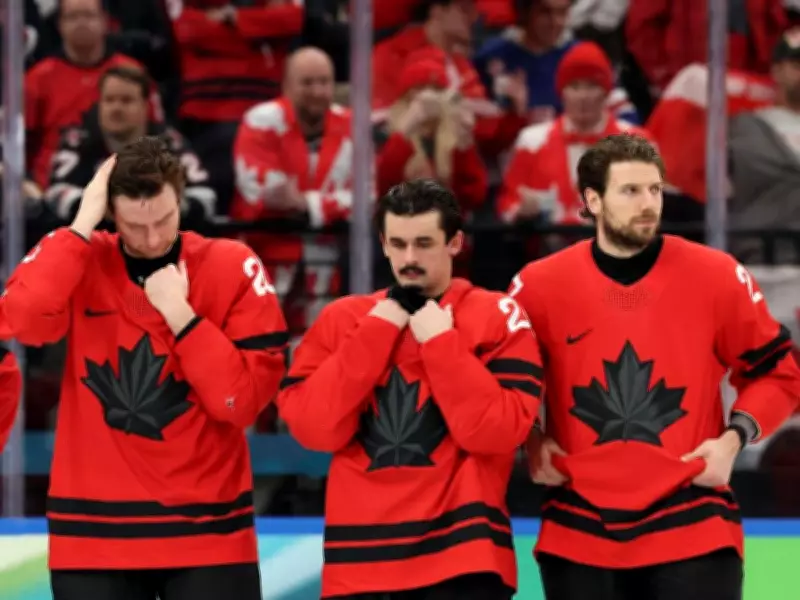
As the Canadian players—including Thomas Harley, Seth Jarvis, and Shea Theodore—awaited their silver medals during the post-game ceremony, the disappointment was visible on every face. They had come so close to Olympic glory, only to see it slip away in the most heartbreaking fashion imaginable.