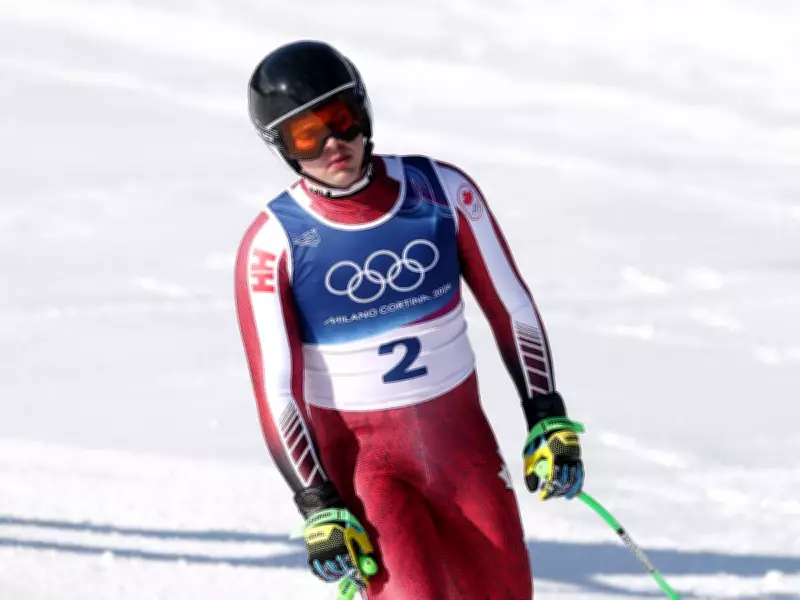
Canada's Alpine Ski Team Leaves 2026 Olympics Without Medals as Organization Struggles to Compete
Canada's alpine skiing team has returned from the 2026 Winter Olympics in Milano Cortina without a single medal, marking a significant disappointment for a nation with winter sports heritage. This outcome represents a stark contrast to the ambitious goals set by Alpine Canada just five years earlier.
Ambitious Goals Meet Harsh Reality
In 2021, Alpine Canada unveiled a comprehensive five-year plan with a clear objective: finish among the top five nations in the Olympic medals table at the 2026 Games. This goal appeared achievable following a record-breaking performance at the 2023 world championships, where Canadian skiers earned four medals and placed fifth overall. However, the Olympic reality proved far different.
The Canadian team's best results at Milano Cortina included Jack Crawford's ninth-place finish in the men's downhill and Val Grenier's thirteenth-place result in the women's giant slalom. Grenier also partnered with Laurence St-Germain for a thirteenth-place finish in the team combined event. These performances did little to offset Grenier's disqualification in downhill and her failure to finish the super giant slalom.

Leadership Acknowledges Shortcomings
Therese Brisson, CEO of Alpine Canada, expressed mixed emotions about the team's performance. "As I look at the performances, I would say we've been competitive," Brisson stated. "It's just a little mistake here, a little mistake there. But there's no question we fell short of our objectives here because I think the difference coming into these Games is we were going for it. We wanted to win and two or three podiums were well within our reach."
Brisson continued, "What's clear to me is that some of the other nations have really been able to elevate over the last 12 months. And we just haven't been able to keep up and consistently have the speed needed to win on the day. So, really proud of the performance, but not satisfied. Not satisfied at all. And I think most of the athletes would probably say the same."
International Competition Intensifies
The medal table at the 2026 Olympics highlighted the growing gap between Canada and alpine skiing powerhouses:
- Switzerland dominated with four gold medals and nine total
- Italy, as host nation, earned two gold medals and five total
- United States captured two gold medals and four total
- Austria won one gold medal and four total
- Germany, Norway, and Sweden each secured two medals
- Even Brazil claimed its first Winter Olympic medal through Norwegian-born Lucas Pinheiro Braathen in the men's giant slalom
Canada's absence from the men's giant slalom race particularly underscored the team's struggles, a surprising development for a winter nation with skiing tradition.
Historical Context and Current Challenges
Canada has won just two alpine skiing medals in the past eight Winter Games, bringing the nation's total Olympic alpine medal count to only twelve. While Olympic success isn't the sole measure of achievement, it remains crucial for public visibility, government support, and corporate sponsorship.
Brisson identified specific areas needing improvement: "We have real strength in the women's tech events and the men's speed events. And my goodness, we've got a lot of work to do to rebuild some depth in the men's tech. We're starting to stretch into the women's speed, but we're not there yet."
Funding Disparities Create Competitive Hurdles
The financial challenges facing Alpine Canada have become increasingly significant. "The frustrating part is, we have athletes who have the potential, but it has turned into a bit of an arms race," Brisson explained, referring to funding disparities. "If we look at the top six nations, they have between two to four times the revenue that we have. And with the exception of the United States, who has as much travel as we do, those other (top) nations have about half the cost because they don't need to travel the way we do."

Developing athletes must compete on the Europa Cup tour, while senior national team members participate in the World Cup circuit—a lengthy season primarily based in Europe. This creates substantial expenses, particularly when the Canadian dollar performs poorly against other currencies. While Alpine Canada cannot control currency fluctuations, the organization has focused on revenue generation, increasing revenues by forty percent since Brisson's arrival in 2020.
The 2026 Olympic results have prompted serious reflection within Alpine Canada about how to bridge the gap with leading alpine nations and return Canada to Olympic alpine skiing prominence in future competitions.