Canada Settles for Para Hockey Silver Again as USA Secures Historic Fifth Gold
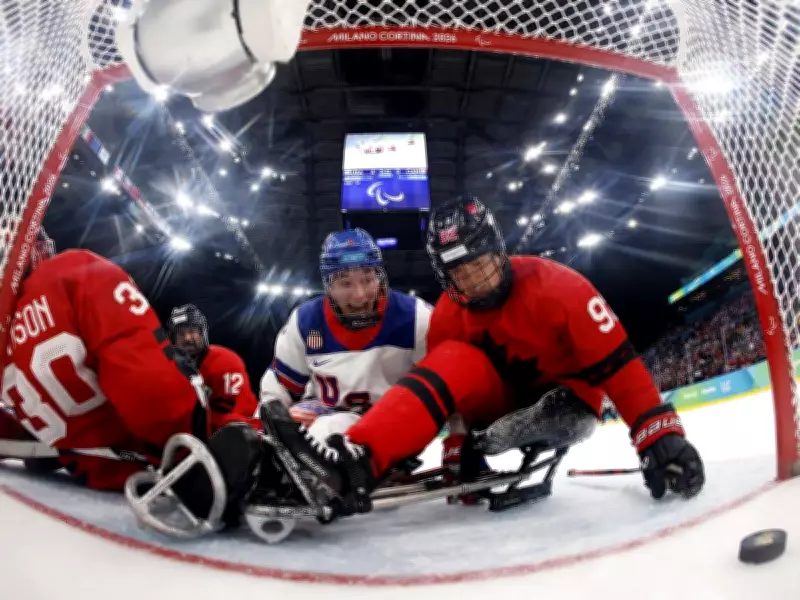
The United States para ice hockey team delivered a commanding performance on Sunday, defeating Canada 6-2 in the gold medal final at the Milano Cortina 2026 Winter Paralympic Games. This victory marks an unprecedented achievement, as the Americans become the first team to win five consecutive gold medals in either the Paralympics or Olympics.
A Hat Trick of Hockey Dominance
With this win, the USA completes a remarkable hockey hat trick at the international level. Their para ice hockey team joins the American women's and men's Olympic hockey teams, who also defeated Canadian opponents to claim gold medals earlier in the year. The only distinction in Sunday's championship match was that it concluded in regulation time, unlike the overtime thrillers that characterized the other gold medal hockey contests.
For Canada, this represents their third consecutive Paralympic silver medal in para ice hockey, continuing a pattern of coming agonizingly close to the top podium spot. The Canadian squad entered the tournament with gold medal aspirations but ultimately fell short against their perennial rivals.

Emotional Aftermath for Canadian Contenders
Canadian head coach Boris Rybalka expressed mixed emotions following the championship game. "Very proud, obviously," Rybalka stated. "We had one goal and that was win gold. Yeah, you play the game to give yourself the opportunity. When you were in that dressing room, you see the players. They wanted to win this one bad."
Canadian captain Tyler McGregor, who contributed six goals and eight assists throughout the tournament, sat breathless after the final buzzer sounded. "I love how we got to do this with this incredible group of people. They're unbelievable, man," McGregor reflected. "In these games it's important to get good starts, and we haven't been able to do that in the past two Paralympics. We got to find a way. They're a good team, but man, we have to attack them. We can't let the game come to us. We have to impose our will. In the moment, it's hard to reflect on what happened today. It's tough."
Defensive Dominance and Early Momentum
Sunday's championship game began with Canada showing early intensity, generating energy among the 11,000 spectators who created a roaring atmosphere at the Milano Santagiulia Ice Hockey Arena. However, the American defensive structure proved impenetrable, having allowed only 17 total shots against them across their four previous tournament games.
The game's momentum shifted decisively when Canada took a holding penalty within the first five minutes. Although the Canadian penalty killers performed admirably, clearing pucks with precision to neutralize the American power play, the relentless pressure eventually took its toll.
Midway through the first period, with Canada serving another penalty, American forward Jack Wallace capitalized on the opportunity. Following a chaotic sequence of scoring chances, Wallace fired a precise shot under the blocker of Canadian goaltender Corban Watson to establish a 1-0 lead for the United States.
The Americans continued to apply pressure throughout the opening frame, utilizing their exceptional speed to control the pace of play. By the five-minute mark of the first period, the shot count revealed a stark 10-1 advantage for the United States, highlighting their territorial dominance from the outset.
Historical Context and Future Implications
This victory extends the United States' unparalleled dominance in Paralympic para ice hockey, establishing a new benchmark for sustained excellence in winter sports. The American team's defensive discipline, offensive firepower, and championship pedigree proved too formidable for their Canadian rivals on this occasion.
For Canada, the quest for Paralympic gold in para ice hockey continues, with the team demonstrating remarkable consistency by reaching the championship game for three consecutive Paralympic cycles. The emotional responses from players and coaches indicate both pride in their silver medal achievement and determination to eventually claim the top prize in future competitions.