Olympic Curling Erupts in Controversy Between Canada and Sweden
The Milan-Cortina Winter Olympics witnessed an intense on-ice confrontation that has continued to generate discussion days after the initial incident. During Friday night's men's curling competition, Team Canada led by Brad Jacobs found themselves embroiled in a heated dispute with their Swedish counterparts, creating one of the most talked-about moments of the Games.
Allegations of Rule Violations Spark Tension
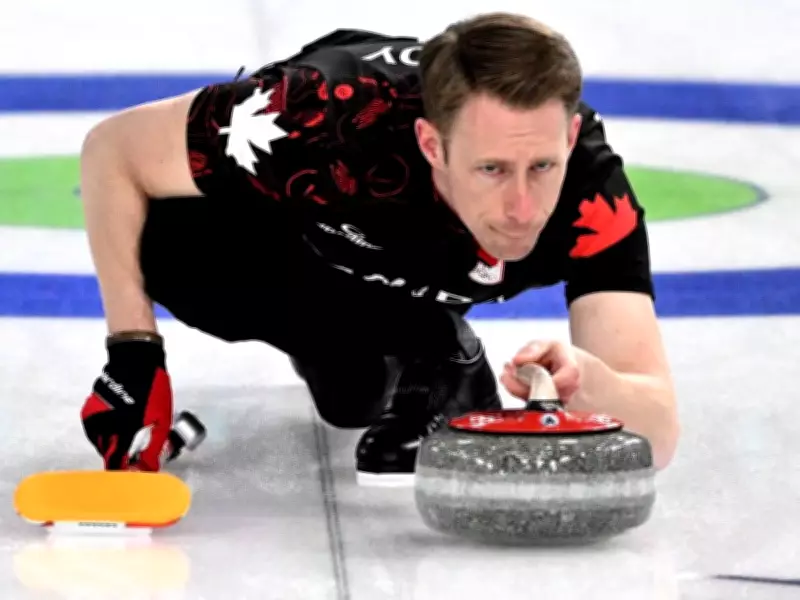
The controversy began when Swedish curler Oskar Eriksson, playing third for Team Niklas Edin, accused Canadian Marc Kennedy of committing a hog line violation. Eriksson claimed Kennedy had touched his stone after release, which would constitute a rules infraction in the sport of curling. This accusation immediately created tension between the two veteran players, both of whom have extensive Olympic experience and numerous medals to their names.
The situation escalated dramatically during the ninth end when Kennedy, wearing the standard lapel microphone required for Olympic curlers, directed profanity at Eriksson. The heated exchange was captured by broadcast equipment and quickly became public, putting both teams under intense scrutiny.

Official Response and Monitoring
In response to the allegations, both teams requested that officials monitor for hog line violations throughout the remainder of the match. This represented an unusual development in a sport that traditionally relies on self-officiating and the honor system. World Curling officials confirmed they had spoken with both teams and assigned game umpires to monitor deliveries at the hogline for three ends, following standard protocol for such complaints.
"The issue of second touches of the stone during delivery was brought to the umpire's attention," World Curling stated in an official release. "Officials spoke with both teams and set game umpires at the hogline to monitor deliveries for three ends, which is the official protocol following this type of complaint."
Despite the heightened scrutiny, officials reported that no actual hog line violations or stone retouches were observed during the monitoring period.
Post-Game Fallout and Player Reactions
Following the match, a visibly frustrated Marc Kennedy defended himself in the post-game media zone. The 2010 Olympic gold medalist insisted he had not broken any rules and expressed disappointment at being accused of cheating after his long career in the sport.
"I don't like being accused of cheating after 25 years on tour and four Olympic Games," Kennedy told reporters. He acknowledged his respect for Eriksson but felt betrayed by the accusation, which he considered unfounded.
The media scrum grew particularly contentious when a Swedish reporter questioned Kennedy about how he could profess respect for Eriksson while using such language on the ice. Kennedy responded defensively, asking the reporter about his background and questioning the personal nature of the inquiry.
Kennedy pointed out that heated exchanges and profanity occur regularly in other sports but aren't typically captured by microphones. He noted that curlers have advocated for a five-second delay on their microphones to prevent such moments from becoming public, though this measure hasn't been implemented.
Team Solidarity and Historical Context
Canadian lead Ben Hebert supported his teammate, expressing frustration with the situation while maintaining respect for the Swedish team. "We're friends with those guys, I'd buy them a beer any time no problem," Hebert stated, highlighting the complex relationship between competitors who often maintain friendships off the ice despite intense rivalries during competition.
Both Kennedy and Eriksson are decorated veterans of the sport. Kennedy won gold at the 2010 Vancouver Olympics, while Eriksson has made history as the first curler to win four Olympic medals. Their extensive experience and previous encounters added layers to the controversy, with both athletes having faced each other numerous times throughout their careers.
Broader Implications for Olympic Curling
The incident has raised questions about several aspects of Olympic curling:

- Microphone policies: The controversy has renewed discussion about whether curlers should have delayed audio or different microphone arrangements to allow for private conversations during heated moments.
- Self-officiating tradition: The request for formal monitoring represents a departure from curling's traditional honor system and could influence how future disputes are handled.
- Sportsmanship expectations: The public nature of the exchange has prompted discussions about appropriate conduct in a sport known for its gentlemanly traditions.
International Olympic Committee spokesperson Mark Adams confirmed the organization was aware of the exchange but indicated they had no direct involvement in the matter. He noted uncertainty about whether broadcast networks had filed complaints regarding the language used during the match.
As the Milan-Cortina Games continue, this controversy serves as a reminder of the intense pressures and emotions that accompany Olympic competition, even in a sport typically associated with decorum and tradition. The incident between Canada and Sweden has added an unexpected layer of drama to the curling competition, ensuring that all eyes will remain on the ice as the tournament progresses toward medal rounds.