Analyzing Arber Xhekaj's Reduced Role with the Montreal Canadiens
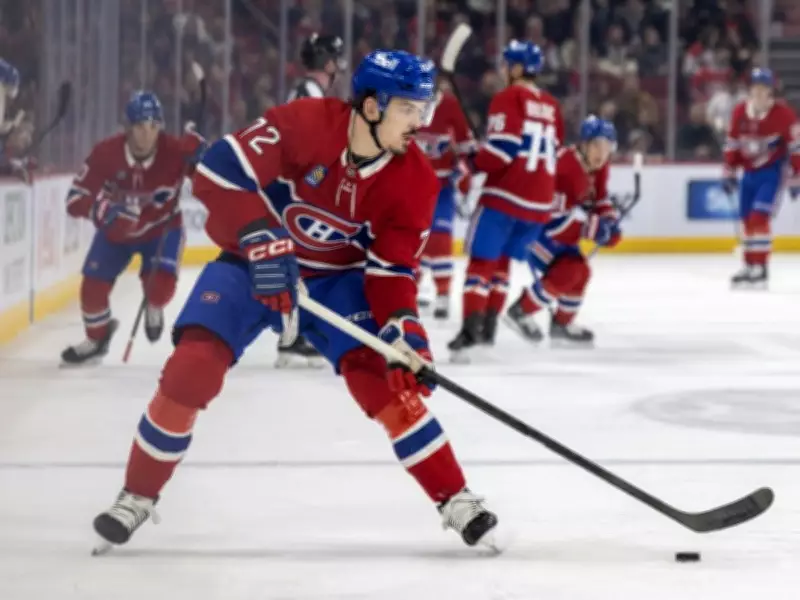
The limited ice time for Montreal Canadiens defenceman Arber Xhekaj has become a topic of discussion among hockey fans, but the situation reflects common NHL roster dynamics. As the sixth defenceman on a team with established top-four players, Xhekaj faces natural constraints on his playing opportunities.
The Numbers Behind the Minutes
Xhekaj's recent performances illustrate this reality clearly. During Thursday night's 7-3 victory over the Colorado Avalanche, he logged 13 minutes and 38 seconds of ice time. This followed a stretch where he played less than 10 minutes in four of the previous five games. His season average currently sits at 11 minutes and 32 seconds per game.
The return of Kaiden Guhle to the lineup has further impacted Xhekaj's opportunities. Guhle, who missed three months recovering from surgery for a partially torn adductor muscle, has reclaimed his position among the team's top defencemen. This leaves Xhekaj competing for limited minutes behind established players including Mike Matheson, Lane Hutson, Noah Dobson, and Guhle himself.

Special Teams Considerations
Special teams usage represents another significant factor in Xhekaj's reduced minutes. Throughout the current season, he has received minimal power-play time—just 12 seconds total—and only 15 minutes and 42 seconds on the penalty kill. This contrasts sharply with teammates like Alexandre Carrier, who averages 3 minutes and 11 seconds per game on the penalty kill alone.
Head coach Martin St. Louis appears to have specific defensive concerns about Xhekaj in certain situations, which influences his deployment decisions. Despite this, the coaching staff clearly values the 6-foot-4, 240-pound defenceman's physical presence, as evidenced by his limited healthy scratches this season.
Comparative NHL Context
Xhekaj's situation mirrors that of sixth defencemen across the league. During the same game against Colorado, Avalanche defenceman Keaton Middleton—occupying a similar roster position—played just 12 minutes and 58 seconds. This demonstrates how NHL teams typically allocate ice time, prioritizing their top defensive pairings in most game situations.
The Canadiens' defensive statistics further contextualize Xhekaj's role. The team's top four defencemen average substantial minutes: Matheson at 24 minutes and 46 seconds, Hutson at 23 minutes and 47 seconds, Dobson at 22 minutes and 45 seconds, and Guhle at 18 minutes and 25 seconds per game. With Carrier averaging 19 minutes and 35 seconds as the fifth defenceman, limited opportunities remain for Xhekaj in his current position.
Looking Beyond Individual Performance
While fans might question why a player with Xhekaj's physical attributes doesn't receive more ice time, the answer lies in roster construction and coaching strategy. The Canadiens have invested significant minutes in their top defensive pairings, creating a trickle-down effect for players in supporting roles.
Xhekaj's situation highlights how NHL teams balance defensive depth with optimal player deployment. His continued presence in the lineup—despite limited minutes—suggests the coaching staff values his specific contributions, even if those contributions come in measured doses throughout the game.