When Olympic Dreams Collide With Brain Science: The Ilia Malinin Story
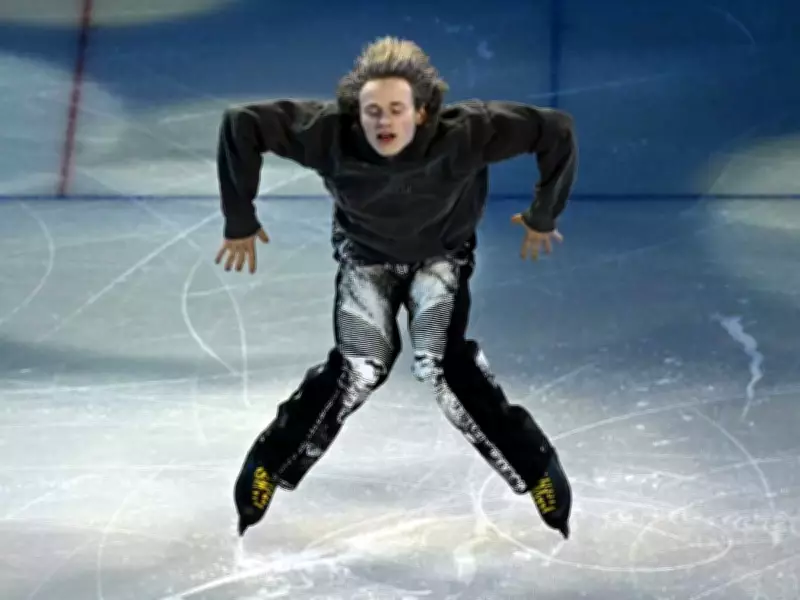
The 2026 Winter Olympics in Milano Cortina delivered countless memorable moments, but one stands out for its heartbreaking universality: the unexpected collapse of American figure skating sensation Ilia Malinin. Known globally as the "Quad God" for his unprecedented mastery of quadruple jumps, the 21-year-old entered the Games as the undefeated favorite for gold, only to falter spectacularly on the ice on February 13. His story, however, transcends sports, touching on a fundamental human experience that neuroscience is now beginning to explain.
The Olympic Pressure Cooker
Malinin's performance was anticipated as a coronation. For two and a half years, he dominated the sport, combining technical brilliance with daring artistry, including backflips and quads no other skater attempted. Yet, under the Olympic spotlight, his confidence evaporated. The ice seemed to betray him as he fell repeatedly, abandoned his signature jumps, and left the arena holding his face in visible anguish. "The pressure of the Olympics really gets to you," he confessed to reporters, echoing the confusion of millions who have faced their own high-stakes failures.
Monkeys, Minds, and Motor Skills
Why do we choke when it matters most? A groundbreaking study from neuroscientists at Carnegie Mellon University and the University of Pittsburgh offers compelling answers. Researchers implanted electrode-covered chips into the brains of three rhesus monkeys—named Earl, Nelson, and Ford—to observe neural activity during rewarded tasks. The monkeys were trained to move a cursor to a target on a screen, but when the reward escalated to "jackpot" levels, their performance deteriorated dramatically.

Earl, for instance, missed the target 11 out of 11 times under maximum reward conditions. The scientists discovered that excessive caution slowed the neuron activity essential for smooth motor movements. "The monkeys are choking by being overcautious," explained Aaron Batista of the University of Pittsburgh. This overattention to normally automatic actions creates a paralysis of analysis, a phenomenon co-researcher Steven Chase notes is visible "across the board... in sports and outside sports as well."
The Science of Choking: A Human Condition
This research identifies specific brain changes during high-pressure moments, building on earlier insights about overthinking. Rob Gray of the University of Birmingham emphasized that focusing too intently on routine motions "makes you mess up." For athletes like Malinin, whose skills are honed to unconscious perfection, the immense stakes of Olympic gold can trigger this neural slowdown, disrupting the fluidity that defines elite performance.
The study provides a biological basis for notorious sporting collapses, such as golfer Jean van de Velde's triple bogey at the 1999 Open Championship despite a three-stroke lead. It also offers solace: choking is not a moral failing but a programmed response. The brain is wired to falter under extreme pressure, a trait shared across primates.
Malinin's Path Forward
In the days following his Olympic disappointment, Malinin's troubling TikTok posts—"Sometimes I wish something bad would just happen to me" and "Nothing hurts more than trying your best and still not being good enough"—revealed the emotional toll. Yet, science suggests he should be kinder to himself. At 25, he will have another opportunity at the 2030 Winter Olympics in Nice, France, and remains the reigning world champion and his generation's most innovative skater.
His graciousness in defeat, congratulating his Kazakhstani competitor with "You deserve it," underscores his character. As neuroscience illuminates the mechanics of choking, it also reaffirms a timeless truth: resilience defines greatness. For Malinin and all who stumble under pressure, the key is not to avoid the fall, but to rise again, understanding that our brains, in their very design, sometimes set us up to blow the big moment.