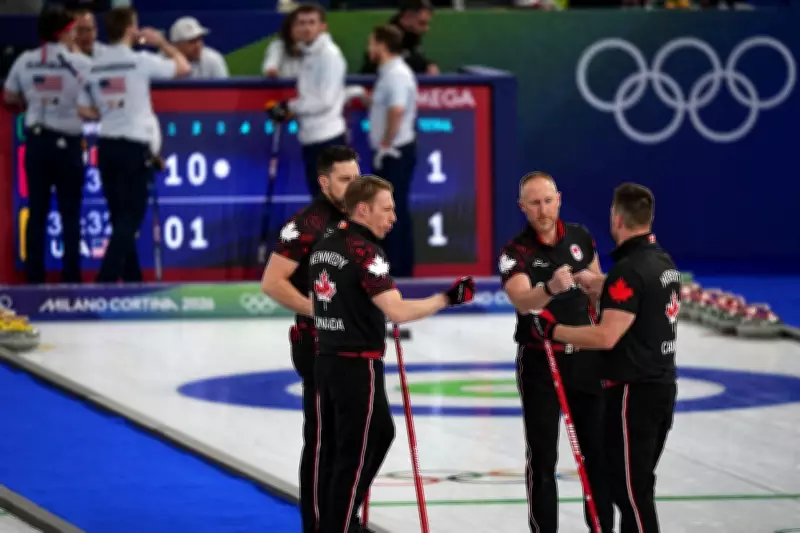
Team Jacobs' Salty Ritual: Smelling Salts Fuel Canada's Olympic Curling Charge
In the high-stakes world of Olympic curling, where precision and mental fortitude are paramount, Canada's Team Jacobs has carved out a distinctive pre-game routine that blends tradition with a potent sensory kick. At the 2026 Winter Olympics in Cortina d'Ampezzo, Italy, the team, comprising skip Brad Jacobs, Marc Kennedy, Brett Gallant, and Ben Hebert, has steadfastly adhered to their practice of using smelling salts before matches, a ritual they believe sharpens focus and energizes their performance on the ice.
The Science and Tradition Behind the Salty Kick
Smelling salts, historically used to revive consciousness, contain ammonium carbonate, which releases ammonia gas that irritates the nasal passages and lungs, triggering an inhalation reflex. This sudden intake of oxygen can increase alertness and heart rate, providing a brief but intense burst of energy. For athletes like Team Jacobs, this translates into heightened concentration during critical moments, such as the men's round-robin session against the United States on February 13, 2026.
The team's commitment to this routine underscores the psychological aspects of elite sports, where rituals can foster camaraderie and mental readiness. As Jacobs explained in a post-game interview, "It's about finding that edge, that extra bit of focus. For us, the salts are part of our preparation, a way to signal that it's game time." This approach highlights how small, personalized habits can contribute to the broader strategy of Olympic competition.

Olympic Context and Performance Impact
The 2026 Winter Olympics have seen Team Jacobs navigate a competitive field, with their smelling salts ritual becoming a talking point among fans and analysts. During their match against the U.S., the team's gestures and intense pre-game focus were captured in photographs, illustrating the seriousness with which they approach each session. This attention to detail is crucial in a sport where millimeters can determine victory or defeat, and the salts serve as a physical reminder to lock in mentally.
While some may view the use of smelling salts as unconventional, it aligns with a broader trend in sports where athletes employ various methods to optimize performance, from visualization techniques to specific warm-up routines. For Team Jacobs, this ritual is not just about the physiological effects but also about building a consistent pre-game environment that reduces anxiety and enhances team cohesion.
Broader Implications for Curling and Beyond
As curling gains popularity globally, the habits of top teams like Jacobs' can influence younger athletes and fans, showcasing the blend of tradition and innovation in modern sports. The team's adherence to this routine at such a prestigious event like the Olympics emphasizes the importance of mental preparation in achieving peak performance. It also sparks conversations about the role of sensory stimuli in athletics, with experts noting that such practices, when used responsibly, can be a valuable tool in an athlete's arsenal.
Looking ahead, Team Jacobs' journey at the 2026 Games will continue to be watched closely, with their smelling salts ritual serving as a symbol of their dedication and unique approach to the sport. Whether this edge translates into medals remains to be seen, but it undoubtedly adds an intriguing layer to their Olympic narrative.