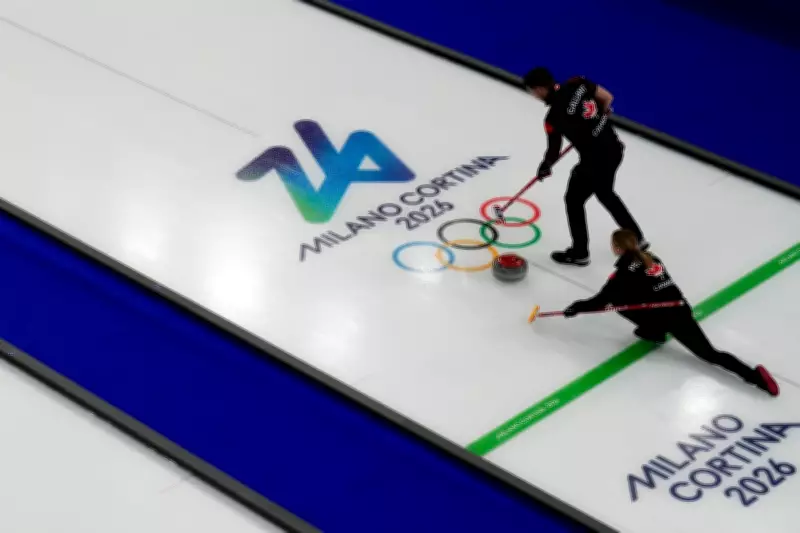
Canadian Curling Hopes Fade with Fourth Straight Olympic Defeat
The Canadian mixed doubles curling team, featuring Calgary's own Jocelyn Peterman and Brett Gallant, has encountered a significant setback at the 2026 Winter Olympics in Cortina d'Ampezzo, Italy. On February 8, 2026, the duo suffered their fourth consecutive loss during the round robin phase, falling to a determined Swedish squad. This troubling losing streak has placed Canada's playoff aspirations in serious jeopardy, with their chances now appearing slim at best.
A Disappointing Performance Against Sweden
The match against Sweden proved particularly challenging for the Canadian representatives. Despite their considerable experience and previous successes on the international stage, Peterman and Gallant struggled to find their rhythm against the Swedish team's precise shot-making and strategic gameplay. The loss marks a continuation of what has become a frustrating pattern for the Canadian curling contingent at these Games, leaving fans and analysts alike questioning what has gone wrong for the typically dominant nation in this sport.
Analyzing the Playoff Mathematics
With four consecutive defeats now recorded, the mathematical reality of advancing to the playoff rounds has become increasingly grim for Team Canada. In the competitive format of Olympic mixed doubles curling, where only the top teams progress beyond the round robin stage, each loss carries substantial weight. The Canadian team now faces the daunting task of winning their remaining matches while also relying on favorable outcomes from other games to keep their medal hopes alive—a scenario that curling experts describe as highly improbable given the current standings.

Historical Context and Future Implications
This disappointing performance represents a notable departure from Canada's traditional strength in Olympic curling competitions. Historically, Canadian curlers have consistently challenged for podium positions across multiple Winter Games, making this current struggle particularly surprising to observers. The outcome raises important questions about the future direction of Canadian curling development and preparation for international competitions. As the tournament continues, all eyes will remain on Peterman and Gallant to see if they can salvage some pride from what has thus far been a forgettable Olympic campaign.
The broader Canadian Olympic team will undoubtedly be monitoring this situation closely, as curling has long been a reliable source of medals for the nation at Winter Games. The performance of Peterman and Gallant serves as a reminder of the fine margins that separate success from disappointment at the highest level of international sports competition.