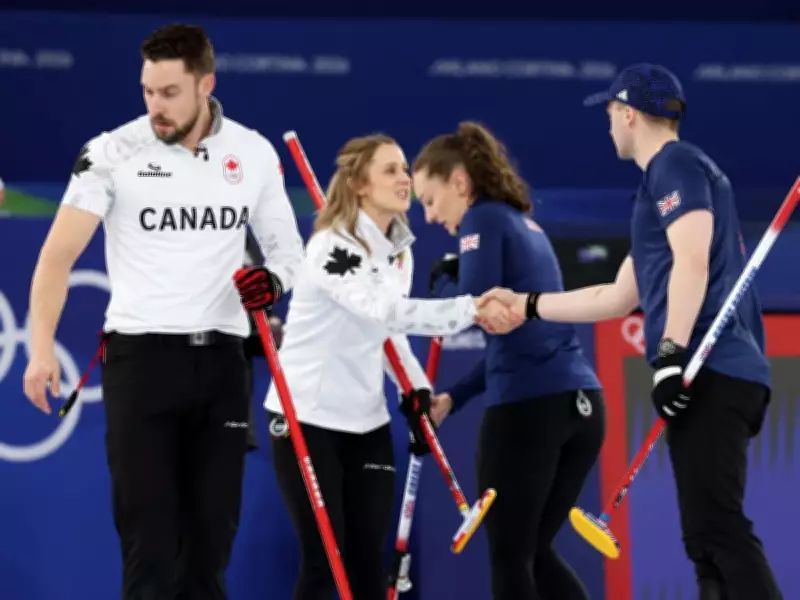
Canada's Olympic Mixed Doubles Curling Playoff Hopes Dim After Two Losses in Italy
The promising start for Canada's mixed doubles curling team at the 2026 Winter Olympic Games has taken a dramatic turn, with playoff aspirations now hanging in the balance after a challenging day of competition in Cortina d'Ampezzo, Italy. Jocelyn Peterman and Brett Gallant, who began the tournament with three consecutive victories, suffered back-to-back losses on Saturday, placing their advancement prospects in serious jeopardy with only three round-robin games remaining.
Perfect Start Gives Way to Unexpected Struggles
Following their flawless opening performance, the Canadian duo experienced what can only be described as a competitive free-fall during Saturday's matches. Their first setback came against the undefeated British team of Jennifer Dodds and Bruce Mouat, who secured a 7-5 victory. Later that same day, Peterman and Gallant fell to Estonia's Marie Kaldvee and Harri Lill by a score of 8-6, compounding their tournament difficulties.
Adaptation Challenges on Unfamiliar Ice Conditions
The Canadian curlers faced significant challenges adjusting to dramatically altered ice conditions that developed overnight. Following Friday's stone preparation aimed at increasing curl, the playing surface became remarkably straight—far straighter than anything the Canadians had previously encountered in international competition.

"It was kind of like going from your municipal golf course to the greens at the U.S. Open," Gallant explained to reporters, highlighting the dramatic shift in playing conditions. Peterman echoed this sentiment, noting "I don't know if we've ever played on ice that straight" and describing the visual adjustment as particularly difficult.
While the British team demonstrated quicker adaptation to the new conditions, building an early four-point lead that proved insurmountable, the Canadians struggled to find their rhythm despite eventually posting better overall statistics (80% effectiveness compared to Britain's 78%).
Performance Inconsistencies Compound Challenges
Gallant, typically recognized as one of the world's premier curlers, experienced an uncharacteristically difficult day during the second match against Estonia. Multiple errors in the second end allowed Estonia to steal two points, establishing a commanding 5-0 lead. A missed double-takeout in the third end extended Estonia's advantage further, creating a deficit from which Canada could not recover despite a late-game rally attempt.
The Canadian team's performance dipped below 50% effectiveness through the first three ends against Estonia—a level insufficient for mounting a successful comeback against determined opposition. Estonia ultimately secured their victory with a spectacular triple takeout by Kaldvee in the eighth end, demonstrating the precision required at this elite level of competition.
Playoff Implications and Path Forward
With their record now standing at three wins and two losses, Peterman and Gallant face increasing pressure as they approach the final stretch of round-robin play. The mixed doubles curling format at the Milano-Cortina Games features a nine-game preliminary round, with only the top teams advancing to medal contention. The Canadians must now regroup quickly, addressing both technical adjustments and mental resilience as they prepare for their remaining matches.
The situation underscores the unpredictable nature of Olympic competition, where early success provides no guarantee of continued advancement. As the tournament progresses, all eyes will be on whether Canada's curling representatives can rediscover their early-form brilliance or if their playoff hopes will ultimately slip away on the Italian ice.