Two consecutive disappointing losses have served as a stark reminder to the Toronto Raptors that despite significant progress this season, they remain far from being genuine championship contenders. Even within a relatively open Eastern Conference, Toronto's glaring deficiencies appear too substantial for this roster to mount a serious challenge for the title.
From Rebuilding to Relevance: A Season of Progress
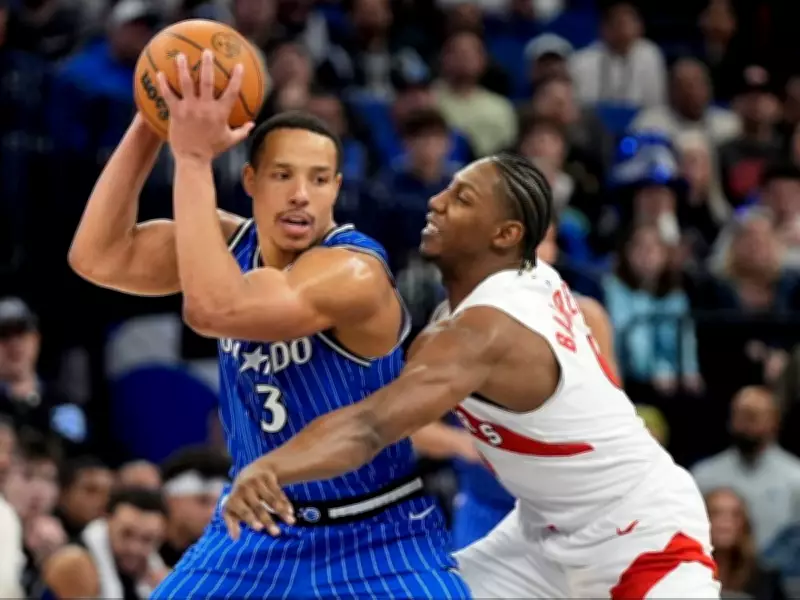
Transitioning from a 30-win team that missed the playoffs entirely last season to their current position near the top of the conference standings is undoubtedly an achievement. However, making the next leap to become a favourite to win at least one playoff series presents an entirely different set of challenges. Recent games against the New York Knicks and Orlando Magic exposed the Raptors' inability to handle physical opposition and highlighted their near-league-worst outside shooting capabilities.
The Statistical Reality of Toronto's Shooting Struggles
The numbers paint a concerning picture for the franchise. Toronto currently ranks 27th in the NBA in three-point accuracy, 24th in both three-point makes and attempts per game, and in the percentage of their total shots that originate from beyond the arc. While the team compensates somewhat by ranking fourth overall in points scored in the paint, those close-range baskets are only worth two points each. This creates a nightly mathematical disadvantage, as evidenced by Orlando making ten more three-pointers and New York making seven more in their recent matchups.

Perhaps more alarming is that the Raptors also rank 27th in three-point accuracy on shots that NBA.com classifies as wide open. Their performance on pull-up three-pointers, regardless of defensive pressure, further reinforces the team's fundamental lack of shooting proficiency.
The Impending NBA Trade Deadline: A Critical Juncture
This brings the focus squarely to the NBA trade deadline, set for February 5th at 3 p.m. Eastern Time. While much of the public discussion has centered on acquiring a starting or backup center—especially with Jakob Poeltl's ongoing back issues—surprisingly little attention has been paid to addressing the team's severe shooting shortcomings.
Analyzing the Current Roster's Shooting Talent
The roster currently features only one elite shooter: sophomore Jamison Battle, who sees limited playing time. Immanuel Quickley represents the next closest option and serves as the team's only genuine pull-up threat, though his performance is inconsistent, particularly against physical defenders like Orlando's Jalen Suggs.
Brandon Ingram remains one of the league's premier mid-range shooters but is merely average from three-point range and doesn't attempt enough of them. Before training camp, head coach Darko Rajakovic expressed hope that Ingram would launch seven three-point attempts per game; instead, he has averaged only five.
Reserve big man Sandro Mamukelashvili is a capable outside shooter but, like Quickley, experiences significant night-to-night variability. RJ Barrett is shooting a career-low 33% from beyond the arc, while franchise cornerstone Scottie Barnes has seen his three-point percentage decline to 30.5% after a hot start. Although this marks an improvement over last season's 27.1%, the ideal scenario would see him return to the 34% (or higher) accuracy of his first All-Star season two years ago.
Barnes excels in virtually every other aspect of the game but would benefit tremendously from being surrounded by at least three other quality shooters. The challenge for management is determining how to accomplish this, whether before the trade deadline or in the offseason.
Trade Targets and Strategic Considerations
Some rumoured acquisition targets, such as Sacramento Kings center Domantas Sabonis, would enhance existing areas of strength like interior scoring but would not solve the critical outside shooting problem. Sabonis has made only five three-pointers in 18 games this season, shooting 18.5% after connecting on a career-best 41.7% last year—though on a modest 2.2 attempts per game. His acquisition would also fail to address the rim protection void created by Poeltl's absence.

The perfect fit for Toronto's needs might not be readily available. Orlando's Desmond Bane, who recently torched the Raptors, exemplifies the type of player who could transform the lineup. Acquiring a player of Bane's caliber would likely require a significant package, potentially including four first-round draft picks, similar to the trade that brought him to Orlando. Raptors general manager Bobby Webster possesses the necessary draft capital to make such a move, with contracts like those of RJ Barrett or Jakob Poeltl potentially needed for salary matching. However, it remains uncertain whether a perfect, available solution exists on the market.
The Path Forward: Playoff Prospects and Roster Decisions
If the current roster remains unchanged, all available evidence suggests the Raptors' return to the playoffs would be brief. The team's shooting deficiencies represent a fundamental flaw that opposing teams can and will exploit in a postseason series. The front office faces a critical decision in the coming days: pursue a trade to address this weakness directly or accept the limitations of the current group and plan for incremental improvement in the future.
The clock is ticking for the Toronto Raptors. Their ability to secure shooting help before the deadline could very well determine not only their playoff fate this season but also the trajectory of the franchise's competitive window in the years to come.