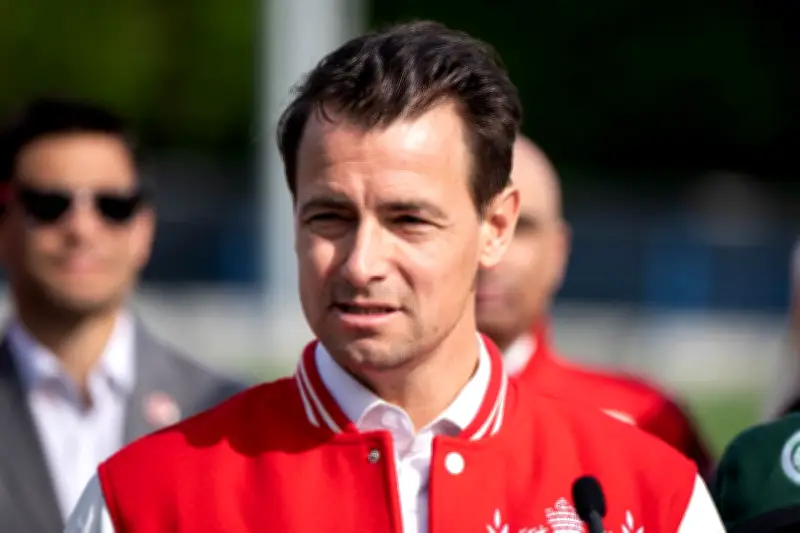
Canada has formally expressed its objection to the International Olympic Committee's (IOC) decision to ease restrictions on athletes from Russia and Belarus, arguing that the move undermines sanctions imposed following the invasion of Ukraine. Secretary of State for Sport Adam van Koeverden announced the opposition during a news conference in Vancouver on July 9, 2026, stating that the IOC's policy shift contradicts the Olympic Charter's principles of peace and neutrality.
Canada's Stance on Russian Athletes
Van Koeverden emphasized that Canada believes the IOC's decision sends the wrong message at a time when Russia's aggression in Ukraine continues. “We cannot pretend that sport exists in a vacuum,” he said. “The IOC’s decision to loosen restrictions on Russian and Belarusian athletes undermines the collective efforts of the international community to hold Russia accountable for its actions in Ukraine.” The Canadian government has urged the IOC to maintain strict eligibility criteria, including requiring athletes to compete as neutrals and to denounce the war publicly.
Background of the Restrictions
The IOC initially banned Russian and Belarusian athletes from international competitions following the 2022 invasion of Ukraine, but in 2024, it began allowing them to compete as neutrals under certain conditions. The recent loosening of restrictions, announced in early 2026, permits Russian and Belarusian athletes to participate in the 2026 Winter Olympics in Milan-Cortina without the neutral designation, though they remain barred from team events. The IOC cited the need to avoid discrimination based on nationality, but critics argue this rewards Russian aggression.

International Reactions
Canada is not alone in its objection. Ukraine has threatened to boycott the Olympics if Russian and Belarusian athletes are allowed to compete. Several other nations, including the United Kingdom and Poland, have also expressed concerns. However, the IOC has defended its decision, stating that it aligns with the Olympic Charter's prohibition of political interference. The IOC President said in a statement, “We must balance the principles of non-discrimination with the need to uphold the integrity of the Games.”
Impact on the 2026 Winter Olympics
The dispute could overshadow the 2026 Winter Olympics in Milan-Cortina, with potential boycotts or protests. Canada has not threatened a boycott but is lobbying other nations to join in opposing the IOC's decision. Van Koeverden noted that Canada will continue to work with international partners to ensure that the Olympics remain a platform for unity, not a tool for political propaganda. The Canadian government is also reviewing its funding for Olympic sports in light of the IOC's stance.
Broader Context of the Ukraine War
The war in Ukraine, now in its fifth year, has led to widespread sanctions against Russia. The IOC's decision is seen by many as a step back from the international consensus. According to a 2026 report by the Canadian Centre for Ethics in Sport, 78% of Canadians oppose allowing Russian and Belarusian athletes to compete under their national flags. Van Koeverden reiterated that Canada remains committed to supporting Ukrainian athletes and condemning Russia's actions.