

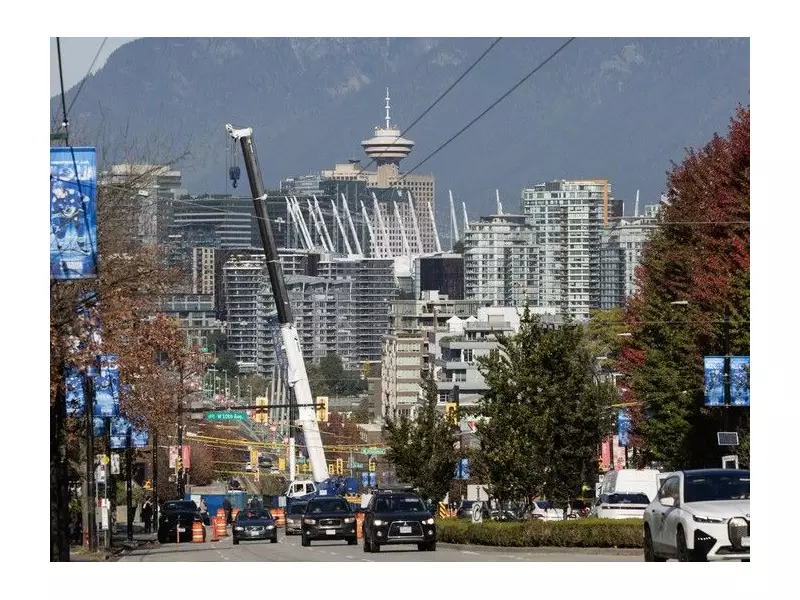
A significant majority of Vancouver residents believe their city is headed in the wrong direction, according to a new public opinion survey that highlights deep concerns about affordability, public safety, and the pace of change.
Widespread Dissatisfaction Captured in Poll
The poll, conducted by national firm Leger for Postmedia, found that 63% of Vancouver respondents agree the city is "on the wrong track." Only 30% feel Vancouver is heading in the right direction, creating a stark two-to-one margin of discontent. This level of dissatisfaction notably outpaces sentiment in Surrey, British Columbia's second-largest city, where 46% said their city is on the wrong track and 44% believe it's on the right path.
Steve Mossop, Leger’s executive vice-president for Western Canada, called the Vancouver results a clear indicator of voter discontent. "When you have respondents saying things are heading in the wrong direction by a 2-to-1 margin, that’s bad news for the incumbent party," Mossop said, suggesting such numbers could signal "the difference between majority territory, and a blowout loss" for the current municipal leadership.

Contrasting Voices from the City
The polling data is reflected in the contrasting experiences of residents. Paula Havard, a 72-year-old retired human-resources professional, typifies the concerns of many. Speaking to Postmedia while at City Square shopping mall across from city hall in December 2025, Havard expressed alarm at the city's rapid transformation. "I understand the city has to change and grow," she said. "But what astonishes me is how fast it’s moving, how fast it’s changing. And I don’t think it’s changing for the good."
Havard pointed to what she sees as excessive development that has outpaced necessary infrastructure like schools. Conversely, other residents, like a 32-year-old health-care professional identified only as Yu, maintain a more optimistic outlook. Yu, who was grabbing lunch at the same mall's food court, believes Vancouver is moving in the right direction overall, citing agreement among his friends in health care. He identified housing, the economy, and affordability as top issues but is less concerned about crime, viewing Vancouver as relatively safe.
Political Reckoning and Policy Paradox
The poll presents a complex picture for Vancouver Mayor Ken Sim and the municipal council. While revealing broad dissatisfaction with the city's trajectory, the survey also found a large number of residents support Mayor Sim's recent push to freeze property taxes. This creates a policy paradox where citizens demand action on core issues but also resist one of the primary tools—municipal taxation—used to fund solutions.
In response to the poll findings, Mayor Sim stated, "Polling like this reinforces what Vancouverites have been telling us: they want action, not the status quo, on public safety and affordability." His comment, made in December 2025, acknowledges the public pressure for tangible results on the city's most pressing challenges.
Mossop emphasized the political gravity of the "wrong track" metric, calling it "the flagship for voter discontent." He concluded bluntly, "So Ken Sim could be in trouble, based on these poll results." The data suggests that for a substantial portion of Vancouver's populace, the current municipal approach is failing to address fundamental concerns about the city's livability and future, setting the stage for a potentially contentious political period.






