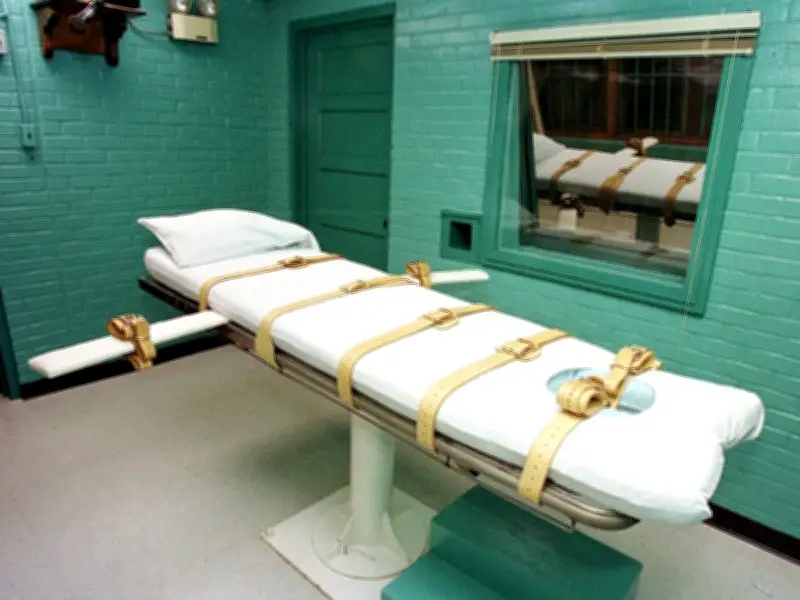
A growing number of Canadians say they support the return of the death penalty for convicted murderers, according to a new poll. However, that percentage declines when respondents are given the alternative of life imprisonment without the possibility of parole.
Poll Findings
Data from Research Co., a Vancouver-based market research and public opinion polling firm, reveals that 60 per cent of Canadians would support reinstating capital punishment for murder in Canada. This marks a six-point increase compared to when the same question was asked in February 2025. Meanwhile, 30 per cent expressed opposition, a two-point drop, and 10 per cent were undecided.
Among decided respondents, the ratio in favour is two-to-one. When the firm began tracking perceptions on the death penalty in 2020, support stood at 51 per cent.

Life Imprisonment as an Alternative
A separate question asked Canadians to choose between life imprisonment without parole and the death penalty as punishment for convicted murderers. With the no-parole option on the table, support for the death penalty dropped to 49 per cent, while 39 per cent preferred life imprisonment. The remaining 12 per cent were undecided.
Reasons for Support
Among those who favour reinstating the death penalty, more than half (56 per cent) believe it fits the crime because a convicted murderer has taken a life. Additionally, 52 per cent said it would serve as a deterrent for potential murderers, and 49 per cent felt it would provide closure to victims' families. Other reasons included saving taxpayers the cost of imprisoning murderers (46 per cent) and the belief that murderers cannot be rehabilitated (31 per cent).
Reasons for Opposition
For those against the death penalty, the top concern (66 per cent) was the risk of wrongful conviction and execution. Other reasons included the belief that murderers should serve their time in prison as determined by a judge (49 per cent), that the death penalty does not deter (39 per cent), that it is wrong to take a murderer's life as punishment (35 per cent), and that murderers can be rehabilitated (18 per cent).
Regional Differences
Support varied by region. Quebecers were least likely to favour a return to capital punishment at 50 per cent, followed by Atlantic Canadians at 55 per cent, Ontarians at 62 per cent, Albertans at 65 per cent, and residents of British Columbia, Saskatchewan, and Manitoba at 67 per cent.
Canada abolished the death penalty in 1976. The last executions in the country were the double hanging of Arthur Lucas and Ronald Turpin in 1962 for the murder of a police informant and a police officer, respectively.