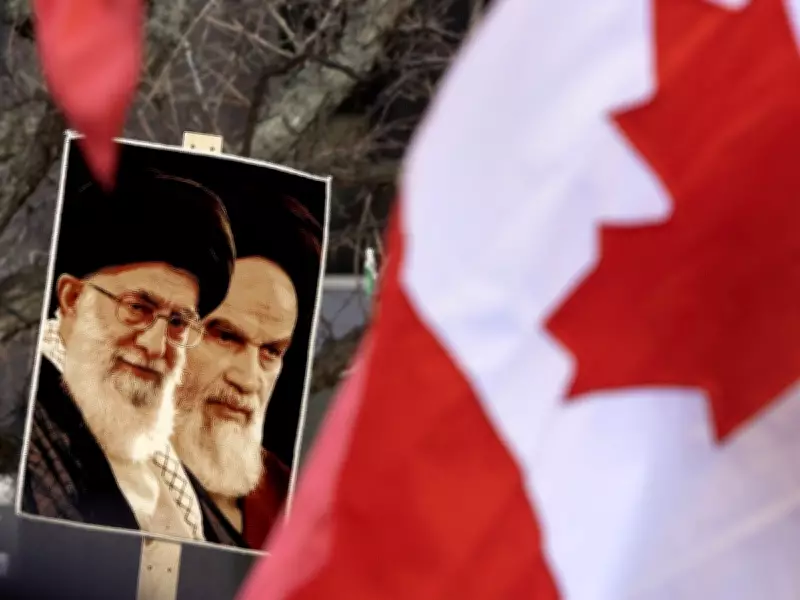
Poll Reveals Generation Gap in Canadian Views on Iran Conflict
A recent poll conducted by the Association for Canadian Studies has uncovered a significant generational divide in Canadian attitudes toward the ongoing war in Iran. While most Canadians across all age groups prefer neutrality, the survey indicates that a notable portion of the nation's youngest adults hold views that starkly contrast with those of their elders.
Youth Support for Iranian Leadership
According to the polling data, one-fifth (20 percent) of respondents in the 18-24 age cohort stated that Ottawa should "politically support" the current Iranian leadership. This finding emerges despite the Canadian government having designated Iran's Islamic Revolutionary Guard Corps (IRGC) as a terrorist organization for nearly two years.
In comparison, support for the United States, Israel, and allied nations involved in the now three-week-old conflict stands at a mere eight percent among the same youth demographic. The student sample included in the poll also showed a slight preference for Iran over Western allies.

Stark Contrast with Older Generations
The results for older Canadians present a dramatically different picture. When accounting for the poll's 2.5 percent margin of error, support for the Iranian regime was virtually nonexistent among those aged 45-54 (three percent), 55-64 (one percent), and the 65-plus Baby Boomer generation (zero percent).
Conversely, approximately a quarter of respondents in these older age groups believe Canada should bolster its historic allies, with support levels at 23, 25, and 26 percent respectively.
Social Media Influence and Misinformation
Jack Jedwab, President and CEO of the Association for Canadian Studies, expressed concern about the youth support for a regime whose military arm is officially designated as terrorist. He theorized that younger Canadians are increasingly "susceptible to following direction from influencers on selected social media," which may explain the poll results.
"You've got one end of the spectrum that's at zero and you've got that other group that's disproportionately probably more and more susceptible to following direction from influencers on selected social media, which is probably what this is attributable to," Jedwab explained in an interview.
Further evidence of potential misinformation spreading among Gen Z respondents appears in their perceptions of Iranian Canadian sentiment. Thirty-two percent of young respondents believe that Iranian Canadians don't support military actions against the regime, a figure twice as high or more than respondents aged 35 and over. More than half of all respondents admitted they don't know the actual sentiments of Iranian Canadians.
Neutrality Remains Dominant Position
Across all age groups and employment statuses, half of all respondents said Canada should remain neutral in the escalating conflict. An average of one-fifth of respondents said they don't know or aren't sure about Canada's proper stance, with this uncertainty consistently evident across various poll questions.
"It's a combination also of our own sort of self-evaluation or assessment of ourselves as the nation that is seeking or desires peaceful solutions and outcomes," Jedwab surmised regarding the preference for neutrality.
Long-Term Implications
Jedwab warned that "medium to long term, there may be some unlearning that needs to be done amongst persons that are adopting such positions that clearly are not well informed if they think the majority of Iranians are not supporting the Iranian regime. That's incorrect."
The current findings echo previous research from the Association for Canadian Studies. A November 2024 poll found that while Canadians were 92 percent in favor of peace with all nations, about half didn't believe a war could be avoided if one side gave up the fight.
The poll results highlight not only a significant generational divide in foreign policy perspectives but also raise questions about how social media and digital influencers are shaping the political views of Canada's youngest voting cohort.