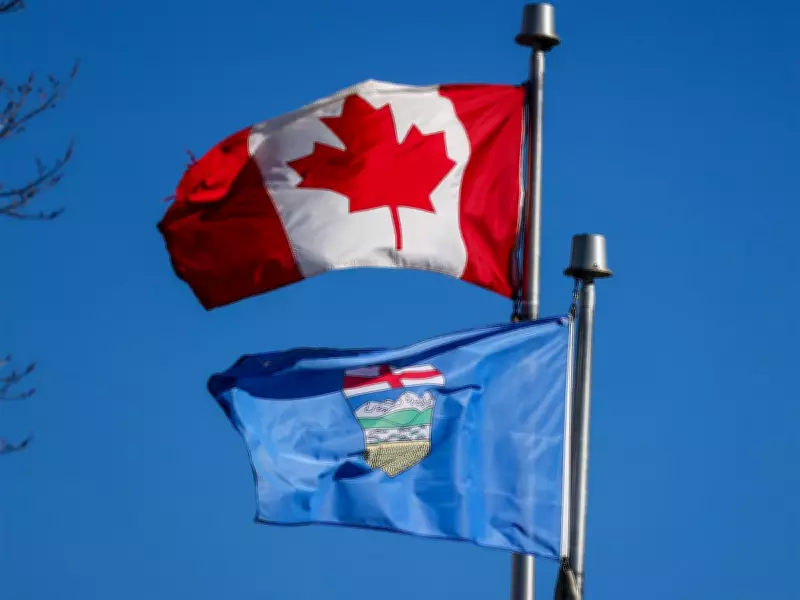
A new national poll reveals that fear of potential United States intervention is a significant factor strengthening Canadian opposition to provincial separatism, with strong majorities across the country favoring the preservation of Confederation.
Overwhelming Concerns About American Absorption
The Angus Reid Institute survey indicates that the specter of U.S. domination looms large in the national consciousness regarding separation debates. An overwhelming 79 percent of respondents believe that if Alberta were to separate, the United States would "definitely" or "probably" use political means to compel the province to join the union.
More alarmingly, 55 percent of Canadians foresee the possibility of military force being employed by the U.S. to take over Alberta should it become independent. These concerns, while slightly less intense, extend to Quebec as well, with 46 percent anticipating political pressure and 44 percent envisioning military action from the southern neighbor.

Solidarity Across Provincial Lines
The polling data demonstrates remarkable national unity against separation movements, even in provinces where separatist sentiments have historically found traction. In British Columbia, 83 percent of residents would keep Alberta within Confederation. Saskatchewan, where anti-Ottawa sentiments sometimes run high, still shows 62 percent opposition to Alberta separation.
Support for maintaining national unity reaches 82 percent in Manitoba, 84 percent in Ontario, and 83 percent across Atlantic Canada. These figures represent the lowest levels of support for separation anywhere in the country.
Quebec's Position in the National Fabric
While percentages for keeping Quebec in Canada are somewhat lower than those for Alberta, they remain in majority territory across all provinces. Notably, 58 percent of Albertans want Quebec to remain part of Canada, while 72 percent of Quebecers express the same sentiment about Alberta.
These findings present a curious contradiction to narratives of provinces "hell-bent for independence," as the Angus Reid Institute describes the situation. Previous surveys from the same organization showed that 65 percent of Albertans would vote to remain in Canada if a referendum were held today, with 63 percent of Quebecers expressing similar intentions.
The Broader Implications
Angus Reid researchers summarize the findings by noting that "if either were to separate, the common sentiment is that the United States would apply significant pressure to absorb or influence the new independent nation." This fear, while not the sole reason, contributes substantially to the national consensus against separation.
The institute's comprehensive three-poll series on independence concludes with a key finding: "The vast majority of Canadians would block Quebec (71 percent) or Alberta (79 percent) from separating" if independence became a realistic possibility. This demonstrates what researchers characterize as "rock-solid majority opinion" for rejecting provincial separation across the entire country.
The data suggests that despite regional tensions and political disagreements, fundamental concerns about sovereignty and potential foreign domination continue to bind Canadians together in support of their national federation.