Canadians View U.S. as Greater Security Threat Than China, Survey Reveals
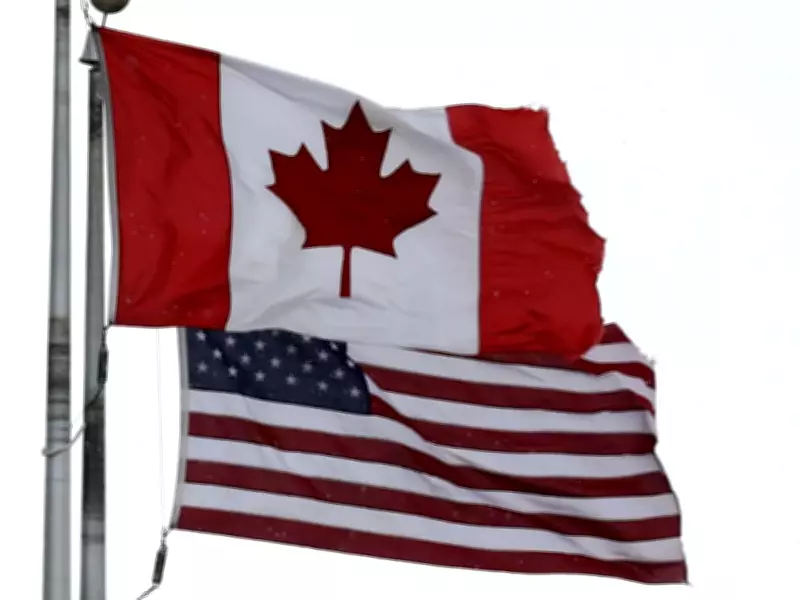
A recent survey conducted by Nanos Research Group for Bloomberg News has uncovered a significant shift in Canadian perceptions of international security threats. According to the findings, more than half of Canadians now believe the United States poses the greatest risk to their country's security, marking a dramatic change in the relationship between these historically close allies.
Survey Results Highlight Growing Rift
The poll, conducted from January 31 to February 4, 2026, found that 55 percent of respondents identified the United States as the country presenting the most substantial security threat to Canada. This perception stands in stark contrast to traditional concerns about other global powers.
Only 15 percent of Canadians pointed to China as the greatest threat, while 14 percent identified Russia. These results indicate a remarkable transformation in how Canadians view their southern neighbor, with the United States now occupying the position of primary security concern in the minds of most citizens.

Trump Policies Fuel Canadian Concerns
The survey was conducted shortly after a series of provocative statements and policy moves by U.S. President Donald Trump. These included threats against Greenland, public complaints about NATO, and declarations that he would be prepared to increase tariffs further on Canadian goods.
Trump's trade policies, combined with his occasional musings about Canada becoming a 51st U.S. state, have generated widespread anger throughout the northern nation. The United States, long considered Canada's most important ally, has increasingly become a destination to avoid for many Canadians, with cross-border travel experiencing a sharp decline.
Expert Analysis of the Findings
Roland Paris, a professor of international affairs at the University of Ottawa who previously advised former Prime Minister Justin Trudeau on foreign policy, stated that the survey's findings accurately reflect the dominant mood in Canada today.
"They help to explain why Canadians have continued to boycott U.S. travel and goods even a year after Trump returned to office and started talking about making Canada the 51st state," Paris noted in an email statement.
"Some may view Trump's rhetorical style and economic threats as a smart negotiating strategy, but these results show what profound damage they are having on important relationships."
Gender Divide in Threat Perception
The survey revealed a notable gender divide in how Canadians perceive the security threat from the United States. According to Nanos Research, women were significantly more likely to identify the U.S. as the greatest foreign threat to national security.
- 64 percent of women said the U.S. poses the greatest threat
- 45 percent of men shared this view
This 19-point gender gap suggests that women may be more sensitive to the diplomatic and economic tensions that have characterized recent U.S.-Canada relations.
Failed Diplomatic Efforts and Escalating Tensions
Prime Minister Mark Carney attempted to deescalate the trade war with the United States following his election victory in April 2025. Despite exchanging warm words with Trump in the Oval Office shortly after taking office, Carney's diplomatic efforts have failed to produce tangible results.
Talks between Ottawa and Washington have stalled for months, with no agreement reached to lower tariffs on steel, aluminum, or automobiles. This ongoing trade dispute has contributed significantly to the deteriorating perception of the United States among Canadian citizens.
Public Rebuke and Presidential Response
In a notable address at the World Economic Forum last month, Prime Minister Carney called on peer countries to band together to resist coercion from aggressive superpowers. While he did not mention Trump by name, the speech represented arguably the prime minister's most direct rebuke of American foreign policy.
Trump took notice of the remarks. The following day at Davos, he commented on Canada, stating: "They should be grateful also but they're not. I watched your prime minister yesterday, he wasn't so grateful." The president added, "Canada lives because of the United States."

These exchanges highlight the deepening diplomatic rift between the two nations and help explain why Canadians increasingly view their southern neighbor as a security threat rather than a reliable ally.