New Poll Reveals Deep Canadian Anxiety Over U.S. Relations Under Trump
A significant majority of Canadians are expressing profound concern about the future of their country's relationship with the United States, according to a comprehensive new survey from the Angus Reid Institute. The poll, conducted in January 2026, paints a picture of a nation grappling with uncertainty and apprehension as it looks southward.
Overwhelming Fear Outweighs Hope for the Year Ahead
The survey's most striking finding reveals that approximately four-in-five Canadians (79%) report feeling more fearful than hopeful about the coming year. Only 21% of respondents expressed optimism, indicating a significant shift in national sentiment. This widespread anxiety appears closely tied to developments in the bilateral relationship with Canada's largest trading partner and closest neighbor.
Trump's Second Term and Trade Tensions Fuel Concerns
The poll was conducted against the backdrop of escalating trade tensions between the two nations. U.S. President Donald Trump, now one year into his second term, initiated a trade war with Canada in 2025 by imposing tariffs on goods not covered by existing free trade agreements. During this period, Trump publicly stated that America doesn't need anything from its northern neighbor, remarks that have clearly resonated with the Canadian public.

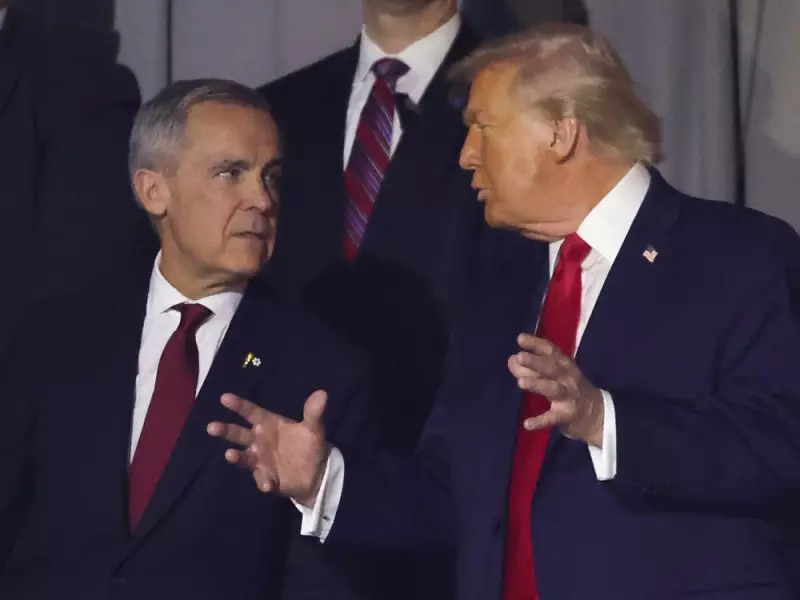
Angus Reid analysts noted that "part of this elevated concern in Canada may rely on the ongoing and persistent jabs from Trump toward Carney, and the former's propensity for musing about absorbing Canada into the American union."
Canadians Deliver Harsh Assessment of Trump's Leadership
The survey reveals Canadians hold overwhelmingly negative views of President Trump's performance. Two-thirds of respondents (66%) gave Trump a failing 'F' grade for his first year in office during his second term. Only 15% awarded him either an 'A' or 'B' grade.
When asked to describe Trump's leadership and governing style, Canadians most frequently selected words like "corrupt," "chaotic," and "incompetent." This assessment crosses party lines, though Conservative Party voters showed somewhat more favorable views, with 50% giving Trump a 'C' or better grade compared to only 33% who gave him a failing grade.
Carney's Approach Receives Mixed Reviews Amid Global Uncertainty
The poll was conducted following Prime Minister Mark Carney's speech to the World Economic Forum earlier in January, where he spoke about the breakdown of the global order without directly mentioning Trump. While U.S. officials claimed Carney "walked back" much of his comments during a subsequent call with Trump, the prime minister insists he is standing by his remarks.
Most survey respondents praised Carney's approach to dealing with Trump thus far, suggesting Canadians appreciate diplomatic handling of the complex relationship despite the underlying tensions.
Increased Attention to U.S. and International Affairs
The survey also reveals that Canadians are paying closer attention to developments beyond their borders. Three-in-five respondents (61%) report following more U.S. news than usual in the past year, while a similar number (57%) say they are closely monitoring international events.
This heightened awareness extends to specific geopolitical developments. Nearly half of Canadians (47%) believe the forced ouster of President Nicolas Maduro in Venezuela represents bad news for Canada's oil and gas industry, with this concern particularly pronounced in Alberta where 58% share this view.
Expectations of Further Disruption Under Trump Administration
Looking ahead, the poll indicates Canadians anticipate continued disruption from the Trump administration. About three-in-four respondents (74%) expect more regime changes to come under Trump's leadership, suggesting Canadians are bracing for additional international instability.
The Angus Reid Institute survey provides a comprehensive snapshot of Canadian public opinion at a critical juncture in the Canada-U.S. relationship. With overwhelming fear outweighing hope and widespread concern about presidential leadership to the south, the findings suggest a nation preparing for continued challenges in its most important international relationship.