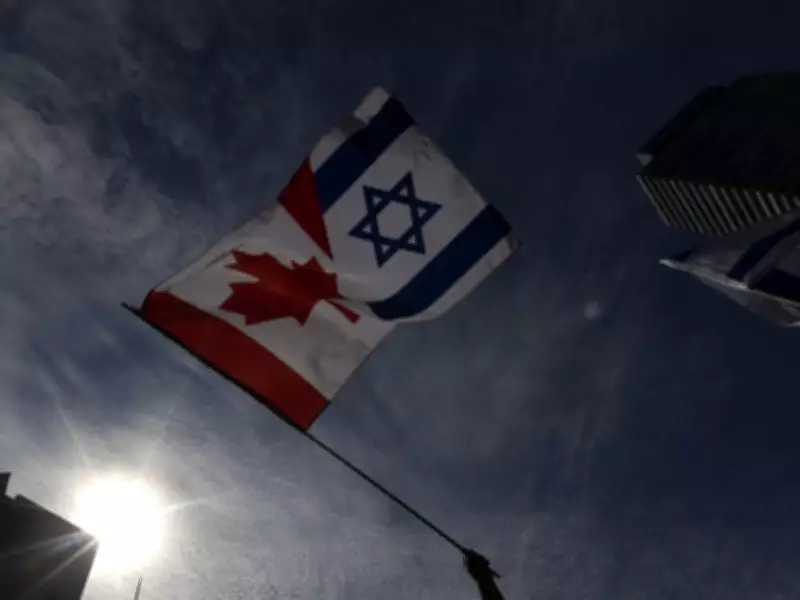
New Research Debunks Claims of Widespread Anti-Zionism Among Canadian Jews
According to a comprehensive 2024 study conducted by University of Toronto sociology professor Robert Brym, an overwhelming majority of Canadian Jews maintain strong support for Zionism, directly contradicting claims that opposition to Israel's existence represents a significant movement within the community.
The Statistical Reality of Jewish Community Views
The research reveals that 91 per cent of Canadian Jews believe Israel has the right to exist as a Jewish state, with approximately 6 per cent undecided on the matter. Only about 3 per cent of the Canadian Jewish population actively rejects Zionism, according to the study's findings.
These statistics challenge recent assertions by groups like Independent Jewish Voices (IJV), whose national co-ordinator Corey Balsam recently argued that opposition to Zionism should not be equated with antisemitism. The data suggests such positions represent fringe perspectives rather than mainstream Jewish thought in Canada.

Zionism as Central to Jewish Identity and Security
Zionism emerged from centuries of Jewish persecution, culminating in the Holocaust, and led to the establishment of Israel as a refuge where Jews could live free from existential threats. To reject Zionism fundamentally denies this historical context and the foundation of Jewish self-determination.
Matthew Taub argues that Zionism remains central to Jewish identity and survival, noting that while criticism of specific Israeli policies is valid, denying Israel's right to exist as a Jewish state crosses into dangerous territory. He draws a parallel to Canadian identity: "I disagree with the Canadian government on various issues, but that doesn't make me anti-Canadian."
Distinguishing Between Policy Criticism and Existential Denial
The debate often conflates legitimate criticism of Israeli policies with rejection of Israel's fundamental right to exist. Taub emphasizes important distinctions between Israel's security situation in Gaza versus the West Bank:
- Gaza remains under Hamas control, with thousands of rocket attacks targeting Israeli civilians and explicit calls for Israel's destruction
- The West Bank involves complex negotiations with the Palestinian Authority, which has historically rejected peace offers
These nuances matter significantly when discussing Israel's policies and the broader Israeli-Palestinian conflict, yet they often get lost in simplified narratives.
The Antisemitism Connection and Canadian Context
According to the International Holocaust Remembrance Alliance definition, antisemitism constitutes hatred directed at Jews because they are Jews. When opposition to Zionism transforms into calls for Israel's destruction, it crosses into antisemitic territory.
This distinction has real-world consequences in Canada, where antisemitic incidents accounted for 69 per cent of all religion-based hate crimes according to recent Public Safety Canada data. The rhetoric surrounding anti-Zionism often correlates with increased violence against Jewish communities.
While Balsam frames criticism of Israel as moral outrage, this perspective fails to address how such rhetoric frequently leads to tangible harm against Jewish individuals and institutions across Canada.
The Fringe Nature of Anti-Zionist Voices
The research findings demonstrate that rejection of Zionism represents no more than 3 per cent of the Canadian Jewish population. This statistical reality contradicts claims that anti-Zionism reflects a growing movement within Jewish communities.
Instead, the data suggests these voices occupy a marginal position within broader Jewish discourse in Canada. The overwhelming support for Israel's right to exist as a Jewish state indicates that Zionism remains a fundamental component of Canadian Jewish identity for the vast majority.
As debates about Israel and antisemitism continue in Canadian public discourse, this research provides crucial context about where Canadian Jews actually stand on these fundamental questions of identity, security, and self-determination.