If events in Orillia, Ontario are any indication, reconciliation in Canada in 2026 seems to mean that a few angry Indigenous protesters can wield a veto over decisions. This is the argument made by Christopher Dummitt in a recent commentary.
The Statue's History
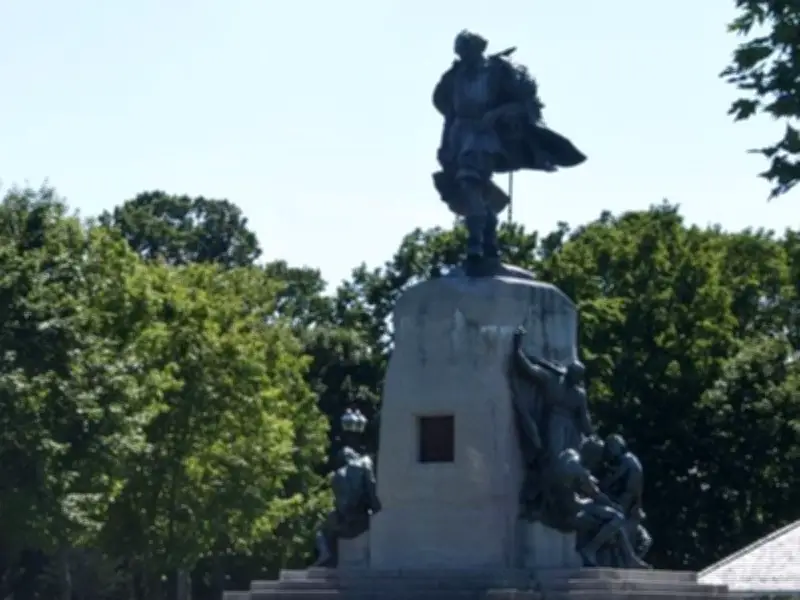
The Samuel de Champlain statue once stood on the waterfront in Orillia, the town made famous by Stephen Leacock's 1912 classic Sunshine Sketches of a Little Town. Locals erected the statue in 1925 to mark 300 years since Champlain traveled through the area in 1615 to visit the Huron-Wendat, important French trading partners. In the years around the Great War, relations between French and English in Ontario were strained, and the statue was meant as a gesture of symbolic rapprochement and local boosterism. It was conceived with confidence in western civilization, Christianity, and what its plaque called “the white race.”
In 2017, the monument needed repair and was removed. During restoration, the Truth and Reconciliation Commission era prompted a working group to decide whether the statue should return and in what form. Smaller figures of Indigenous people that knelt below Champlain were not returned, and a new plaque was written. With those modifications, Champlain was supposed to go back to his lakeside plinth.

Delays and Vandalism
Then came 2021 and the Kamloops graves moral panic. The return was delayed repeatedly. This spring, Orillia’s mayor decided to return the statue, citing storage costs and potential damage. Most locals seemed to agree: a 2019 online survey showed 70% favoured reinstalling Champlain. But the mayor had the statue reinstalled last month without broad consultation. Within hours, someone vandalized it. Local First Nations objected, saying they had not been consulted, and demanded the statue come down. City council caved, and Champlain was taken down again. The cost of this round of erection and removal was about $200,000.
Dummitt argues that nothing in this debate is really about history, Champlain, or the wishes of the local community. It is about power and who gets to wield it in the era of so-called reconciliation. It is about giving vandals a veto. Someone spray-painted “Rama said no” on the plinth, seemingly a reference to the local Rama First Nation.
The South African model of reconciliation was built on a single collective exercise of truth-telling, after which groups could live together in peace. In Canada, and in Orillia, it seems different. Dummitt concludes that removing the monument is counterproductive to reconciliation.