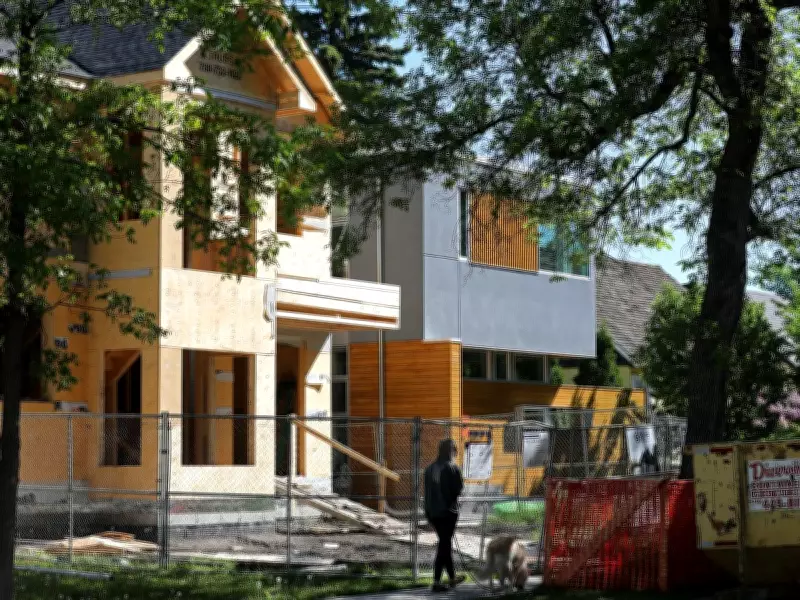
On Monday, April 27, Edmonton's city council will decide whether to reduce the maximum building height for new housing in mature neighbourhoods from 10.5 metres to 9.5 metres. This may seem like a small change. What could cutting just one metre from housing really do, after all? Unfortunately, the answer is a lot.
The Impact of a One-Metre Reduction
At 10.5 metres, a new building can comfortably accommodate four levels: a basement, main floor, and two additional storeys. In practice, this enables a pair of family-sized homes stacked atop one another. The lower unit is no longer just a basement suite; it includes its living space on the main floor with just the sleeping areas in the basement, while the upper unit spans two full storeys above. This configuration delivers higher density while providing functional, livable spaces in both homes.
This is an increasingly popular form of housing in our city that delivers what's preferred: two households where everyone gets adequate light and space, and a sense of being inside a home, not underneath one. Take one metre out of this design to meet the proposed 9.5-metre limit, however, and the livability of one or both units is compromised.

Either the lower unit gets pushed back underground, or the uppermost level is compressed into a partial storey that's useful for storage, maybe, but less so for living. With just one metre lost, what had been a livable design to provide Edmontonians what they want becomes compromised, or just left unbuilt.
Renters Bear the Brunt
The people most likely to feel the effects of this proposed height change are renters, a group that often isn't front and centre in these discussions. Many who've rented in Edmonton have rented a basement suite. We have a large post-secondary presence that creates a significant number of people who need lower-cost rental housing in the core. But these aren't great suites. Most are in the basements of older homes where the ceilings are low. Light is limited and windows are small. You feel like you live under a home, rather than in one. You leave when you can find something better.
The 10.5-metre height has enabled an alternative housing form in mature neighbourhoods, one that uses design to provide more dignified living spaces. Bedrooms may still be located in the basement, but the main living spaces are brought above ground, into natural light.
Council's Contradictions
This proposed change is not happening in a vacuum. In some established neighbourhoods, new multi-family housing developments are unwelcome. Council appears to be responding to that frustration with a visible, easy-to-understand change — a one-metre reduction in height — that signals action but doesn't meaningfully address the underlying concerns. Will losing one metre substantially reduce shadows for existing residents? Likely not. Will it limit the types of housing designs that people are asking for? Likely yes.
A frustrating part of this discussion is also the obvious contradictions. As council considers reducing housing height in established neighbourhoods to 9.5 metres, it is also working within a policy framework that aims to meet climate targets and limit property tax increases. Removing appealing housing options from the core will only make these targets harder to hit.