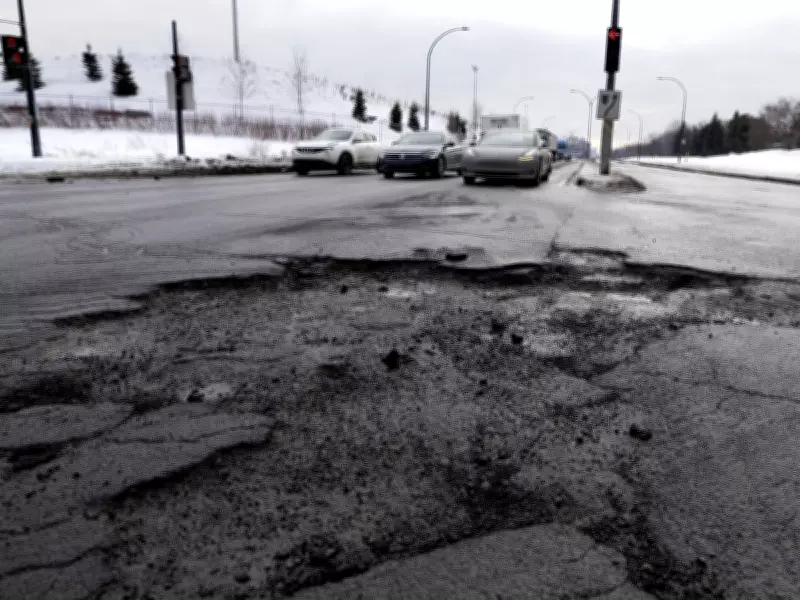
As Montreal's annual St. Patrick's Parade weekend brings joy and signals the approaching end of winter, it also marks the grim arrival of Quebec's notorious pothole season, which has appeared earlier than usual this year. The war-zone condition of many roads is set to worsen in the coming weeks, leading to blown tires, damaged axles, and accidents as drivers swerve to avoid craters.
A Classic Reminder of Taxpayer Fleecing
Every spring, this issue serves as a stark reminder of how taxpayers are being systematically fleeced, with citizens grudgingly accepting it as the norm. The situation highlights broader failures in government accountability and infrastructure management.
Technology Solutions Ignored for Profit
Several years ago, a chemical engineer working with university researchers revealed that modified polymer asphalt compositions exist today that could create nearly indestructible roads, far more resistant to temperature fluctuations. This innovation could save fortunes in annual repair budgets, yet it remains largely ignored.

The reason? Recurring government contracts represent cash cows for the asphalt industry, providing little incentive to invest in longer-lasting products through research and development. Additionally, the common practice of awarding contracts to the lowest bidder encourages the use of cheaper, substandard materials and processes, potentially perpetuating lucrative annual repair contracts.
Government at a Breaking Point
This maddening example comes at a time when all levels of government are struggling with revenues that cannot keep pace with the costs of maintaining quality services and infrastructure. Quebec's recent budget highlights the constant tug-of-war between service levels and taxpayers' ability to pay, with deficits offering an easy short-term solution that begets greater long-term debt.
Elected officials have been delinquent in challenging the status quo or questioning practices that leave taxpayers feeling pummeled. From road repairs to energy costs, the pattern of accepting mediocrity persists.
Gas Prices Add to the Burden
Another circumstance fueling taxpayer frustration is the volatility of gas prices. When conflict in the Middle East and disruptions in the Strait of Hormuz made headlines, pump prices in Canada skyrocketed almost immediately, as if oil reserves were already depleted. Yet when conflicts resolve, prices take significantly longer to decrease than they did to rise.
Similarly, Hydro-Québec recently denounced a regulatory decision capping residential electricity rate increases at three percent, arguing it limits service quality improvements. Despite this supposed cap, complicated billing formulas with varying rates and meter readings likely mean bills will continue rising at higher rates, with consumers expected to accept them at face value.
Where is the Follow-Up on Corruption Exposés?
Over a decade has passed since the Charbonneau Commission exposed corruption and collusion in Quebec's construction industry, yet mechanisms to ensure recommendations are implemented remain inadequate. Citizens complain but often resign themselves to mediocrity, echoing Frederick Douglass's observation that "power concedes nothing without a demand."
Time for Political Accountability
Perhaps it's time to draw inspiration from the resilience and commitment embodied by St. Patrick, demanding higher standards from politicians who must step out of their comfort zones to challenge accepted norms. Taxpayers deserve better than being taken for a ride while infrastructure crumbles and costs soar.
Robert Libman is an architect and planning consultant who has served as Equality Party leader and MNA, mayor of Côte-St-Luc, and a member of the Montreal executive committee.