Quebec's Seventh Consecutive Deficit Budget Unveiled Amid Political Controversy
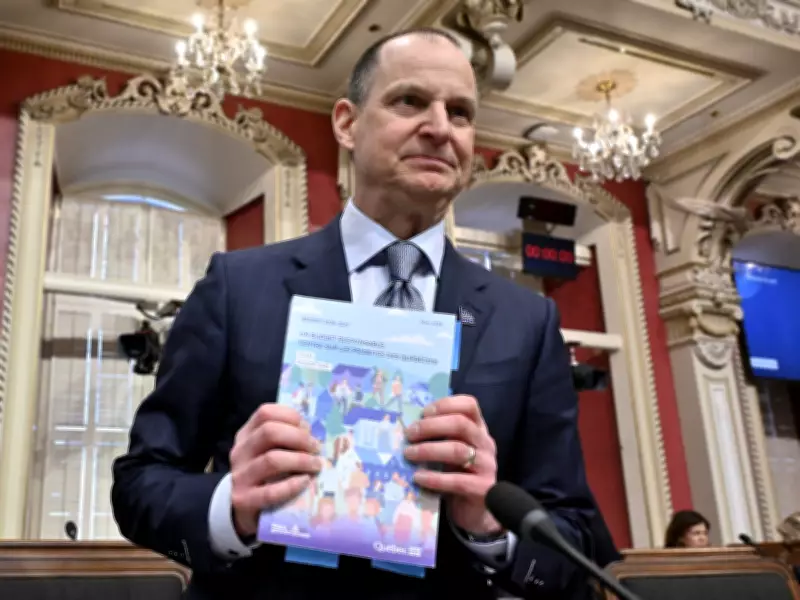
Finance Minister Eric Girard tabled Quebec's 2026-27 budget on Wednesday, marking the seventh consecutive deficit budget under the Coalition Avenir Québec government. This final budget before the October general election continues a pattern of red ink that began shortly after the CAQ took power in 2018.
Historical Context of Persistent Deficits
Following the CAQ's first budget in 2019-20, which benefited from a surplus left by the previous Liberal government, Girard has presented a string of seven budgets with deficits. Wednesday's announcement further adds to Quebec's long-term net debt, which will reach $250.3 billion by March 31.
Girard has served as finance minister during an exceptionally challenging period in Quebec's history. His budgets from 2020-21 to 2022-23 were presented during the COVID-19 pandemic, which disrupted government finances worldwide and sent Quebec's spending soaring. Subsequent budget exercises had to manage economic fallout from the war in Ukraine, tariff chaos following Donald Trump's return as U.S. president, inflation, and the ongoing Middle East conflict affecting gas prices.

These factors made balancing the province's books—something the previous Liberal government achieved at significant political cost—a nearly impossible task. Critics point to additional reasons for the deficits, including the failed Northvolt battery venture investment, controversial 30 percent salary increases for MNAs, and questionable spending decisions like bringing the Los Angeles Kings to Quebec City for exhibition hockey.
Political Reactions and Defense
Liberal finance critic Frédéric Beauchemin was particularly blunt in his assessment, noting that while it took 60 years for Quebec to accumulate $160 billion in debt while building welfare, health, and education systems, "the CAQ has added nearly $100 billion in just eight years." He characterized the situation as "a triple D: debt, deficit and downgrade in Quebec's credit rating."
Girard defended his record, telling reporters, "I am proud to have served in difficult conditions. Stewardship is about taking something, taking care of it and passing it to the next one." He emphasized that public service during such turbulent times required supporting people and businesses in need.
Budget Details and Future Projections
The 2026-27 budget includes $5 billion in infrastructure spending for hospitals and schools, plus funding for homelessness initiatives and domestic violence victims. An additional $1.7 billion over five years aims to accelerate Quebec's economic transformation. While there were no tax cuts for citizens, there were also no increases.
Girard announced improved budgetary projections, with the 2025-26 deficit revised downward from $13.4 billion to $9.9 billion (1.2 percent of GDP), among the lowest in Canada. The 2026-27 deficit is forecast at $8.6 billion (0.9 percent of GDP). The government maintains its target of balanced books by 2029-30, with the net debt burden decreasing to 38.8 percent of GDP from 42.9 percent in 2019.
Economic growth predictions remain optimistic, with GDP increases of 0.8 percent in 2025, 1.1 percent in 2026, and 1.4 percent in 2027.
Controversial Allocation for Next CAQ Leader
The budget's most contentious element is the allocation of $250 million annually for five years (totaling approximately $1.3 billion) for the next CAQ leader to spend as they see fit. Additionally, the new leader could access a contingency fund of $8 billion over five years, including $2 billion for 2026-27.
Opposition parties immediately criticized this provision. Liberal Leader Charles Milliard dubbed it "the Fréchette-Drainville cushion," referring to the two CAQ leadership candidates. Québec solidaire co-spokesperson Ruba Ghazal called it "a pre-paid credit card for crass political reasons," while Conservative Party Leader Éric Duhaime stated, "I've never seen anything like this. They are saying the real budget will actually come later."
However, the next leader will face significant challenges, including identifying $2 billion in savings—likely through spending cuts—to achieve the balanced budget target by 2029-30.

As Quebec prepares for both a leadership transition and a general election, this budget sets the stage for continued debate about fiscal responsibility and political priorities in the province.