Quebec Finance Minister Highlights $20 Million Annual Cost of Referendum Uncertainty
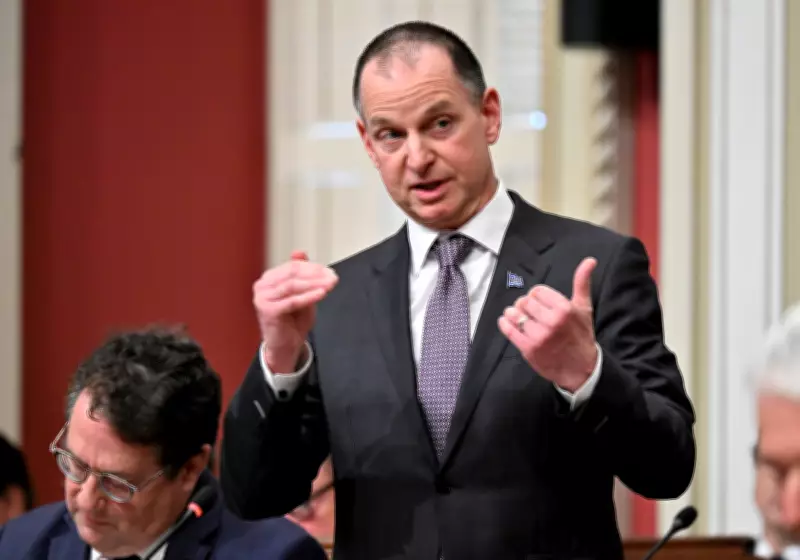
Quebec Finance Minister Eric Girard has publicly asserted that the persistent spectre of a sovereignty referendum is imposing a substantial financial toll on the province, estimating the annual cost at a staggering $20 million. This declaration was made during a recent legislative session, underscoring the economic implications of ongoing political instability.
Economic Impact of Political Instability
Minister Girard emphasized that the mere possibility of a referendum creates an environment of uncertainty that deters investment and hampers economic planning. He argued that this climate forces the government and businesses to allocate resources toward contingency measures, rather than focusing on growth and development initiatives. The $20 million figure represents a direct financial drain, which could otherwise be invested in public services, infrastructure, or debt reduction.
This cost is attributed to various factors, including increased administrative burdens, heightened risk assessments by financial institutions, and potential delays in long-term projects due to political hesitancy. Girard's comments come amid rising poll numbers for the Quebec Liberal leader, who has expressed readiness to lead a 'No' campaign in any future referendum, further fueling the debate.

Context and Broader Implications
The issue of Quebec sovereignty has been a longstanding and divisive topic in Canadian politics, with previous referendums in 1980 and 1995 narrowly rejecting independence. Girard's statement reflects concerns that even without an active referendum campaign, the lingering threat alone can have tangible economic consequences. This perspective is supported by economic theories suggesting that political uncertainty can lead to reduced consumer confidence, lower capital inflows, and increased borrowing costs for governments.
In his address, Girard called for a more stable political environment to foster economic prosperity, urging all parties to consider the financial ramifications of their stances on sovereignty. He highlighted that while democratic processes are essential, the costs associated with perpetual uncertainty must be acknowledged and mitigated.
Reactions and Future Outlook
While Girard's claims have sparked debate among political analysts and opposition members, they underscore a critical aspect of governance: the intersection of politics and economics. As Quebec navigates its fiscal challenges, including discussions on healthcare, education, and environmental policies, the minister's warning serves as a reminder of how political dynamics can directly impact public finances.
Looking ahead, this issue may influence upcoming policy decisions and electoral strategies, as stakeholders weigh the benefits of sovereignty against its economic costs. The $20 million annual estimate provides a concrete figure for public discourse, potentially shaping voter perceptions and political agendas in the years to come.