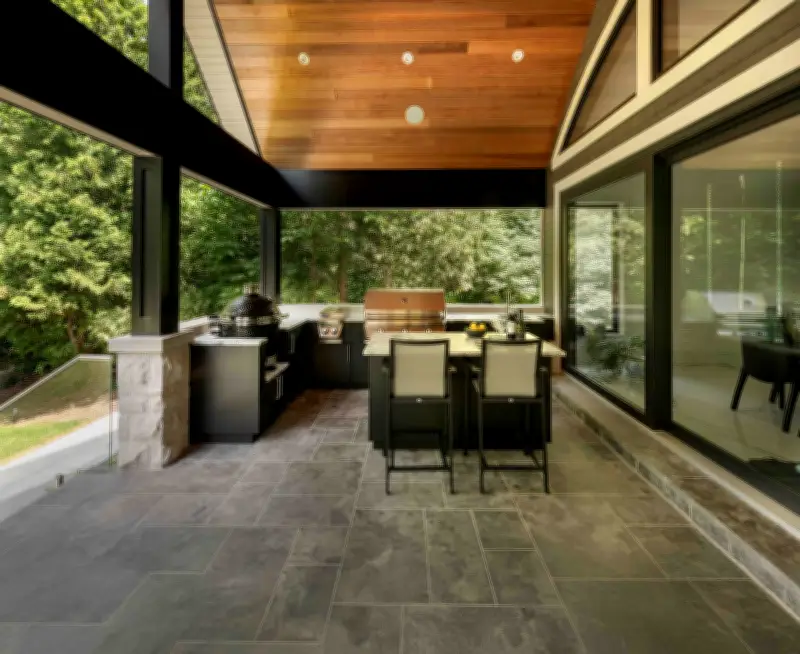
Outdoor Kitchens Become the Heart of the Home
More and more homeowners are bringing the heart of the home to the great outdoors with an outdoor kitchen, giving new meaning to al fresco dining. This trend has gained momentum since the pandemic, as people invest in their backyards with the same care they would for indoor spaces.
“The pandemic fundamentally changed how people approach their outdoor spaces,” says Caesarstone Canada President Ken Williams. “Canadians started investing in their backyards the way they’d previously invested in their interiors.”
That investment has matured. “People no longer treat their backyard as an afterthought. They bring similar care and thought they would to a kitchen, living room or any other indoor hosting space. We’re also seeing people take it a step further by adding covered structures, pergolas and enclosed patios that physically extend the home and naturally bridge that gap between inside and out,” he says.

“It makes the outdoor kitchen feel like a true extension of the living space rather than a separate feature. And given how short our season is, that kind of investment makes a lot of sense. When summer hits, that outdoor kitchen becomes the centre of everything.”
Design and Materials Matter
The outdoor kitchen has become the “final frontier” to almost every custom-built home, according to Daniel Albo, president of Outeriors, Outdoor Kitchens & Cabinetry in Vaughan. “Architects, designers and landscape professionals are including outdoor kitchens in all their floor plan drawings as of recently, which we haven’t seen before,” he says.
“Designers are getting more comfortable working with Outerior’s Alumina outdoor kitchens, as they follow traditional interior cabinetry design language, making them much easier to design and speak to than ever before. COVID-19 was a major initiator of growth for this category, as lockdowns and social distancing forced entertaining and larger group gatherings outdoors.”
How Do You Entertain?
The biggest mistake people make when creating their outdoor kitchen is treating it like an indoor kitchen that just happens to be outside, Williams warns. “Before you even think about finishes, think about how you actually live. How do you entertain? How does the space connect to your indoor flow?”
“Sun and shade patterns matter more than most people expect and a beautiful space that bakes in the afternoon sun won’t get used. Budget clarity early is also really important. Costs can scale quickly once you factor in gas lines, electrical and drainage. And in Canada specifically, you have to design for the full year, not just four months of summer and part of the shoulder seasons.”
Non-Negotiables for Outdoor Kitchens
Williams lists a quality grill, plenty of counter space for preparation, storage and a sink with running water as non-negotiables. Durable countertops are also key. “Surfaces that are easy to use, ones you can directly cut on, and are scratch and heat resistant make all the differences to serving up hot food from the grill,” he says.
“Everything else scales from there depending on your lifestyle. A dedicated outdoor fridge moves from want to need pretty quickly once you have one. A bar and beverage stations are increasingly popular and really change how a space gets used. Most people wish they’d included these the first time around.”
Albo encourages you to pay attention to how much space you have and your budget, which will depend on the scope of your project and factors like size and quantity and quality of appliances. “The smallest kitchens we typically see are about seven feet in length but can get much larger. Budgets range from $20,000 and up depending on size and appliance inclusions,” he says.
Location is also key. If the outdoor kitchen is close enough to their house, he finds most homeowners will use it year-round. “I personally use my outdoor kitchen at least five days per week all year round,” says Albo.

Withstanding Canadian Winters
How outdoor kitchens stand up to Canadian winters is the question on every Canadian’s mind, says Williams. “The good news is that with the right materials, they hold up really well. Non-porous engineered surfaces are ideal because they don’t absorb moisture, which means no cracking or damage through freeze-thaw cycles,” he says.
“Beyond material selection, proper drainage, appliance covers and winterizing your water lines are standard practice. The high-heat resistance and durability of Caesarstone Porcelain are well suited to perform through every Canadian season.”
When planning an outdoor kitchen, materials are among the most important things to consider. “Alumina cabinets are manufactured from marine-grade, powder-coated aluminum that requires no maintenance or covering,” Albo says. “Alumina outdoor kitchens are manufactured here in Canada for the Canadian elements and all seasons – no covering or winterization required.”
He also recommends you consider how the finishes complement other exterior architectural details of the home. “A high quality, built-in barbecue and a great refrigerator are the two most critical components to an outdoor kitchen. A handwashing sink would be a component that is hard to implement in most outdoor kitchens but something that would be a really nice to have.”
Outdoor kitchens can also feature side burners, which serve as an outdoor gas range, power burners to boil a large volume of water for cooking corn and lobster, and pizza ovens.