NDP Leader Claudia Chender Criticizes Nova Scotia's Fiscal Management
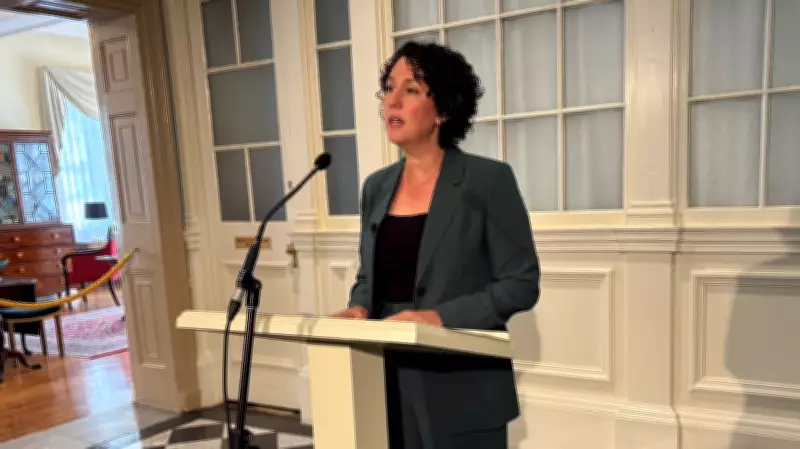
In a recent statement, NDP Leader Claudia Chender has placed the blame for Nova Scotia's deficit squarely on the shoulders of Premier Tim Houston, calling it a "problem of the premier's own making." Speaking at Nova Scotia Province House, Chender emphasized that the current financial shortfall is a direct result of government decisions rather than external economic factors.
Political Accountability in Focus
Chender argued that the deficit, which has raised concerns among residents and policymakers alike, stems from misguided fiscal policies and a lack of strategic planning. She highlighted that the government's approach to spending and revenue generation has failed to address the province's economic challenges effectively.
"This is not an unavoidable situation," Chender stated. "It is a consequence of choices made by this administration that have prioritized short-term gains over long-term stability." Her comments come amid ongoing debates about Nova Scotia's budget and its impact on public services such as healthcare and education.

Broader Context of Provincial Politics
The criticism from the NDP leader reflects broader tensions in Nova Scotia's political landscape, where opposition parties are scrutinizing the government's handling of economic issues. Chender's remarks aim to hold the premier accountable for what she describes as fiscal mismanagement, urging a reevaluation of priorities to ensure sustainable growth.
She pointed out that other provinces have managed to navigate similar economic pressures without incurring significant deficits, suggesting that Nova Scotia's leadership could learn from these examples. "We need a government that plans ahead and invests wisely, not one that creates problems it then struggles to solve," Chender added.
Implications for Future Policy
As the debate continues, Chender's statements are likely to influence upcoming discussions on budget adjustments and policy reforms. She called for transparency in government spending and a more inclusive approach to economic planning that involves input from various stakeholders, including businesses and community groups.
The NDP leader's focus on the deficit underscores the importance of fiscal responsibility in provincial governance, with potential implications for future elections and public trust. Her critique serves as a reminder that political decisions have real-world consequences for Nova Scotia's financial health and the well-being of its citizens.