Montreal Mayor's Early Tenure Tests Relations with Quebec Government
Mayor Soraya Martinez Ferrada entered office in November 2025 with hopes of resetting the often contentious relationship between Montreal and the Quebec government. Her strategy focused on demonstrating the city's credibility through strong governance before making requests, while emphasizing Montreal's economic importance as a major metropolis. However, less than three months into her mandate, that approach is already facing significant tests on critical issues.
Immigration Policy Clash Emerges as First Major Challenge
The mayor has taken a leading role in opposing the provincial government's recent immigration policy changes. In November, Quebec cancelled the popular Programme de l'expérience québécoise (PEQ) and replaced it with the Programme de sélection des travailleurs qualifiés. This change has created uncertainty for thousands of immigrants already living in Quebec, particularly those in Greater Montreal who receive fewer points under the new system.
"That's not normal," Martinez Ferrada stated during a recent radio interview. "It's like we want to force them once again to go to another region. These are people who are already here in Montreal. They've installed themselves, with their children, their family, in their house, so I'm going to continue to have this conversation with Quebec."

Montreal City Council responded with a unanimous motion on Monday, jointly presented by the mayor and opposition leader Ericka Alneus, demanding that the Legault government reverse course on cancelling the PEQ or at least create a grandfather clause to protect existing immigrants. The Communauté métropolitaine de Montréal, representing 82 municipalities in the wider region, has also endorsed this position.
Personal Experience Informs Policy Approach
As someone who immigrated to Montreal at age eight when her family fled Chile's authoritarian Pinochet regime, Martinez Ferrada brings personal understanding to the immigration debate. She is not only Montreal's first mayor of Latina heritage but also represents the city's growing diversity in unprecedented ways.
Her lived experience also informs her approach to police reform. During her election campaign, Martinez Ferrada pledged to outfit Montreal police with body cameras to improve accountability amid concerns about racial profiling. While the recent capital works budget allocated $40 million for equipment purchase, the project remains in limbo awaiting provincial legal frameworks.
"I've been stopped because I was driving in a car with my partner that it didn't seem that a Black man should be driving," the mayor revealed during her radio interview. "That's happened to us and that's happened to me a few times. It's unfortunate. There's work to be done. And that comes also from talking about it and breaking these social taboos."
Structural Challenges Complicate Municipal-Provincial Relations
The mayor faces structural challenges inherent in Quebec's municipal governance system. Cities are constitutionally considered "creatures of the province" and often operate under tight provincial constraints. Montreal relies on property taxes for 62.7 percent of its revenue and provincial transfers for 8.9 percent, creating significant financial dependence.
Politically, the Coalition Avenir Québec government has historically struggled to gain voter support in Montreal while frequently positioning the metropolis against other regions of Quebec. Premier François Legault has already rebalanced the composition of the metropolitan community at Montreal's expense, and with his announced departure and a leadership contest underway, provincial priorities remain uncertain.
Building Consensus Amid Political Differences
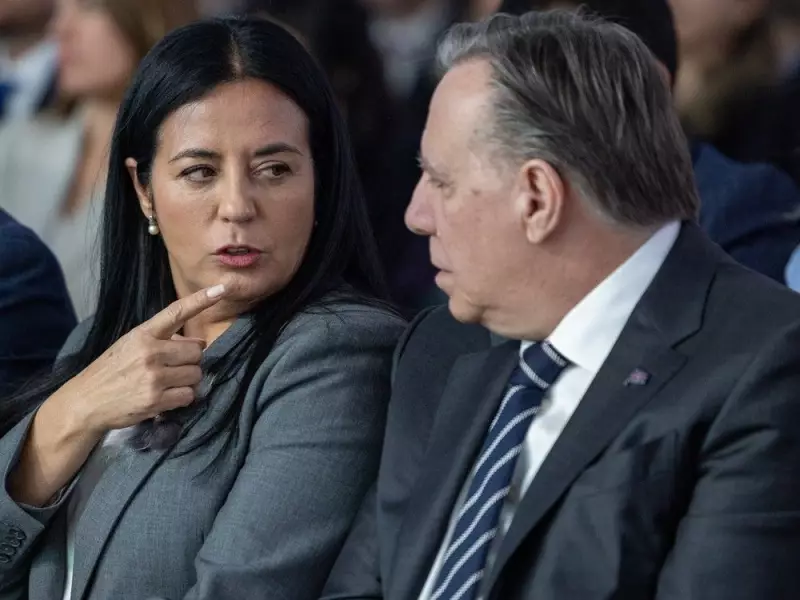
Despite early friendly meetings with Premier Legault and Municipal Affairs Minister Geneviève Guilbault, Martinez Ferrada finds herself advocating for priorities that don't align with the CAQ government's agenda. She is reaching across political aisles to build consensus while mounting arguments that combine economic pragmatism with humanitarian concerns.

Many immigrants affected by the policy changes were originally recruited to address labor shortages in priority sectors like nursing, education, daycare, and tourism. Others include international students whose sudden departure would create difficult-to-fill gaps while undermining Montreal's international reputation.
The mayor emphasizes that body cameras would send an important message to police while reassuring the public about fair treatment, but acknowledges she cannot implement this reform without provincial cooperation. With an election scheduled for October 2026 and leadership transitions underway, the timeline for action remains unclear.
Looking Ahead to Future Challenges
Immigration and police body cameras represent just the first fault lines in what promises to be a complex relationship between Montreal's new administration and the Quebec government. As Martinez Ferrada works to safeguard the city's political influence while advocating for her priorities, these early tests may establish patterns for future negotiations on infrastructure, public transit, homelessness, and other critical urban issues.
The mayor's approach combines personal conviction with strategic pragmatism, recognizing Montreal's constitutional limitations while asserting its importance as Quebec's economic and cultural engine. How she navigates these early challenges will likely shape her entire tenure and the city's relationship with provincial authorities for years to come.