Iran announced on Thursday that the latest proposal from the United States has partially bridged the divide between the two nations, as both sides seek to transform a fragile ceasefire into a lasting peace agreement. The semi-official Iranian Students' News Agency (ISNA) reported that Tehran is currently reviewing a text submitted by Washington, which has 'narrowed the gaps to some extent.' The report did not specify the source of this information.
Iran's 14-Point Proposal as a Foundation
The exchange of messages is based on Iran's 14-point text presented several weeks ago, according to Iran's foreign ministry. That plan envisions a short-term agreement where Iran would reopen the Strait of Hormuz, and the U.S. would lift its blockade of Iranian ports. This would be followed by deeper negotiations on Tehran's nuclear program.
Iranian officials have stressed that further narrowing of differences requires an end to what they describe as 'the temptation for war on Washington's part.' The foreign ministry reiterated its demand for a commitment to end fighting 'on all fronts, including Lebanon,' as well as the unfreezing of sanctioned assets.

No Timeline for Formal Response
Iran gave no indication of when it would formally respond to the U.S. proposal. The Iranian foreign ministry emphasized the need for a comprehensive cessation of hostilities. Meanwhile, Field Marshal Asim Munir, Pakistan's most powerful figure, visited Tehran on Thursday. Islamabad has been serving as the main mediator between the two sides.
U.S. President Trump's Mixed Signals
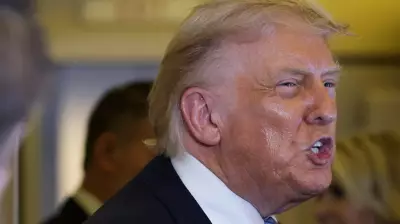
The developments come amid renewed threats of escalation. U.S. President Donald Trump told reporters on Wednesday that the U.S. was in the 'final stages' of diplomacy with Iran, sparking investor optimism that a deal was imminent. U.S. Treasury prices rose and oil prices dropped following his remarks. However, Trump then warned that he might resume attacks in the coming days if Iran did not agree to his terms, a threat he has repeated since the ceasefire took effect on April 8.
'We'll either have a deal or we're going to do some things that are a little bit nasty,' Trump said. 'But hopefully that won't happen.'
Key Sticking Points: Nuclear Enrichment and Uranium Stockpiles
Major obstacles include Iran's nuclear enrichment activities and its stockpile of highly processed uranium. The U.S. demands that Tehran hand over the uranium, fearing it could be used to build an atomic bomb, and commit to ending enrichment for at least a decade. Iranian leaders have publicly rejected these demands.
Reuters reported on Thursday that Iran's Supreme Leader, Mojtaba Khamenei, has issued a directive that the country's near-weapons-grade uranium should not be sent abroad. The report cited two unnamed Iranian sources. Iran has consistently refused to ship the enriched uranium to the U.S., but has indicated it could move it to a third country. Foreign Minister Abbas Araghchi recently thanked Russia for its offer to take the material, while cautioning that the idea is not currently under discussion.